Theodore Roosevelt III was born on 13 September 1887 at the family estate on Cove Neck, Oyster Bay, Long Island, the eldest son of Theodore Roosevelt, then a young politician between jobs and later the twenty-sixth President of the United States. Everyone called him Ted, or Theodore Jr.2,3
Being the eldest son of that father was not easy. The elder Roosevelt believed in the strenuous life and expected more of Ted than of any of his other children; the pressure nearly gave the boy a nervous breakdown. But Ted adored him. He remembered walking to his father’s office in Washington while the future president talked history, stopping to draw out the plans of famous battles in the dust of the gutter with the tip of his umbrella.3,4
He went to Groton and Harvard, graduating in 1909, and made a fortune in business and investment banking before he was thirty. He married Eleanor Butler Alexander, and they had four children.3
The Great War
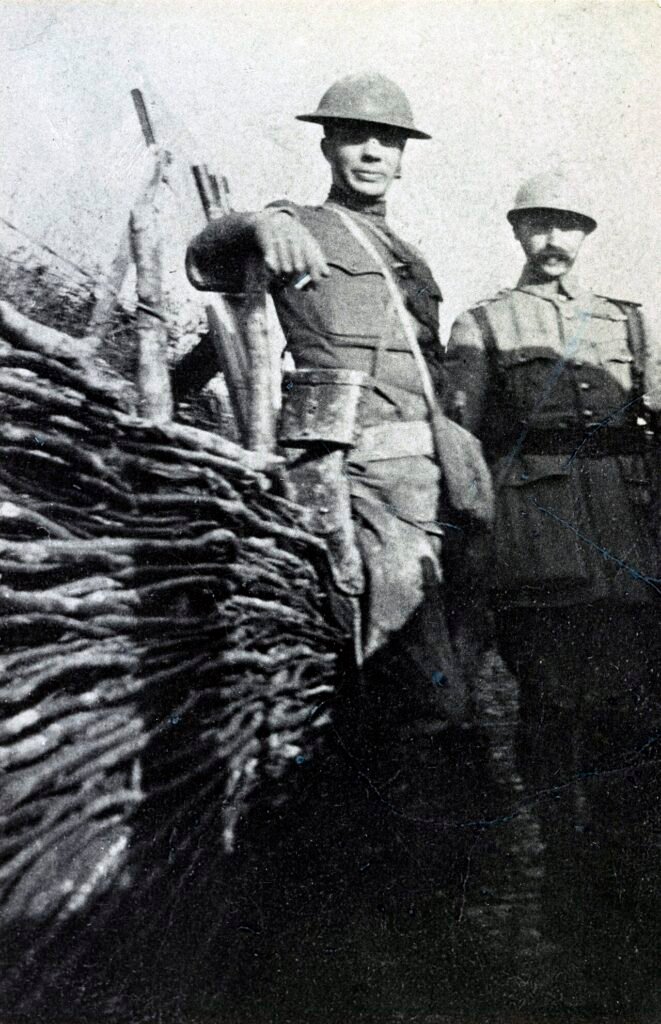
Like his father, Ted believed that America would have to fight in Europe. In 1915 he went to the businessmen’s military training camp at Plattsburgh, New York. When the United States entered the war in April 1917, his father asked General Pershing to take his sons to France; Ted was commissioned as a major. His brothers Archie and Quentin went too, Quentin as a pilot, and Kermit fought with the British in Mesopotamia.3,4
Ted served with the 1st Division, the Big Red One, and was judged by its commander to be the best battalion commander in the division. He bought boots for his entire battalion out of his own pocket. He fought at Cantigny, America’s first victory of the war, in May 1918, and was gassed and wounded at Soissons that summer. In July 1918 his youngest brother, Quentin, was shot down and killed over France. By the end of the war Ted was a lieutenant colonel commanding the 26th Infantry Regiment, with the Distinguished Service Cross and the French Légion d’honneur. In Paris in 1919 he was one of the founders of the American Legion, the great veterans’ organisation, but turned down the offer to become its first commander.3,4
Politics and empire
After the war he went into politics, as a New York State assemblyman and, from 1921, Assistant Secretary of the Navy, the job his father had once held. His career was damaged by the Teapot Dome oil scandal; he was cleared by a Senate committee, but in 1924 he lost the race for Governor of New York, with his Democratic cousins Franklin and Eleanor Roosevelt campaigning against him. The quarrel split the family for good.3,4
He was more successful abroad. From 1929 to 1932 he was Governor of Puerto Rico, where he learned Spanish, tried to ease the poverty of the Depression and was affectionately known as El Jíbaro de La Fortaleza, the countryman in the governor’s mansion. From 1932 to 1933 he was Governor-General of the Philippines. In the 1930s he returned to business, as chairman of American Express and a vice-president of the publishers Doubleday, and kept up his Army reserve training every year.3
Back to the Big Red One
By 1940 Roosevelt was in his fifties, with a weak heart and arthritis from his old wounds, but he meant to fight again. His wife went personally to the Army chief of staff, General George Marshall, to ask that he be given a combat command. Marshall said he would make an exception to his rule against favours if what was being asked for was a more dangerous job. In April 1941 Roosevelt was given command of the 26th Infantry, his old regiment, and late that year he was promoted to brigadier general as assistant commander of the 1st Infantry Division.3,4
He led the 26th ashore at Oran in Algeria on 8 November 1942 in the invasion of North Africa, and fought through the Tunisian campaign under the division commander, Terry Allen. He was a front-line general, always among the troops. The French commander in North Africa, General Juin, cited him for the Croix de Guerre for his defence of a sector in the Ousseltia valley, where for three weeks he never stopped visiting the front lines.3
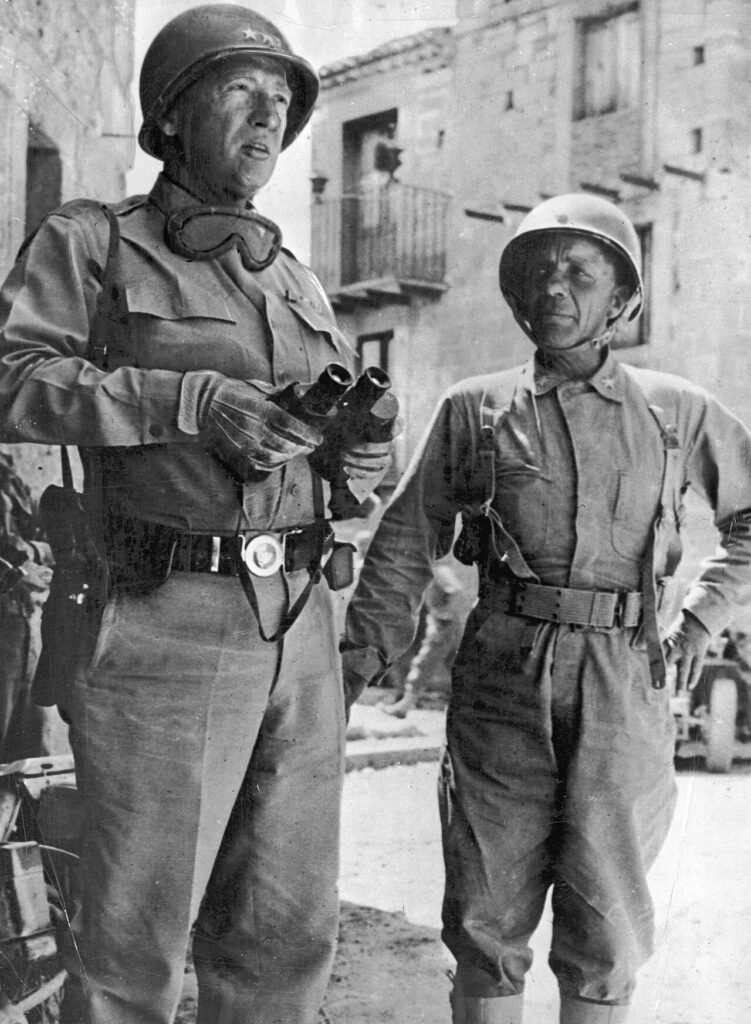
Allen and Roosevelt were loved by their men and disliked by their superiors, who thought them too lax about discipline and dress. In Sicily in the summer of 1943 Patton asked to have them both removed, writing in his diary that Roosevelt was brave but no soldier. Bradley, who carried out the order, later called it one of the most unpleasant things he had to do in the war. Roosevelt was given liaison work with the French in Italy, and kept asking Eisenhower for a combat command.2,3
A letter to his general
In February 1944 he got one: assistant commander of the 4th Infantry Division, preparing in England for the invasion of France. The 4th had never been in battle. It was to land on the beach code-named Utah, on the east coast of the Cotentin peninsula. Roosevelt asked his commander, Major General Raymond Barton, to let him go in with the first wave. Barton refused. Roosevelt asked again, and then put it in writing.1,3
The way the first troops hit the beach, he argued, might decide the whole operation. Green troops would take their lead from their first engagements. The commander would need an accurate picture of the situation when he came ashore. And, he wrote, he knew the officers and men of the assault companies personally and believed it would steady them to know he was with them. Barton gave in, with great misgiving. He did not expect to see Roosevelt alive again.3
Roosevelt was fifty-six. He was the oldest man in the first wave of the invasion, and the only general to land by sea in the first wave on D-Day. His son Quentin, a captain in the 1st Division, was landing the same morning at Omaha Beach. They were the only father and son to come ashore in Normandy that day.1,3
A mile off course
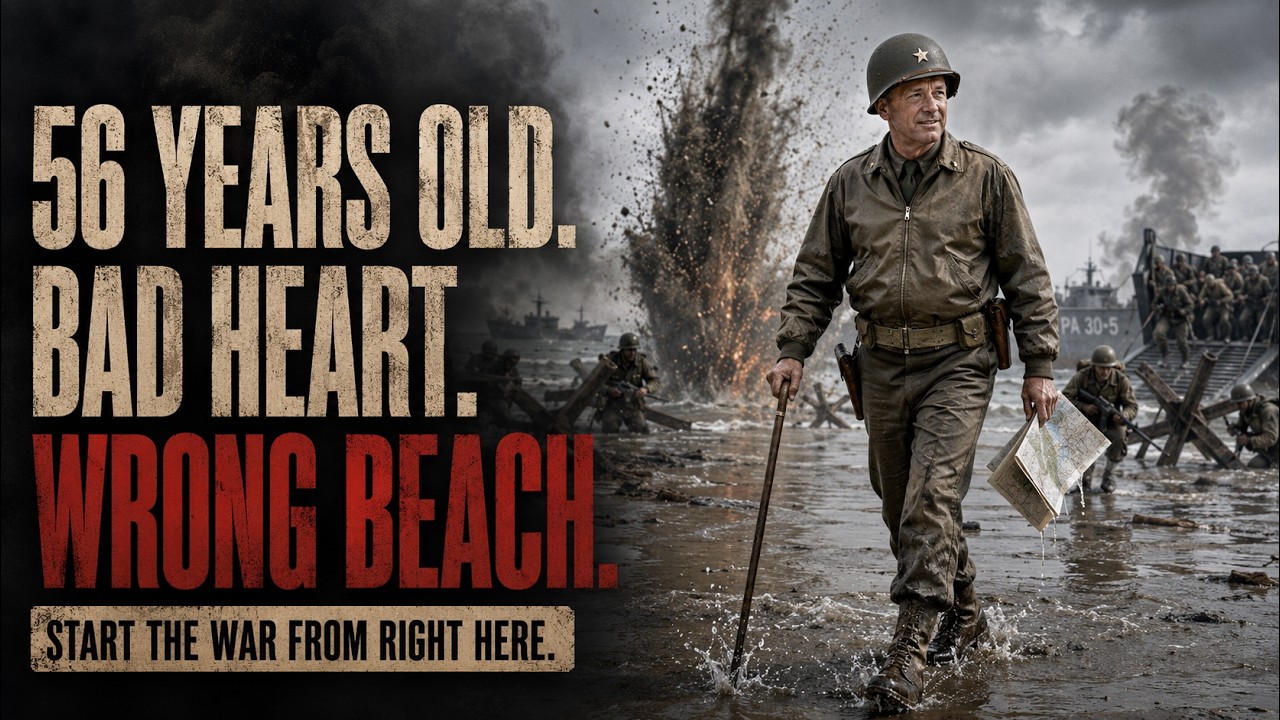
At about 6.30 on the morning of 6 June 1944 Roosevelt waded ashore at Utah Beach with the first assault companies of the 8th Infantry Regiment, carrying a pistol and a walking cane. Almost at once he realised something was wrong. The landmarks were not where they should be. The strong current and the smoke of the bombardment had carried the landing craft about a mile south of their intended beaches.1,3
He went forward himself, under fire, to reconnoitre the ground behind the beach and find the causeways across the flooded fields that the troops would need to get inland. Then he went back and found the two battalion commanders. The choice was stark: try to move the whole landing north to the planned beaches, under fire and with thousands more men and vehicles coming in behind, or fight from where they were. Here the defences were weaker than on the planned beaches. Roosevelt made the decision. “We’ll start the war from right here.”1,3
The traffic cop of Utah Beach
For the rest of the day he walked up and down the beach under shellfire, leaning on his cane, meeting each new wave and each follow-on regiment as it landed and sending it to its new objective. He untangled jams of tanks and trucks, telling jokes and reciting poetry and stories about his father to steady nervous young soldiers. One soldier said later that seeing the general walking about apparently untouched, with clods of earth falling on him from near misses, gave him the courage to get on with his job: if the general was like that, it could not be so bad.1,3
When General Barton came ashore, Roosevelt met him with a full picture of the situation, just as he had promised. Barton wrote that he loved Ted, and that when he had said goodbye in England he had never expected to see him alive again. At Utah the 4th Division got ashore with fewer than two hundred casualties, one of the lightest tolls of any beach that day. Years later, asked to name the single most heroic action he had seen in combat, Omar Bradley answered: “Ted Roosevelt on Utah Beach.”2,3
12 July 1944
In the weeks after D-Day Roosevelt drove around the front in a jeep he named Rough Rider, after his father’s regiment in the Spanish–American War. He was recommended for the Distinguished Service Cross for Utah Beach, and on 12 July 1944 Eisenhower approved his appointment to command a division of his own, the 90th Infantry Division.3,4
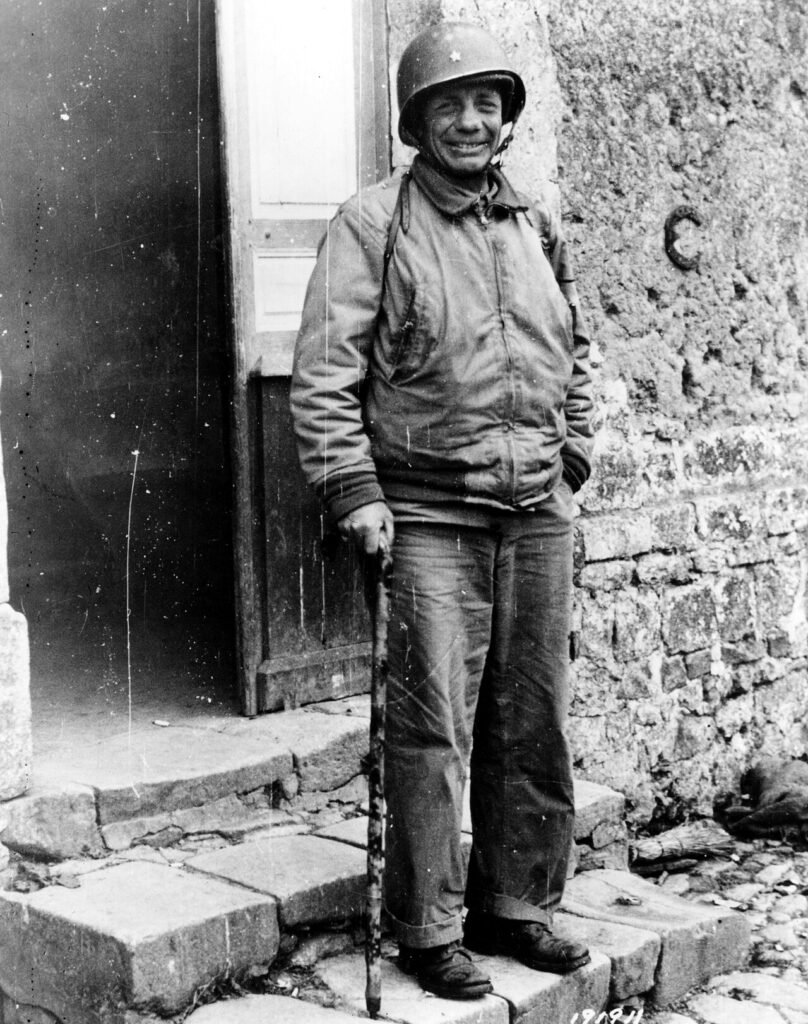
That evening, in his command post in an old orchard at Méautis, near Sainte-Mère-Église, Roosevelt spent a long time talking with his son Quentin, who had come to visit him. Late that night he had a heart attack, and he died before he could learn of his new command. He was fifty-six.3,5
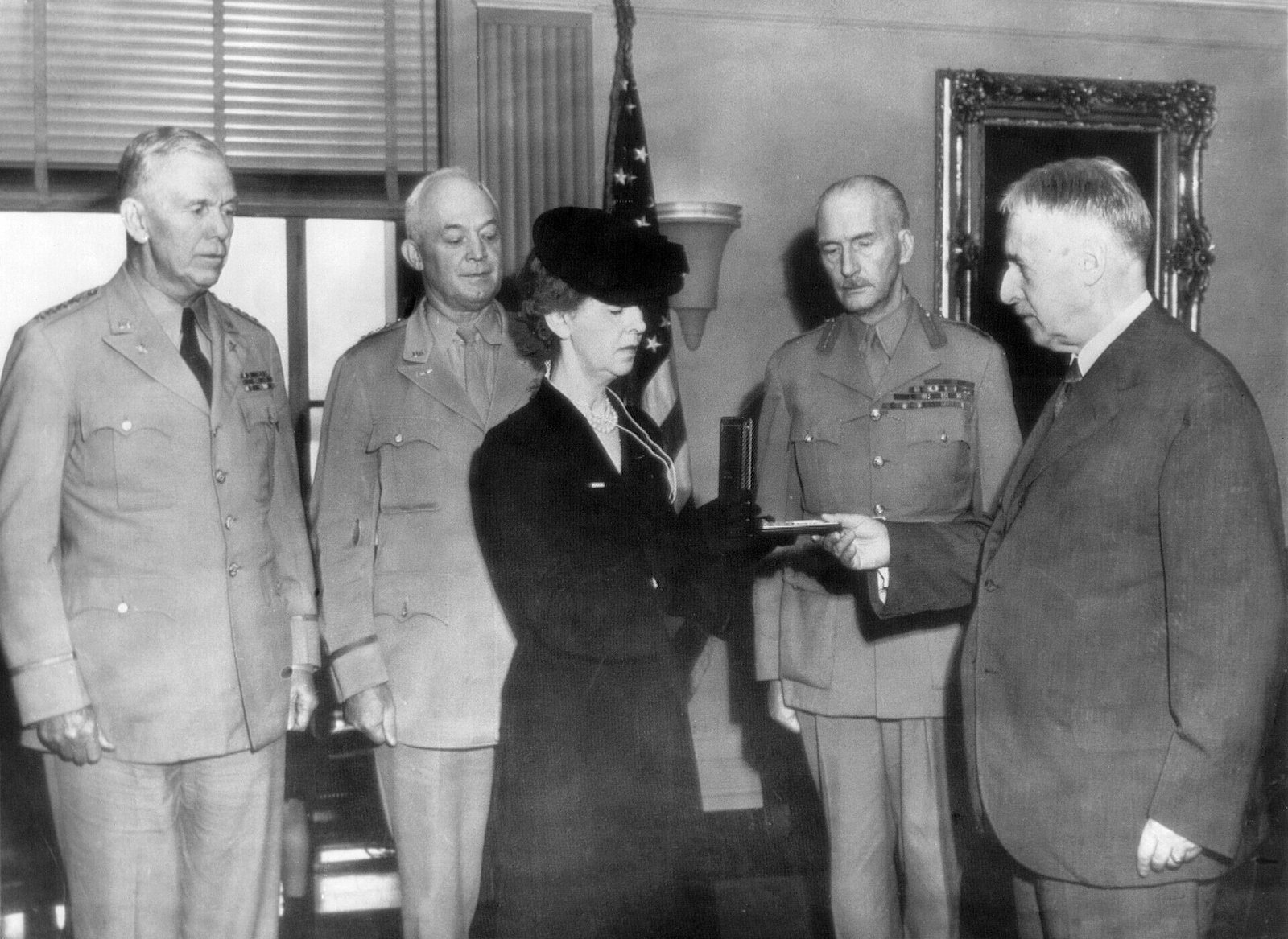
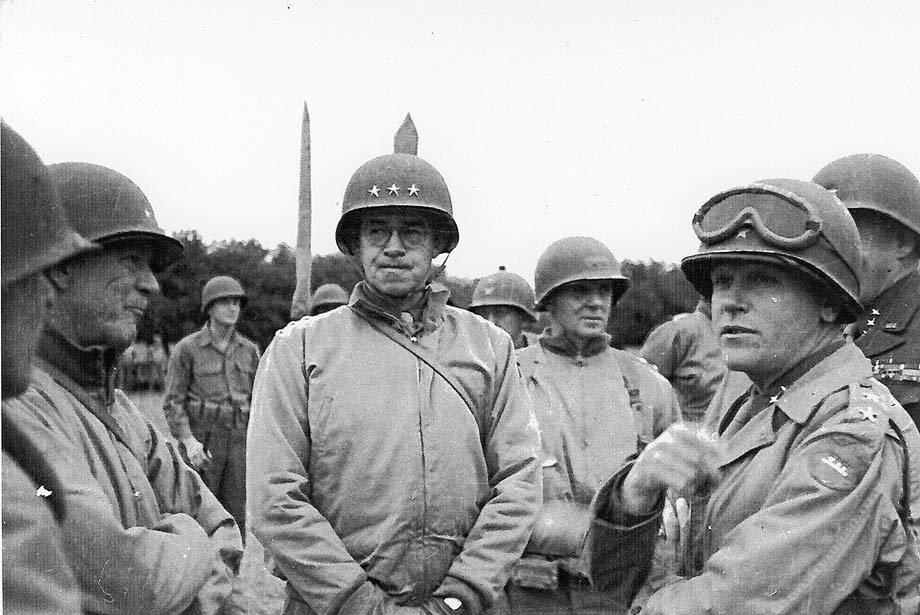
He was buried at Sainte-Mère-Église. Generals Bradley, Patton, Collins and Hodges were among the mourners, and Patton, who a year before had called him no soldier, wrote in his diary that he was one of the bravest men he had ever known. The recommendation for the Distinguished Service Cross was upgraded, and in September 1944 the Medal of Honor was presented to his widow, Eleanor. His citation praised his “seasoned, precise, calm and unfaltering leadership” and credited him with contributing “to the successful establishment of the beachhead in France”.1,2
After the war his body was moved to the American cemetery above Omaha Beach at Colleville-sur-Mer. In 1955 the body of his brother Quentin, killed flying over France in 1918, was brought from his grave near the spot where he fell and buried beside him. The two sons of Theodore Roosevelt lie side by side in Normandy.6
Timeline
- 13 September 1887 Born at Oyster Bay, New York.
- 1909 Graduates from Harvard.
- May 1918 Fights at Cantigny with the 1st Division.
- July 1918 Gassed and wounded at Soissons; his brother Quentin is killed.
- 1919 A founder of the American Legion.
- 1929–1933 Governor of Puerto Rico, then Governor-General of the Philippines.
- April 1941 Returns to command the 26th Infantry.
- 8 November 1942 Lands at Oran in the invasion of North Africa.
- July 1943 Relieved in Sicily.
- 6 June 1944 Lands with the first wave at Utah Beach.
- 12 July 1944 Dies of a heart attack in Normandy.
- September 1944 Medal of Honor presented to his widow.
- 1955 His brother Quentin reburied beside him at Colleville-sur-Mer.
- Medal of Honor citation for Brigadier General Theodore Roosevelt Jr., for action on 6 June 1944.
- Omar N. Bradley, A Soldier’s Story (Henry Holt, 1951).
- Robert W. Walker, The Namesake: The Biography of Theodore Roosevelt Jr. (Brick Tower Press, 2004).
- Tim Brady, His Father’s Son: The Life of General Ted Roosevelt, Jr. (New American Library, 2017).
- Eleanor Butler Roosevelt, Day Before Yesterday (Doubleday, 1959).
- American Battle Monuments Commission, Normandy American Cemetery.
Found an error, or hold a related record? Tell the research desk.
Share what you know