
Garlin Murl Conner was born on 2 June 1919 on Indian Creek, a stream that runs into the Cumberland River in Clinton County, in the hills of southern Kentucky. He was the third of eleven children in a farming family. He was small, about five feet six, and quiet. Four of his brothers would also serve in the Second World War.1,4
He had worked in the Civilian Conservation Corps, the Depression-era programme that put young men to work on forests, roads and parks, when the Army drafted him in March 1941, nine months before Pearl Harbor. He trained at Fort Lewis, Washington, and was assigned to K Company, 3rd Battalion, 7th Infantry Regiment, of the 3rd Infantry Division. The 3rd would spend more days in combat than any other American division in the European war, and suffer more casualties. Conner was with it almost all the way.1,2
Four landings
The division sailed from Norfolk, Virginia, on 23 October 1942 and landed in French Morocco on 8 November as part of the invasion of North Africa. It went on to Sicily in July 1943, and to the Italian mainland at Salerno that September. In January 1944 it came ashore at Anzio, south of Rome, where the Allied beachhead was penned in for four months under German guns. Conner made four amphibious landings. By the Army’s count he spent twenty-eight months on the front line and fought in ten campaigns.1,2
He was a fighting soldier who kept being promoted. He won his first Silver Star in Italy in October 1943 and his second at Anzio on 30 January 1944. He was made a technical sergeant in January 1944 and was given a battlefield commission as a second lieutenant on 28 June 1944. He was wounded again and again: on 6 March 1944 at Anzio, and twice more in the summer and autumn of 1944 after the division landed in southern France in August. He won his third Silver Star on 11 September 1944. By the end of the war he believed he had been wounded seven times; records survive for at least three.1,5
The Colmar Pocket
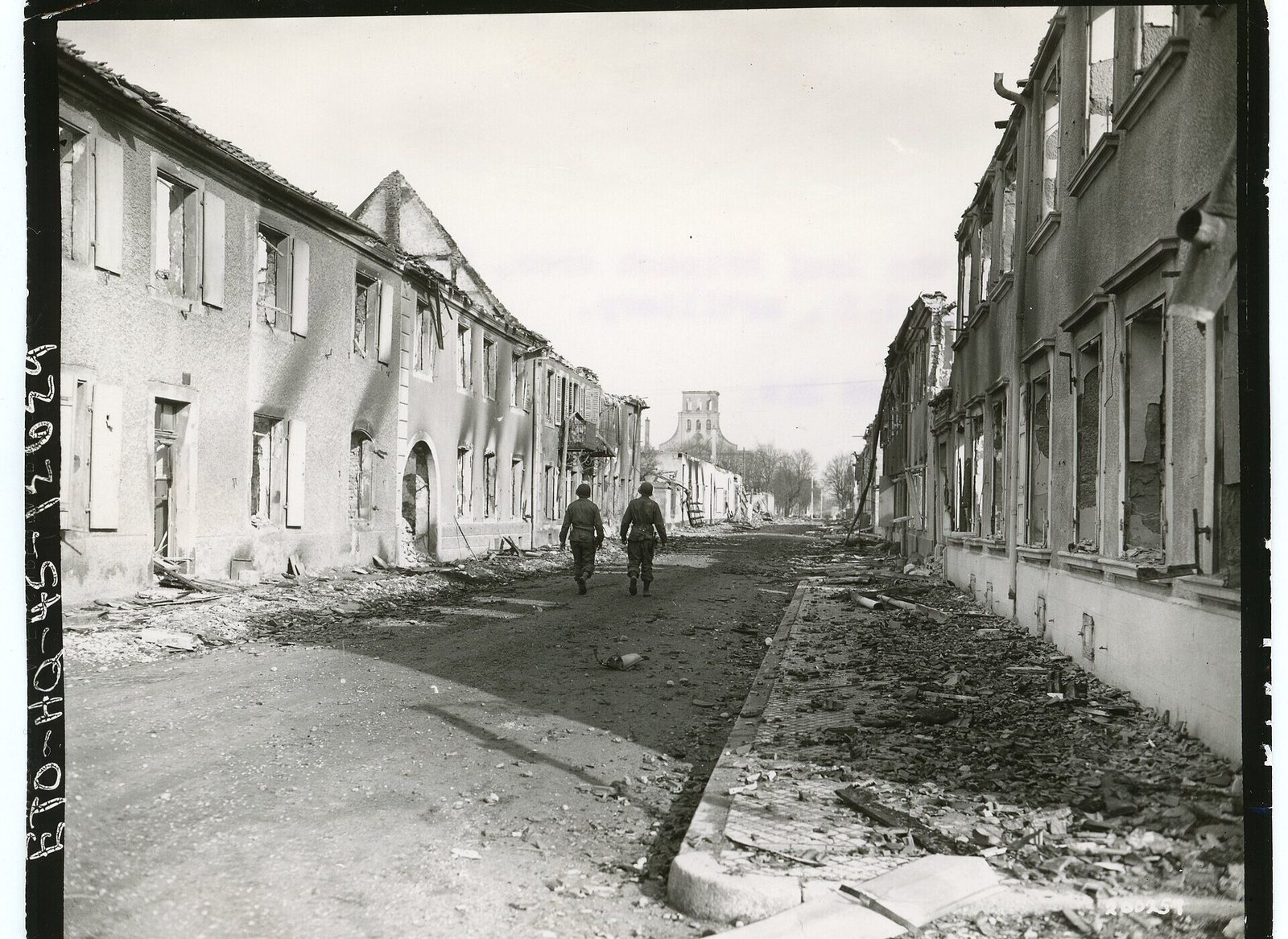
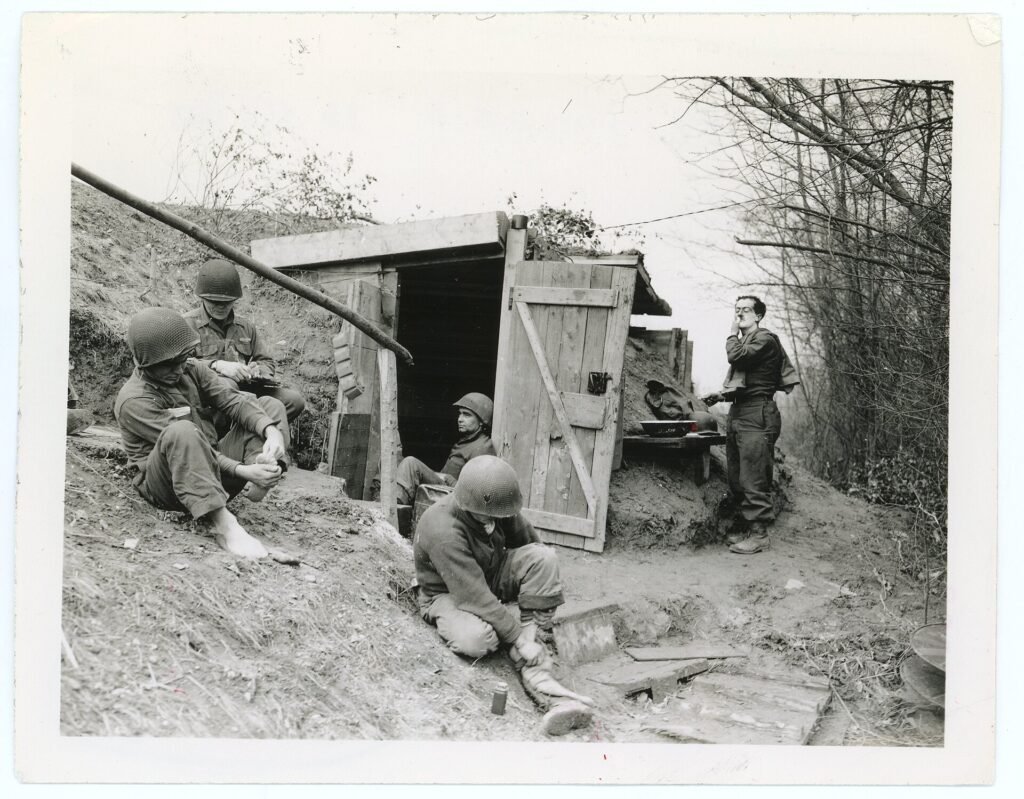
By the winter of 1944–45 the 3rd Division was in Alsace, in eastern France, facing the last German foothold west of the Rhine: a bulge of territory around the city of Colmar that the Allies called the Colmar Pocket. The weather was savage, with deep snow and temperatures well below freezing. On 22 January 1945 the division attacked to eliminate the pocket.1,2
Conner, promoted to first lieutenant in December, had been wounded again and sent to hospital. He left before he was fully healed, still troubled by a hip wound, and made his way back to his battalion. He was given a job in the battalion command post as its intelligence officer, a post that kept him, for once, a little behind the front line.1
24 January 1945
On the morning of 24 January 1945, near the village of Houssen, north of Colmar, the Germans launched a heavy counter-attack against the left flank of the 7th Infantry. About six hundred German infantry came forward, supported by six tanks and tank destroyers. If they broke through, the 3rd Battalion could be overrun.1
His commander, Lloyd Ramsey, needed someone to go forward and direct artillery fire onto the attack. Conner volunteered. With another soldier, Robert Dutil, he grabbed a reel of telephone wire and ran towards the enemy, unrolling the wire behind him so that he could talk to the command post. Artillery fire tore through the trees around him. They covered some four hundred yards. Dutil was wounded. Conner went on past the battalion’s own front line to a position about thirty yards in front of it, and threw himself into a shallow irrigation ditch.1,2
Lying on his stomach in the frozen ditch, with machine-gun and rifle fire striking all around him, he began calling in fire missions, adjusting the shells round after round by telephone. The German advance stopped and took cover behind a dike. For three hours Conner stayed in the snow-covered ditch in near-zero cold, his body partly exposed to enemy fire, calling down fire as the German infantry came at him again and again. At one point they were within five yards of him.1
“Blanket my position”
Then the Germans massed for a final assault that would overwhelm him. His commander told him to get out. Conner refused. Instead he told the artillery to fire on his own position: blanket my position. The American shells fell all around the ditch, exploding a few feet from him, among the Germans swarming towards him, and he kept directing fire until the attack broke.1,2
By the count in his citation, the artillery he directed killed about fifty German soldiers and wounded perhaps a hundred more, and saved the battalion from what would certainly have been heavy losses. Conner came out of the ditch alive. An officer of the battalion, Lieutenant Harold Wigetman, later credited him with saving the whole battalion.1
He was recommended for the Medal of Honor. Instead he was awarded the Distinguished Service Cross, the second-highest award for valour, presented to him by Lieutenant General Alexander Patch, commander of the Seventh Army. He won his fourth Silver Star on 3 February 1945. Two days after Conner’s stand, and about five miles away near Holtzwihr, another soldier of the 3rd Division, Lieutenant Audie Murphy, climbed onto a burning tank destroyer and stopped another German attack; Murphy’s actions brought him the Medal of Honor and national fame.1,2
A farm without electricity
In March 1945 Conner was sent home. In May, the town of Albany, Kentucky, held a celebration for him, and the guest speaker was Alvin York, the hero of the First World War, who lived just across the state line in Pall Mall, Tennessee. On 22 June 1945 Conner was honourably discharged. On 9 July he married Lyda Pauline Wells.1
They lived on Indian Creek, north of Albany, in a house with no electricity or running water, farming with mules and horses. In 1950 the government bought their land to create Lake Cumberland, and they moved to the Rolan community in the south of the county. They had one son. Conner farmed, served for seventeen years as president of the Clinton County Farm Bureau, and spent years travelling the surrounding counties helping other veterans and their families claim the benefits they were owed. His wounds troubled him all his life, and he later suffered from heart disease and Parkinson’s disease. He almost never spoke about the war. Most of his neighbours had no idea what he had done.1
Garlin Conner died on 5 November 1998 and was buried in Memorial Hill Cemetery in Albany.1
A stranger’s campaign
The story might have ended there. In 1996 an Army veteran from Wisconsin, Richard Chilton, was researching the service of his uncle, Private First Class Gordon Roberts, who had been killed at Anzio in January 1944 while serving alongside Conner. He heard about Conner, met him, and saw his medals. He decided that Conner had been cheated of the Medal of Honor, and set out to put it right.1
It became a twenty-two-year campaign. In 2000 a Louisville newspaper columnist, Byron Crawford, wrote about Chilton’s efforts, and Walton “Chip” Haddix, a local man who had known Conner for years without knowing his record, joined in. Many of Conner’s records had been lost in the 1973 fire at the National Personnel Records Center in St. Louis, and the campaigners had to rebuild his story from photographs, medals and the testimony of the men he had served with. Lloyd Ramsey, by then a retired major general, wrote that it was one of the most disappointing regrets of his career that Conner had not been given the Medal of Honor: he was, Ramsey said, the most outstanding soldier he had ever commanded.1,4
The Army refused to reconsider, saying the request came too late. Pauline Conner sued. In 2014 a federal judge ruled against her on the same grounds. She appealed, and the appeals court ordered the two sides into mediation. Finally the Army’s Board for Correction of Military Records recommended that Conner receive the Medal of Honor, and Congress waived the time limit in the defence budget for 2018.1
The East Room
On 26 June 2018, seventy-three years after the battle, President Donald Trump presented the Medal of Honor for First Lieutenant Garlin M. Conner to his widow, Pauline, in the East Room of the White House. With it, Conner became one of the most decorated American soldiers of the Second World War.2,3
He had asked for none of it. The campaign that won it was carried on by his widow, a stranger who had never served with him, and a neighbour who had not known his story. It shows how many deeds of that war went unrecognised, and how much depended on someone taking the trouble to remember.
Timeline
- 2 June 1919 Born on Indian Creek, Clinton County, Kentucky.
- 1 March 1941 Enters the Army.
- 8 November 1942 Lands in French Morocco with the 3rd Infantry Division.
- 1943 Sicily and Salerno; first Silver Star in October.
- 30 January 1944 Second Silver Star at Anzio.
- 28 June 1944 Commissioned as a second lieutenant.
- August 1944 Lands in southern France.
- 24 January 1945 Calls artillery onto his own position near Houssen.
- 22 June 1945 Discharged; marries Pauline Wells in July.
- 5 November 1998 Dies in Albany, Kentucky.
- 26 June 2018 Medal of Honor presented to his widow at the White House.
- Medal of Honor citation for First Lieutenant Garlin M. Conner, for action on 24 January 1945, presented 26 June 2018.
- U.S. Army, “Medal of Honor: 1st Lt. Garlin M. Conner”, army.mil
- The White House, Medal of Honor ceremony for First Lieutenant Garlin M. Conner, 26 June 2018.
- Byron Crawford, columns on Garlin Conner in The Courier-Journal, Louisville.
- Many of Conner’s service records were destroyed in the 1973 fire at the National Personnel Records Center in St. Louis. The number of his wounds is uncertain: records support at least three Purple Hearts; Conner said he was wounded seven times.
Found an error, or hold a related record? Tell the research desk.
Share what you know