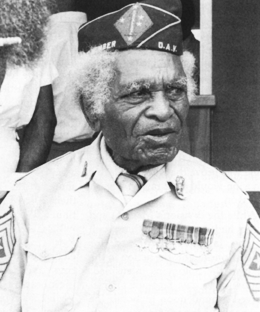
Jacob Charles Vouza was born around 1892 at Tasimboko, a village on the north coast of Guadalcanal, one of the larger islands of what was then the British Solomon Islands Protectorate. He was educated at the South Seas Evangelical Mission school. In 1916 he joined the Solomon Islands Protectorate Armed Constabulary, the small police force that kept order across the islands for the British administration.3
He served for twenty-five years. By the time he retired in 1941 he had risen to sergeant major, the most senior rank open to a Solomon Islander in the force. He could have expected a quiet retirement. Within months, the war came to his island.
An island between two empires
In the first half of 1942, Japanese forces advanced south through the Pacific and occupied the Solomons. On Guadalcanal they began to build an airfield on the flat ground near Lunga Point, a base from which their aircraft could threaten the sea routes between the United States and Australia.1
Not everyone left. A network of coastwatchers, most of them Australian and British officials, planters and missionaries, stayed behind in the hills with radios, reporting Japanese ships and aircraft to the Allies. On Guadalcanal the British district officer, Martin Clemens, remained with a group of island police and scouts. Vouza came out of retirement to join him.2,3
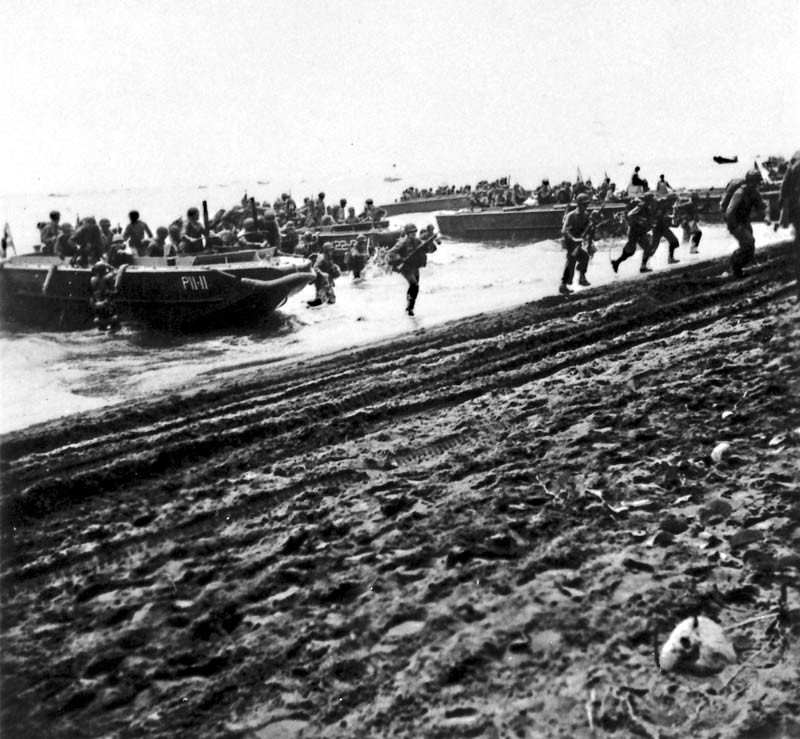
On 7 August 1942 the U.S. 1st Marine Division landed on Guadalcanal and seized the half-built airfield, which the Americans named Henderson Field. The same day, Vouza found an American pilot from the aircraft carrier USS Wasp who had been shot down over Japanese-held territory, and guided him safely back to the American lines.3
Captured on the trail
The Japanese responded quickly. Within two weeks they had landed a battalion-strength force east of the Marine perimeter: the Ichiki Detachment of the 28th Infantry Regiment, under Colonel Kiyonao Ichiki. On 20 August Vouza volunteered to scout the country east of the Marines for Japanese positions.1
He walked into them. Ichiki’s soldiers searched him and found a small American flag hidden in his loincloth. It was enough to mark him as working for the Americans. They tied him to a tree and questioned him about the Marine positions. He refused to answer.1,3
The interrogation went on for hours. He was beaten with rifle butts and bayoneted repeatedly. The Marine Corps’ official history describes two bayonet thrusts through his chest; other accounts list wounds to both arms, his throat, a shoulder, his face and his stomach. At the end of it his captors left him tied to the tree, apparently certain he would die, and moved on towards the Marines.1,3
The warning at the river
Vouza did not die. When the soldiers had gone, he chewed through the ropes that held him. Losing a great deal of blood, he made his way back through several miles of jungle towards the American lines along the Ilu River, which the Marines called the Tenaru.1,3
He reached the positions of the 2nd Battalion, 1st Marines, and found Lieutenant Colonel Edwin Pollock and Martin Clemens. Before he would let anyone treat his wounds, he gave them his report: somewhere between two hundred and fifty and five hundred Japanese soldiers were coming behind him. The warning came minutes before the attack, but it was enough for the Marines to be ready.1,3
Tied to a tree, bayoneted and beaten, he chewed through his bindings and reached the Marine lines in time to warn them.
After the U.S. Marine Corps history of the campaign
The Ichiki Detachment attacked across the sandbar at the mouth of the river in the early hours of 21 August. The Marines, dug in, met the assault with rifles, machine guns, canister rounds and artillery. When daylight came, they counter-attacked and surrounded the remaining Japanese in a coconut grove. By the end of the day the detachment had been destroyed. The Marine Corps history puts the Japanese dead at close to eight hundred; Colonel Ichiki died with them. The fight became known as the Battle of the Tenaru, the first major land defeat of the Japanese army on Guadalcanal.1
Back to the jungle
Vouza spent twelve days in hospital. Then he went back to work as the chief scout for the Marines.3
Major General Alexander Vandegrift, commanding the 1st Marine Division, presented him in person with the Silver Star for refusing to give information under torture, and made him an honorary sergeant major of the United States Marine Corps.3,4
In November and December 1942 he scouted for Lieutenant Colonel Evans Carlson’s 2nd Raider Battalion on its long patrol: a month behind Japanese lines in the jungle and hills of the island, harrying the Japanese troops who had escaped from the eastern end of Guadalcanal. That service earned him the Legion of Merit, awarded in 1945. The British government awarded him the George Medal for gallant conduct and exceptional devotion to duty, and he received the Police Long Service and Good Conduct Medal for his years with the constabulary.3
Sir Jacob
After the war Vouza became a leading figure in the public life of the islands. He was appointed a district headman in 1949, served on the British Solomon Islands Protectorate Advisory Council from 1950 to 1960, and was president of the Guadalcanal Council from 1952 to 1958. He was appointed a Member of the Order of the British Empire in the New Year Honours of 1957.3,4
The Marines did not forget him. In 1968 he travelled to the United States as a guest of honour of the 1st Marine Division Association. In the Birthday Honours of 1979, the year after the Solomon Islands became independent, he was made a Knight Commander of the Order of the British Empire.3,4
He kept the Marine Corps tunic he had been given, and wore it for the rest of his life. Sir Jacob Vouza died in Honiara on 15 March 1984 and was buried in that tunic. A memorial to him stands in front of the police headquarters at Rove, in Honiara, the capital that grew up around the airfield the Marines fought to hold.3
Timeline
- c. 1892 Born at Tasimboko, Guadalcanal.
- 1916 Joins the Solomon Islands Protectorate Armed Constabulary.
- 1941 Retires as sergeant major after 25 years.
- 7 August 1942 U.S. Marines land on Guadalcanal; he rescues a downed USS Wasp pilot.
- 20 August 1942 Captured and tortured by the Ichiki Detachment; escapes and warns the Marines.
- 21 August 1942 Battle of the Tenaru: the Ichiki Detachment is destroyed.
- November–December 1942 Scouts for the 2nd Raider Battalion’s long patrol.
- 1949 Appointed district headman.
- 1957 Appointed MBE.
- 1968 Visits the United States as a guest of the 1st Marine Division Association.
- 1979 Knighted as a Knight Commander of the Order of the British Empire.
- 15 March 1984 Dies in Honiara and is buried in his Marine Corps tunic.
- Henry I. Shaw Jr., First Offensive: The Marine Campaign for Guadalcanal (U.S. Marine Corps History and Museums Division, 1992).
- Martin Clemens, Alone on Guadalcanal: A Coastwatcher’s Story (Naval Institute Press).
- Marine Corps Association, “Coastwatcher Jacob Charles Vouza”.
- The London Gazette: New Year Honours 1957 (MBE) and Birthday Honours 1979 (KBE).
- Accounts differ on the exact number and place of his bayonet wounds; the U.S. Marine Corps history describes two thrusts through the chest.
Found an error, or hold a related record? Tell the research desk.
Share what you know