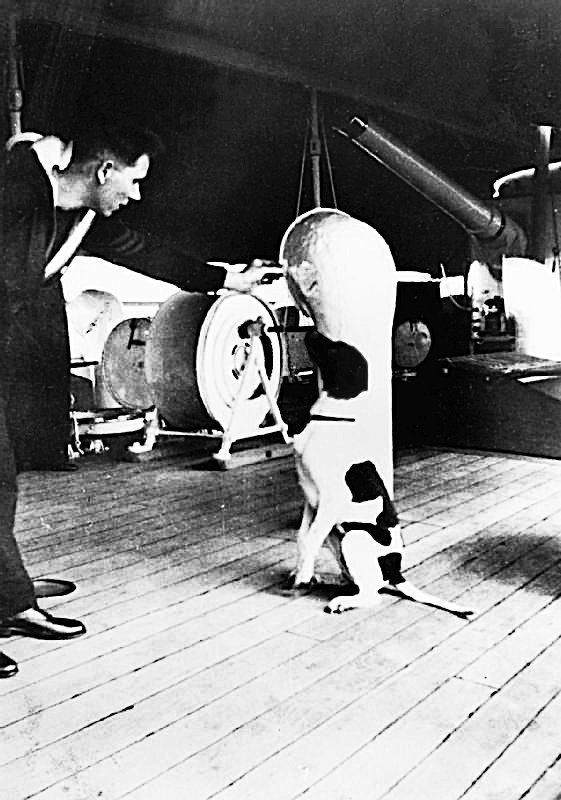
Judy was born in February 1936 in the Shanghai Dog Kennels, a boarding kennel used by British families living in Shanghai. She was a liver-and-white English pointer, one of a litter of seven. At three months old she ran away, and spent months living in a back alley with a Chinese shopkeeper before a kennel worker found her and brought her back. The Chinese had called her Shudi. The name was anglicised to Judy.1,2
A dog for the Gnat
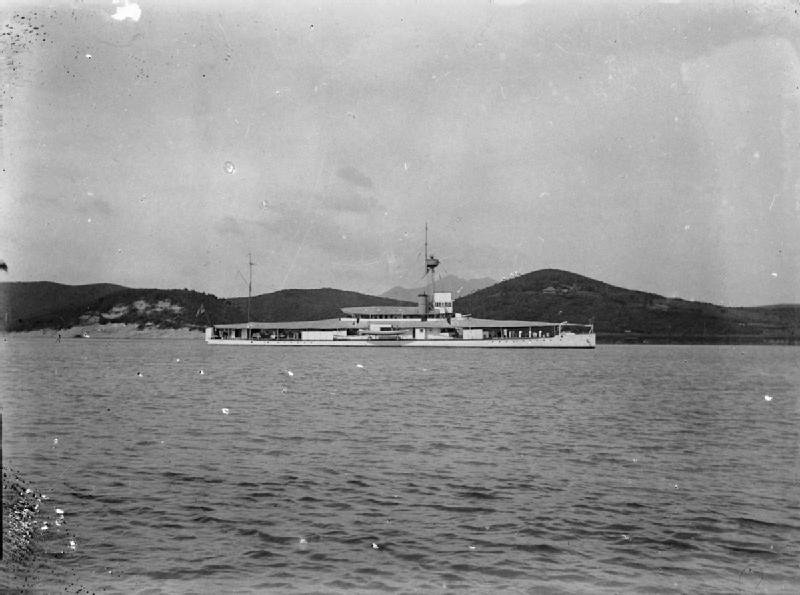
In the autumn of 1936 the crew of HMS Gnat, a small Royal Navy river gunboat patrolling the Yangtze, voted to get a mascot. The rival gunboats Bee, Cicada and Cricket all had one. The captain and the chief petty officer bought Judy from the kennel. The plan was to train her as a gun dog to retrieve the birds the officers shot. It failed completely: her time on the streets had left her with no interest in hunting, and the only time she would point properly was at food. The crew treated her as a pet instead, and she was entered in the Navy’s paperwork as Judy of Sussex, after her mother, Kelly of Sussex.1,2
Within weeks she fell overboard into the Yangtze. The ship was brought to a stop and a boat lowered to fish her out, and the rescue was recorded in the log as a man-overboard exercise. The crew signalled: Judy’s christening completed.1
An early warning
China was at war with Japan, and the Yangtze was a dangerous place. The sailors found that Judy could hear things they could not. In the dark, one morning, she barked a warning that river pirates were creeping up to board the Gnat, and the attack was beaten off. She could hear Japanese aircraft long before any man aboard, and began barking at them well before they flew low over the gunboat. The crew learned to watch her.1,2
She had her adventures. In November 1937 she went missing after a party aboard the American gunboat USS Panay; the Americans denied all knowledge, until a Chinese trader let slip that she was aboard. A party from the Gnat rowed over and stole the Panay’s bell, then offered to exchange it for the dog. Judy was back within the hour. Weeks later, on 12 December, Japanese aircraft sank the Panay. In 1938 Judy fell for a pointer called Paul from the French gunboat Francis Garnier, and after a mock wedding held by the two crews, produced thirteen puppies.1
Grasshopper
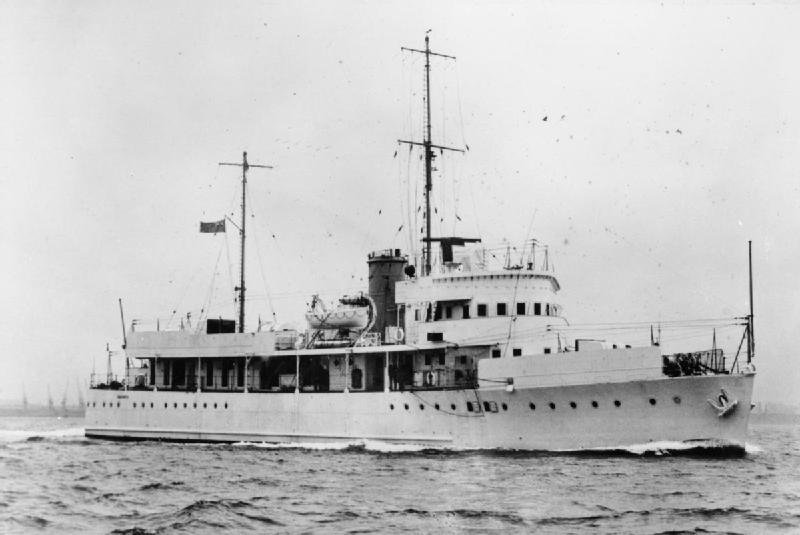
In June 1939 new gunboats arrived on the Yangtze, and part of the Gnat’s crew moved to HMS Grasshopper, taking Judy with them. When war broke out in Europe that September, Grasshopper was sent to Singapore. For more than two years little happened. Then in December 1941 Japan attacked, and by February 1942 the Japanese army was at the gates of Singapore. Grasshopper spent the last weeks bombarding the Japanese along the Malayan coast and ferrying troops. On the evening of 13 February, two days before Singapore surrendered, she sailed with her sister ship Dragonfly, crowded with evacuees, for Batavia in the Dutch East Indies.1,2
The next day, among the Lingga Islands south of Singapore, Judy began to bark. The Japanese bombers came. Dragonfly was hit by three bombs and sank quickly. Grasshopper was hit, caught fire near her ammunition, and was abandoned. The survivors were ferried ashore to a small island under machine-gun fire from the aircraft. Only on the beach did anyone realise that Judy was missing.1,2
Water
The island was uninhabited, with little food and no water anyone could find. A petty officer, George White, went back out to the burning ship to scavenge supplies. Below decks, in the darkness, he found Judy, trapped in her bed under a row of fallen lockers, and brought her back with the supplies on a makeshift raft. That night the ship’s magazine blew up.1
The next problem was water. Judy went down to the tide line and began to dig. After a few minutes water welled up in the hole: a spring of fresh water, below the high-tide mark. The survivors credited her with saving their lives.1,2
Across Sumatra
After five days a local boat took the survivors to the island of Singkep, and from there a Chinese junk carried them to Sumatra, where they hoped to find a ship to India or Ceylon. They sailed up the rivers until the junk could go no further, and then set out on foot across the island to reach the port of Padang on the west coast: about two hundred miles, through jungle, in five weeks. On the way a crocodile attacked Judy in a river and tore a six-inch gash in her shoulder; the men patched her up with their few first-aid supplies. She warned them of snakes and, one of them said later, of a tiger.1,2
They reached Padang too late. The last evacuation ship had gone. On 18 March 1942 the Japanese arrived, and the survivors of Grasshopper, and their dog, became prisoners of war.1
Gloegoer
The prisoners were moved north to the camp at Gloegoer, near Medan. They smuggled Judy on to the trucks under empty rice sacks. Conditions in the camp were brutal: hunger, disease, heavy labour and beatings. In August 1942 Judy met a prisoner who would change her life. Leading Aircraftman Frank Williams of the Royal Air Force watched her and saw how thin she was, and began to share his own daily handful of rice with her. From then on the two were inseparable.1,2
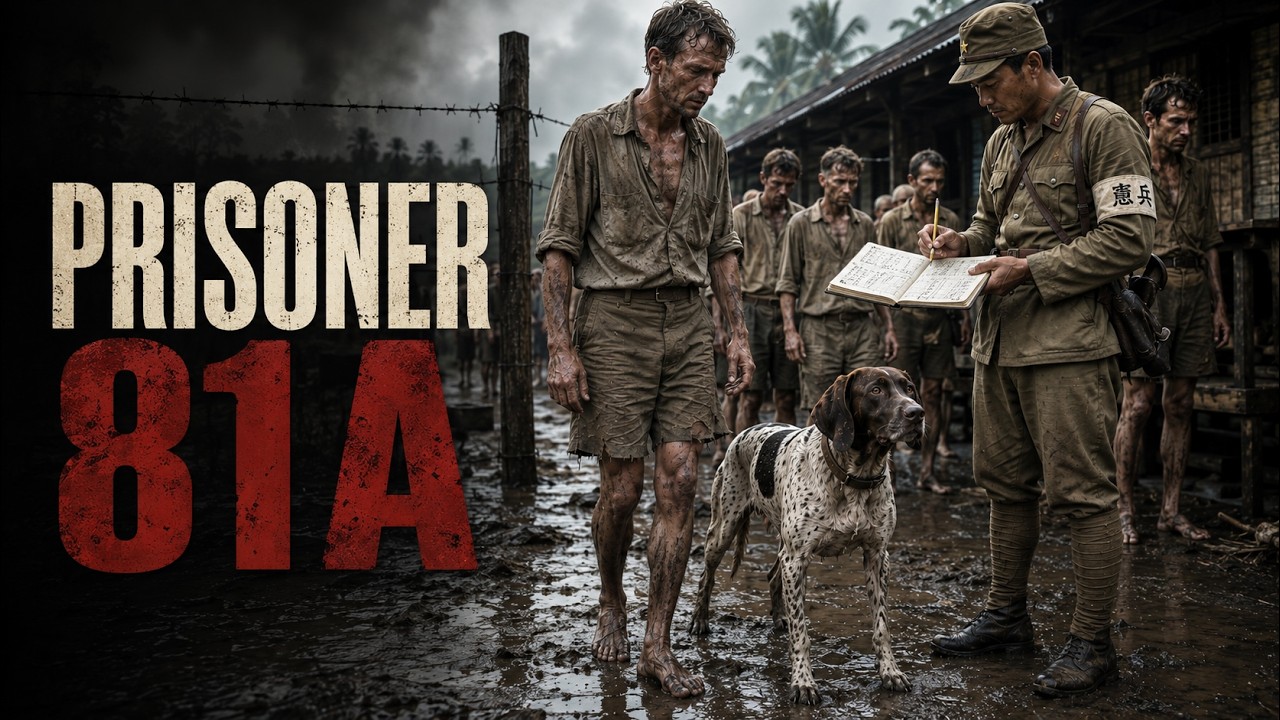
Judy became a danger to the guards and they to her. She growled and barked at them, and sometimes rushed at them when they were beating a prisoner, distracting them long enough to break it up. The guards threatened to shoot her. Williams came up with a plan. He waited until the camp commandant was drunk on sake and asked him to register Judy as an official prisoner of war, promising him one of her future puppies. The commandant signed. Judy became prisoner number 81A Gloegoer Medan: the only animal known to have been officially registered as a prisoner of war in the Second World War.1,2
She earned her keep. She warned the men when guards were coming, and of snakes and scorpions. She slipped out of the camp to hunt and brought back rats and snakes, which Williams could cook. When she had another litter, one puppy went to the commandant as promised, and another was smuggled into the women’s camp with whatever food the men could spare.1
A dog in a rice sack
In June 1944 the prisoners were ordered on to a ship, the Harugiku Maru, bound for Singapore. Dogs were not allowed. Williams had trained Judy to lie silent inside a rice sack, and he carried her aboard on his back. The prisoners were made to stand on deck in the burning sun for three hours before they sailed, and Judy did not make a sound. More than seven hundred prisoners were packed into the holds.1,2
On 26 June 1944 the British submarine Truculent, which had no way of knowing who was aboard, torpedoed the ship. As it went down, Williams pushed Judy out through a porthole, a drop of fifteen feet into the sea, to give her a chance. More than five hundred people died. Survivors later described a dog swimming among the wreckage, helping drowning men reach floating debris and pushing pieces of it towards them.1,2
Williams was picked up and sent to a new camp, believing Judy was dead. Then one day she walked into the camp; another of her old shipmates, Les Searle, had found her at the docks and smuggled her in. She jumped on Williams’s back and knocked him over.1
The railway
The prisoners were shipped back to Sumatra, told they were going to pick fruit. Instead they spent the last year of the war hacking a railway line through the Sumatran jungle. Judy grew thin and wild, hunting to survive. Williams wrote later that she was no longer a tame, obedient dog but a skinny animal kept alive by cunning and instinct. In 1945 a guard grazed her shoulder with a bullet. Near the end, the Japanese ordered her killed as part of an effort to control lice in the camp. Williams hid her in the jungle for three days, and she came back only when the guards had abandoned the camp.1,2
Home
At the end of the war Williams and his friends smuggled Judy aboard the troopship Antenor, bound for Liverpool. When the captain found out, three days from port, he was angry, but he was talked round. Judy spent six months in quarantine in Surrey, paid for by donations from readers of a dog-lovers’ magazine, and was released on 29 April 1946.1
In May 1946, at a ceremony in London, Judy was awarded the Dickin Medal of the PDSA, the People’s Dispensary for Sick Animals, often called the animals’ Victoria Cross. Her citation praised her magnificent courage and endurance in Japanese prison camps, which, it said, helped to maintain morale among her fellow prisoners, and her part in saving lives through her intelligence and watchfulness. Frank Williams received the White Cross of St Giles. That summer her bark was broadcast around the world by the BBC during the Victory celebrations, and she appeared before 82,000 people at Wembley Stadium.1,4
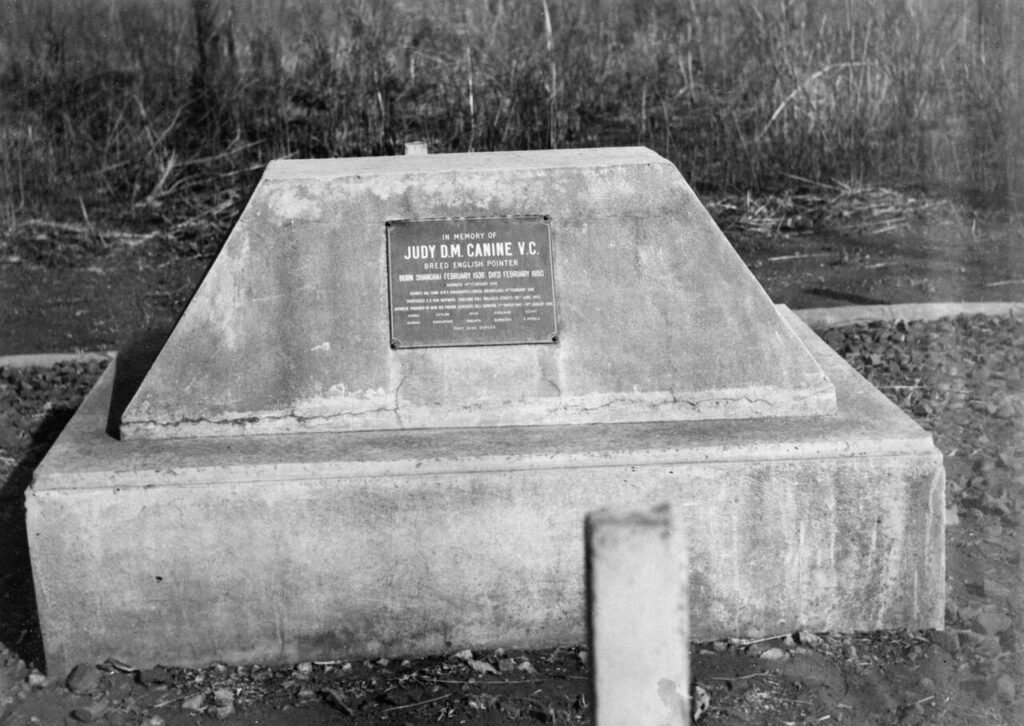
She and Williams spent much of the year after the war visiting the families of prisoners who had not come home. Later Williams took a job in East Africa with the government’s groundnut scheme, and Judy went with him. She died there, in Tanganyika, on 17 February 1950, of a tumour, aged fourteen. Williams buried her in her RAF jacket and built her a grave. Her Dickin Medal and collar are now in the Imperial War Museum in London.1,3
Timeline
- February 1936 Born in Shanghai.
- Autumn 1936 Joins the crew of HMS Gnat on the Yangtze.
- June 1939 Transfers to HMS Grasshopper.
- 13–14 February 1942 Grasshopper escapes Singapore and is bombed and sunk.
- March 1942 Trek across Sumatra; captured at Padang on 18 March.
- August 1942 Meets Frank Williams; registered as prisoner of war 81A.
- 26 June 1944 Survives the sinking of the Harugiku Maru.
- 1944–1945 Sumatra railway camps.
- 29 April 1946 Released from quarantine in England.
- May 1946 Awarded the Dickin Medal.
- 17 February 1950 Dies in Tanganyika.
- Damien Lewis, Judy: A Dog in a Million (Quercus, 2014).
- Robert Weintraub, No Better Friend: One Man, One Dog, and Their Incredible Story of Courage and Survival in WWII (Little, Brown, 2015).
- Imperial War Museums, photographs HU 42990, HU 43988, HU 43991 and the display of Judy’s Dickin Medal and collar.
- PDSA, Dickin Medal citation for Judy, May 1946.
- Many episodes, including the pirates, the crocodile and the tiger, come from the recollections of the sailors and prisoners who knew her, gathered after the war.
Found an error, or hold a related record? Tell the research desk.
Share what you know