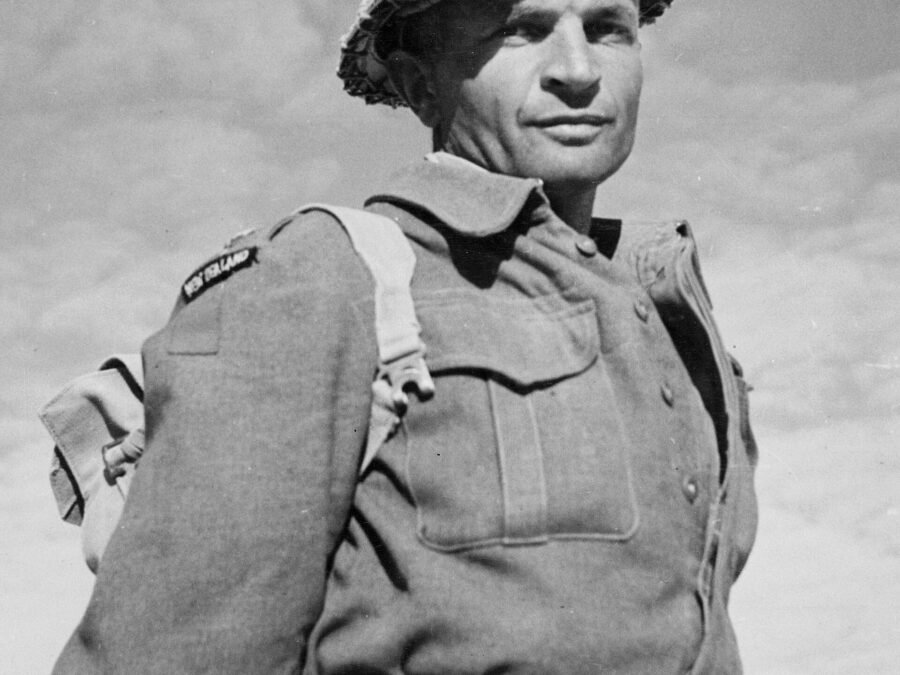
Robert Blair Mayne was born on 11 January 1915 at Newtownards, in County Down, into a well-off Presbyterian family of shopkeepers and landowners, one of seven children. He grew into a giant of a man, six feet three inches tall and around fifteen and a half stone, quiet, bookish and courteous when sober, and frightening when he was not. His family and friends called him Blair. To the Army, and to history, he became Paddy.1,2
A British Lion
He was a gifted all-round sportsman: rugby, cricket, golf and shooting at school, and heavyweight boxing at Queen’s University Belfast, where he became Irish Universities champion in 1936 while studying law. But rugby was his game. He won his first cap for Ireland as a lock forward in 1937, and in 1938 was chosen for the British and Irish Lions tour of South Africa, where he played in all three Tests. A South African newspaper called him outstanding in a pack that stood up tirelessly to a tremendous task. Off the field he was already a legend of a different kind, with tales of wrecked hotel rooms and a night he slipped away from a formal dinner to go hunting.1,2
In early 1939 he qualified as a solicitor. By then he had already joined the part-time army, first the Royal Ulster Rifles and then the Royal Artillery.1
Litani River
After Dunkirk, Winston Churchill called for raiding forces that could strike and vanish. Mayne volunteered for No. 11 (Scottish) Commando and went with it to the Middle East. He first saw action in June 1941 at the Litani River in Lebanon, against Vichy French troops, leading his section with a coolness that got him mentioned in despatches.1,3
The same month he got into serious trouble. On the evening of 21 June 1941, after heavy drinking in the officers’ mess in Cyprus, he assaulted his battalion’s second-in-command, Major Charles Napier. Mayne held a grudge against him; one account says Napier had shot Mayne’s dog. Mayne was sent away from the commando. Legend later said he was under arrest for hitting his commanding officer when David Stirling came to find him. The diary of the commanding officer, Geoffrey Keyes, shows that the victim was Napier, and does not mention an arrest.1,2
L Detachment
David Stirling was a young Scots Guards officer with an idea: small parties of parachutists could be dropped behind the German lines in the desert to destroy aircraft on the ground. In the summer of 1941 he persuaded the commanders in Cairo to let him try, under the deliberately confusing name L Detachment, Special Air Service Brigade. A mutual friend, Lieutenant Eoin McGonigal, told Stirling about Mayne, and Stirling recruited him.1,2
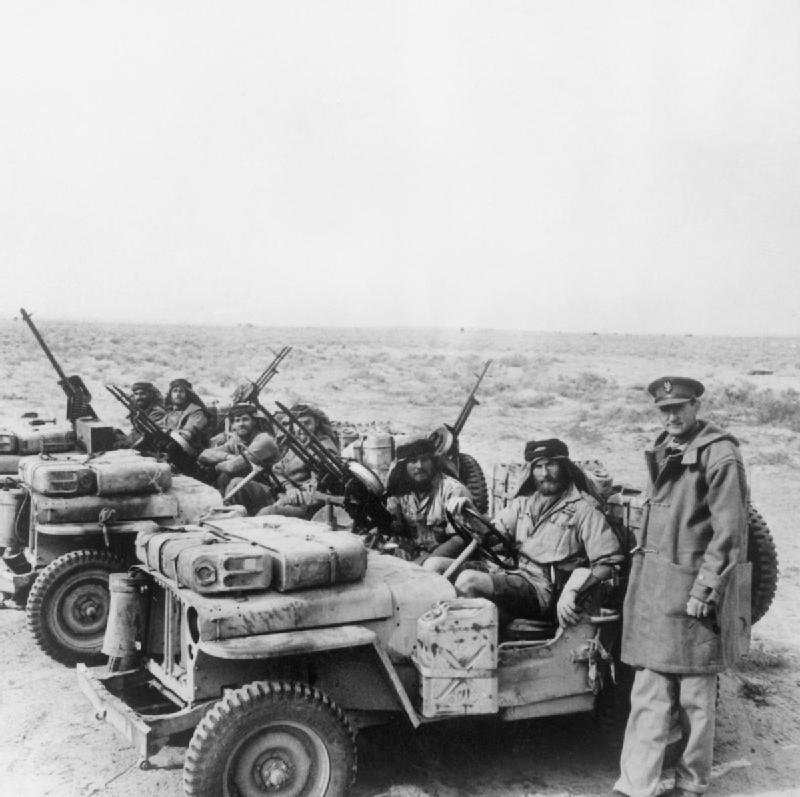
The first raid, in November 1941, was a disaster. The parachutists jumped into a gale; men and equipment were scattered across the desert, and only a fraction of them came back. The SAS survived because Stirling found a better way in: the Long Range Desert Group, the Army’s desert reconnaissance experts, would drive the raiders to their targets in trucks.2
Wadi Tamet
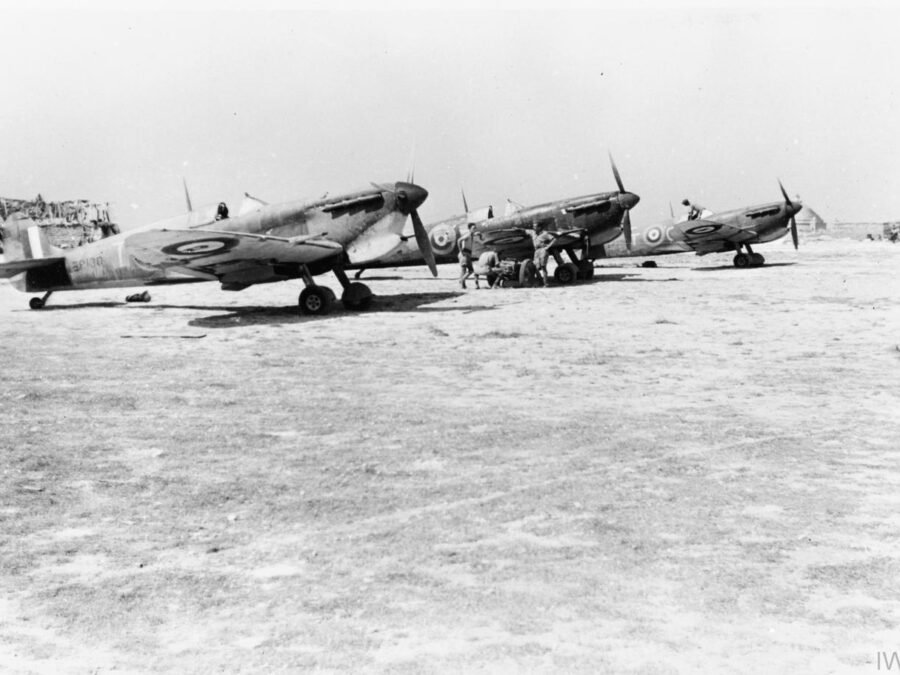
On the night of 14 December 1941 Mayne led a small party onto the Italian airfield at Wadi Tamet in Libya. They placed bombs with time fuses on fourteen aircraft, smashed the instrument panels of ten more, blew up the bomb and petrol dumps, and cut the telephone lines. When they found a hut full of enemy airmen, Mayne attacked it with sub-machine-gun and pistol fire. His report was as dry as a ledger. He went back on 27 December and did it again.1,4
Twenty-four aircraft were destroyed or put out of action. Tamet saved the SAS. It proved that Stirling’s idea worked, and it made Mayne the unit’s outstanding raider. He was awarded the Distinguished Service Order. There is a story, told by men who served with him, that when he ran out of explosives on one raid he climbed into a cockpit and tore the instrument panel out with his bare hands.2,3
A battle nostril
Stirling and Mayne were very different men. Stirling was the aristocratic visionary who talked generals into things; Mayne was the fighting soldier who made the raids succeed. Mayne could be sullen and resentful of Stirling’s charm and connections, but Stirling never doubted him. Mayne, he said later, had a marvellous battle nostril: he could sense precisely what he had to do in a situation. It was not sheer courage, Stirling insisted, but sheer technique.3
The men who served under Mayne saw both sides of him. He planned carefully, kept his head, and hated losing men. He read poetry and carried books into the desert. He also had a savage temper when drinking and a sense of humour that could tip into violence. When his father died in 1943 and he was refused leave to go home for the funeral, the story goes, he went on a drinking rampage through Cairo. Those who knew him best thought the war took more out of him than he ever showed.2,3
Jeeps in the dark
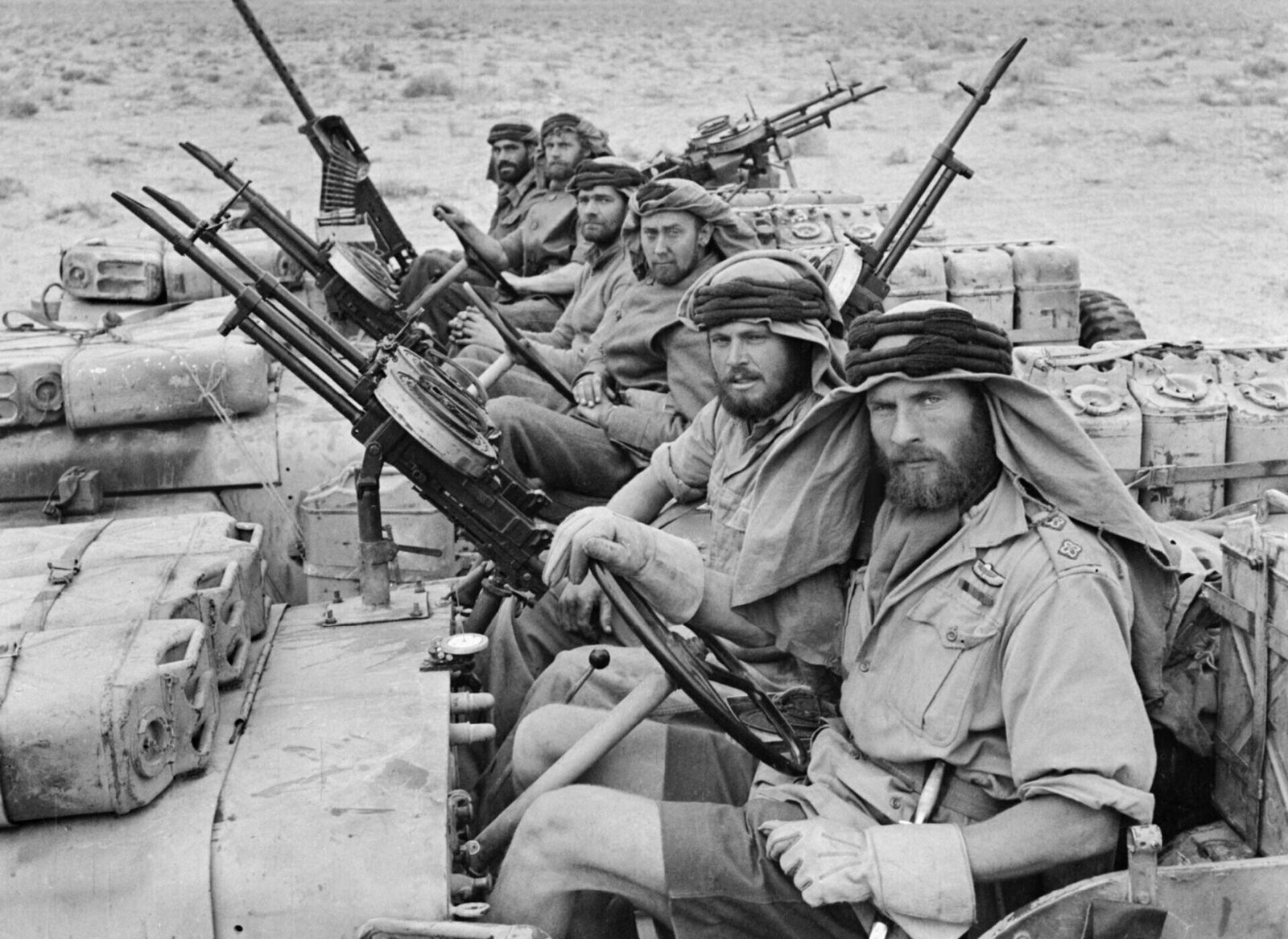
Through the first half of 1942 the SAS raided airfields along the North African coast. Then they got their own transport: American jeeps armed with Vickers K machine guns, fast enough to drive straight onto an airfield and shoot it up before anyone could react. On the night of 26 July 1942, eighteen jeeps under Stirling, with Mayne among the leaders, drove in two columns down the runway at Sidi Haneish, in Egypt, firing into the parked aircraft on both sides. Up to forty German aircraft were destroyed. Three jeeps and two men were lost.1,2
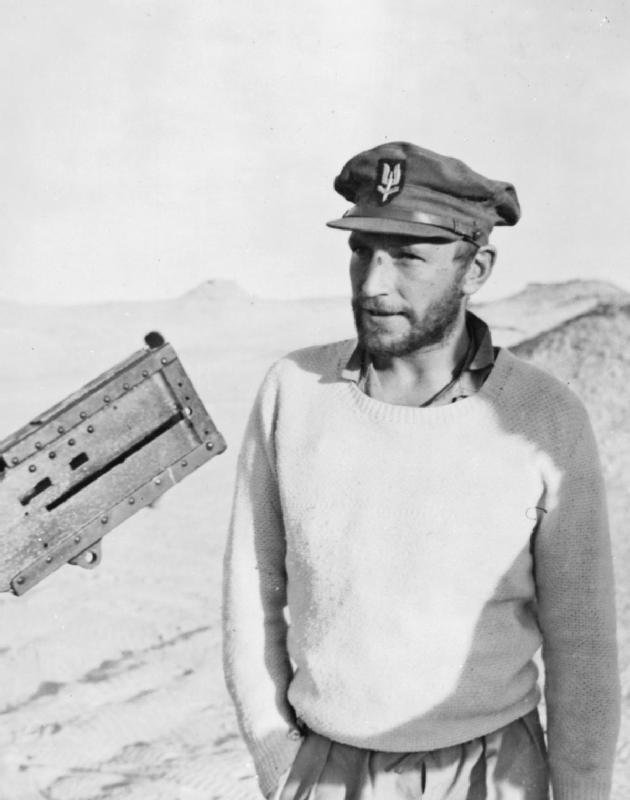
By the end of the desert war, the National Army Museum records, Mayne had personally accounted for more than a hundred enemy aircraft, more than any Allied fighter pilot shot down. The number cannot be checked precisely, but no one doubts that he was the most destructive of all the raiders.3,6
Commanding the SAS
In January 1943 Stirling was captured in Tunisia. The SAS was reorganised, and Mayne, now a major, was given command of the part that became the Special Raiding Squadron. On 10 July 1943, the first day of the invasion of Sicily, he led it ashore from landing craft below the cliffs of Capo Murro di Porco to capture an Italian coastal battery that threatened the landing beaches; by nightfall they had taken three more batteries and some 450 prisoners. Two days later they seized the port of Augusta in a daylight landing, with Mayne leading his men from the landing craft into machine-gun fire. He received a Bar to his DSO. The squadron fought on in Italy, at Bagnara and then at Termoli in October 1943, where it held the town against German counter-attacks and suffered heavy losses.1,3,4
In January 1944 he was promoted to lieutenant colonel and given command of the re-formed 1st SAS Regiment. After D-Day his squadrons were dropped deep inside France to work with the Maquis, ambushing German convoys, blowing up railways and calling down air strikes. On 8 August 1944 Mayne parachuted in himself, drove by jeep in daylight between SAS bases behind the lines, and crossed the front four times to lead reinforcements through. A second Bar to his DSO followed. France gave him the Légion d’honneur and the Croix de Guerre.1,4
The operations in France had names, recorded in his citation. Houndsworth was the SAS base in the wooded hills of the Morvan, west of Dijon, where Mayne landed. Gain was another base, south of Paris, that he drove to across German-held country in a single day. Wallace was a column of twenty jeeps landed behind the lines, which he led back and forth through the fighting as the Americans advanced. It was a war of ambushes on lonely roads at night, of trains derailed and German columns strafed, of weeks living in the forest with the Maquis. It was also a war in which captured SAS men were shot: Hitler had ordered in 1942 that commandos taken prisoner were to be killed, and dozens of Mayne’s men were murdered after capture in France.1,2,4
Oldenburg, April 1945
In April 1945 Mayne led two squadrons of armoured jeeps ahead of the 4th Canadian Armoured Division towards Oldenburg in north-west Germany. On 9 April one of his columns was ambushed in a village and pinned down, with wounded men lying in the open. Mayne drove up, took in the situation, and went forward himself: first on foot, then in a jeep with a single companion manning the guns, he drove through the village firing into the houses, silenced the German positions, and then went back for the wounded under fire.1,4
His commanders recommended him for the Victoria Cross. The recommendation was approved by Field Marshal Montgomery. The citation spoke of his brilliant military leadership and cool, calculating courage, and of a single act of bravery that broke the crust of the enemy’s defences in the whole sector. Months later the award was downgraded. Mayne received a third Bar to his DSO, his fourth DSO, making him one of the most decorated British soldiers of the war.1,4
“So strangely eluded him”
Downgrading was common. But many of Mayne’s contemporaries believed he had been treated unfairly, and that his reputation for drinking and brawling, and some officers’ dislike of the SAS, had counted against him. Major General Robert Laycock wrote to him that the authorities did not know their job; if they did, they would have given him a VC as well. King George VI is reported to have asked why the Victoria Cross had so strangely eluded him. In June 2005 more than a hundred Members of Parliament supported a motion calling for the award to be restored. The government declined to reopen the case, and the campaign continues.1,5
After the war
The SAS was disbanded in October 1945; it would be revived a few years later and become the model for special forces around the world. In 1945 Mayne joined the Falkland Islands Dependencies Survey as deputy leader of an expedition to the Antarctic, but a back injury from the war forced him home. He became secretary of the Law Society of Northern Ireland. He was often in pain, drank heavily, and rarely spoke about the war. In the early hours of 14 December 1955, driving home from an evening with friends, he crashed his car in Mill Street, Newtownards, and was killed. He was forty.1
Hundreds came to his funeral at the family plot in Movilla Abbey churchyard. A bronze statue of him stands in Conway Square, Newtownards. In 2003 British troops preparing for the invasion of Iraq named their camp in Kuwait after him. In 2022 the BBC series SAS: Rogue Heroes, based on Ben Macintyre’s history, introduced him to a new generation.2
Timeline
- 11 January 1915 Born in Newtownards, County Down.
- 1937 First cap for Ireland.
- 1938 Plays in all three Tests for the British Lions in South Africa.
- June 1941 In action with No. 11 Commando at the Litani River.
- Summer 1941 Recruited by David Stirling for L Detachment SAS.
- 14 December 1941 Leads the raid on Wadi Tamet airfield; awarded the DSO.
- 26 July 1942 Jeep raid on Sidi Haneish.
- January 1943 Takes command of the Special Raiding Squadron.
- 10–12 July 1943 Sicily: coastal batteries and Augusta; Bar to the DSO.
- January 1944 Commands 1st SAS Regiment.
- 8 August 1944 Parachutes into France.
- 9 April 1945 Action near Oldenburg; recommended for the Victoria Cross.
- 14 December 1955 Killed in a car crash in Newtownards.
- Hamish Ross, Paddy Mayne: Lt Col Robert ‘Blair’ Mayne, 1 SAS Regiment (Sutton, 2003).
- Ben Macintyre, SAS: Rogue Heroes (Viking, 2016).
- National Army Museum, “Paddy Mayne”, nam.ac.uk
- Citations for the Distinguished Service Order and Bars to Robert Blair Mayne, 1942–1945, and the Victoria Cross recommendation of April 1945, National Archives, Kew.
- House of Commons Early Day Motion on Lieutenant Colonel Mayne, June 2005.
- Figures for aircraft destroyed by Mayne personally vary. The National Army Museum gives “more than 100”; exact numbers from night raids cannot be checked, and some were shared with other raiders.
Found an error, or hold a related record? Tell the research desk.
Share what you know