Edward Henry O’Hare was born in St. Louis, Missouri, on 13 March 1914, the only son of Edward Joseph O’Hare, a lawyer, and his wife, Selma. Everyone called him Butch. When his parents divorced in 1927, he and his two sisters stayed with their mother in St. Louis; his father moved to Chicago.1
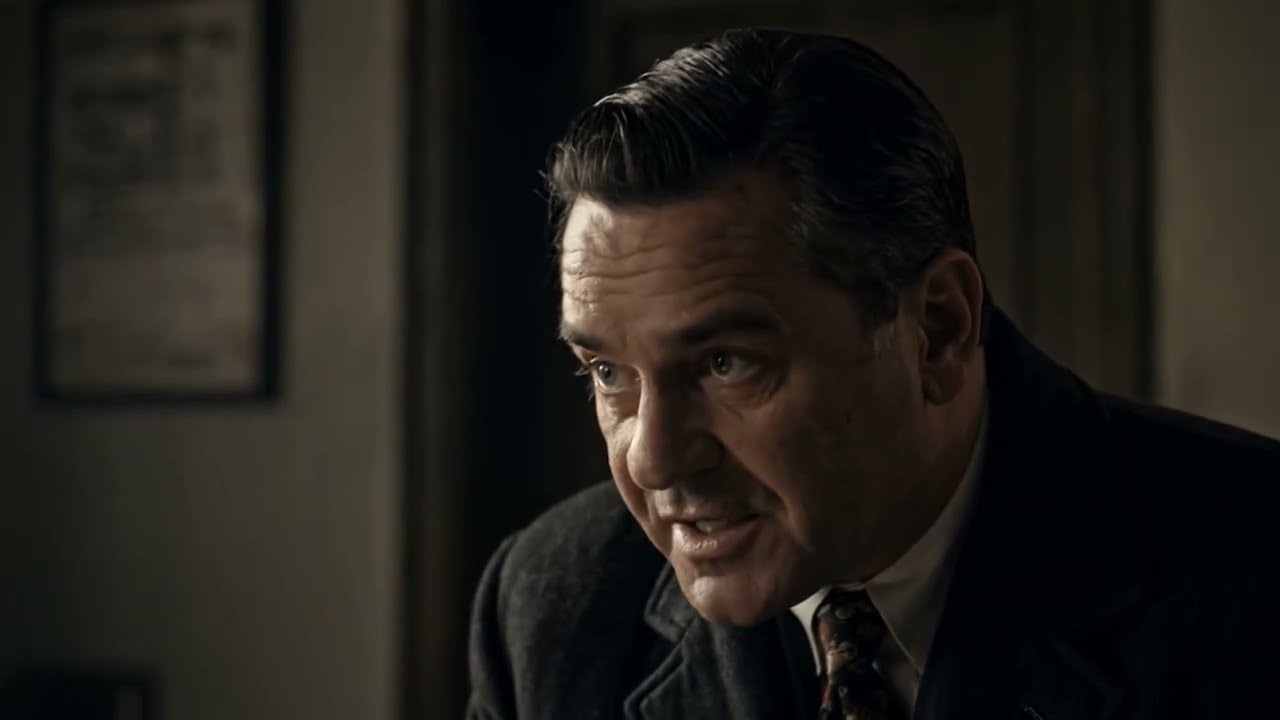
In Chicago Butch’s father went into business with the most notorious gangster in America. E. J. O’Hare ran dog-racing tracks and became a business associate of Al Capone. Then, secretly, he turned against him. During Capone’s trial for tax evasion in 1931, O’Hare passed information to the federal investigators that helped send Capone to prison. Some who knew him believed he did it partly to win his son a place at the Naval Academy and to give him a clean start in life.1
Annapolis and the wings
Butch graduated from the Western Military Academy in 1932 and entered the United States Naval Academy at Annapolis the following year. He was commissioned as an ensign on 3 June 1937 and served two years on the battleship New Mexico before starting flight training at Pensacola in 1939.1
In November 1939, while Butch was training, his father was shot dead in his car on a Chicago street. It was a week before Capone was released from prison. The killers were never caught; the murder was almost certainly the Capone mob’s revenge.1
Butch won his wings on 2 May 1940 and joined Fighting Squadron 3, VF-3, on the carrier Saratoga. There he came under the eye of the squadron’s executive officer, Lieutenant John Thach, one of the Navy’s best fighter tacticians, who would soon devise the “Thach weave”, a manoeuvre that let slower American fighters survive against the Japanese Zero. Thach saw that O’Hare was an exceptional pilot and a superb shot, and trained him hard.1
In the summer of 1941, visiting a friend’s wife in hospital in St. Louis, Butch met a nurse named Rita Wooster and proposed to her the same day. They married in Phoenix on 6 September 1941.1
Twenty February 1942
In January 1942 the Saratoga was torpedoed, and VF-3 moved to the carrier Lexington. In February the Lexington led a task force into enemy waters to raid the great Japanese base at Rabaul, on New Britain. On 20 February, still some 450 miles from Rabaul, the carrier was found by Japanese flying boats, and that afternoon two formations of nine twin-engined Mitsubishi G4M bombers, which the Americans called Bettys, came out to attack her.1,4
Most of the Lexington’s fighters went after the first formation and shot it to pieces. O’Hare and his wingman, Ensign Marion Dufilho, had been held back in case of a second attack. At 4.49 in the afternoon radar picked it up: another nine bombers, only twelve miles out, on the side of the task force where there were no other fighters. O’Hare and Dufilho raced to meet them and arrived above the formation at about five o’clock. Then Dufilho’s guns jammed.1,4
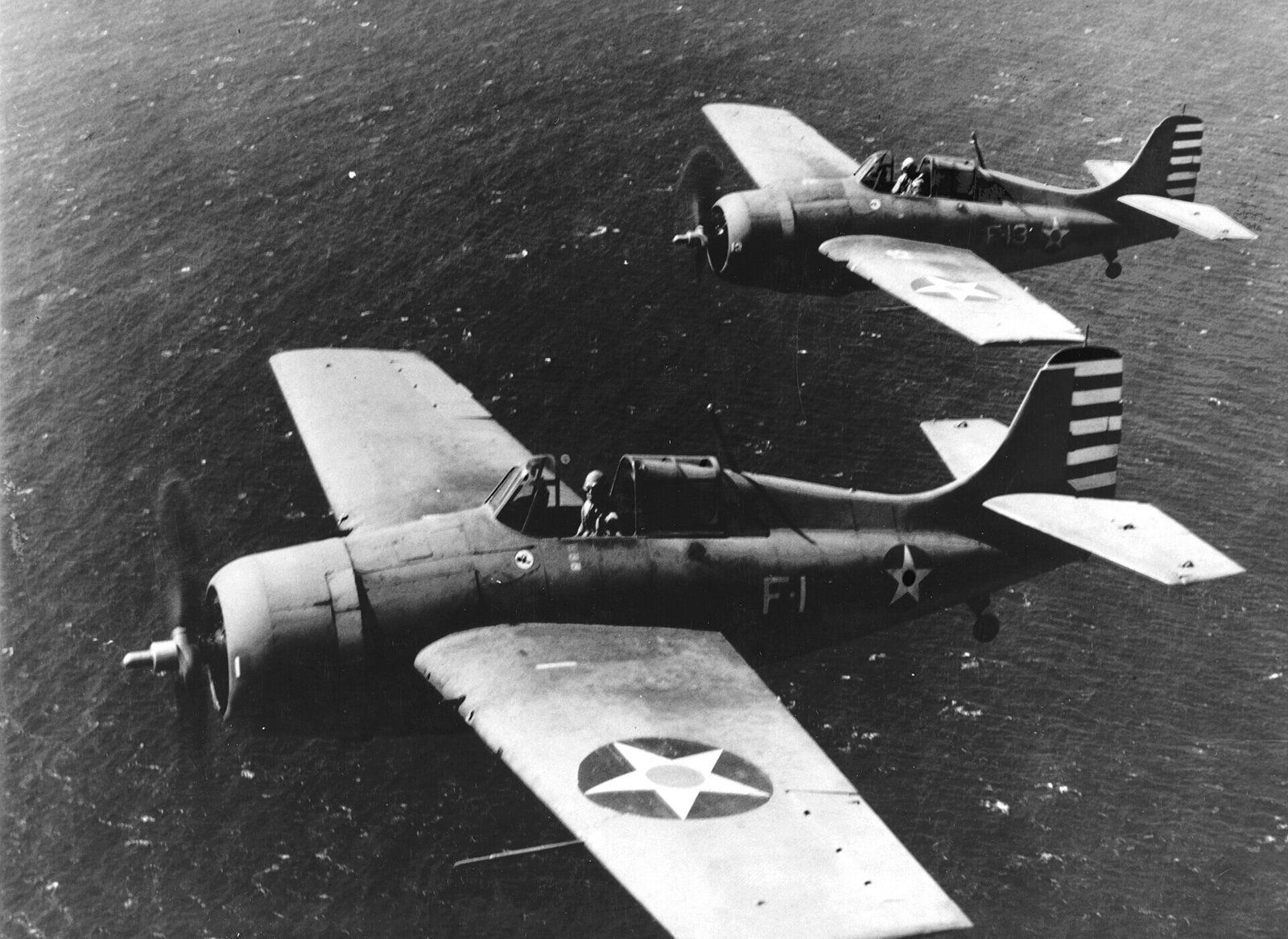
O’Hare was alone, in a Grumman F4F Wildcat carrying 450 rounds for each of its four machine guns: enough for about ten short bursts. The bombers flew in a tight formation of V’s, so that their tail gunners, with 20mm cannon, could cover one another.1
Four passes
He dived on the formation from above and to the right, set the right engine of the outermost bomber on fire and damaged another, knocking both out of formation. He swung round and attacked from the left, forcing one bomber to jettison its bombs and turn for home, and shooting down another. On his third pass he shot down the leader of the second section and then hit the formation leader’s aircraft so hard that its left engine tore out of its mounting and fell away; the other Japanese crews thought it had been hit by an anti-aircraft shell. He made a fourth pass and ran out of ammunition.1
The surviving bombers pressed on, but their formation had been broken, and every bomb they dropped missed the Lexington. The wrecked lead bomber, its commander’s pilot fighting for control, tried to crash into the carrier and went into the sea close by. It had all taken only a few minutes; the accounts written at the time say four.1,4
Coming in to land, O’Hare was fired on by a nervous machine-gunner on the Lexington. He taxied over to the gun position afterwards, by Thach’s account, and told the gunner calmly that if he didn’t stop shooting at him when he had his wheels down, he would have to report him to the gunnery officer. His Wildcat had been hit by a single bullet.1
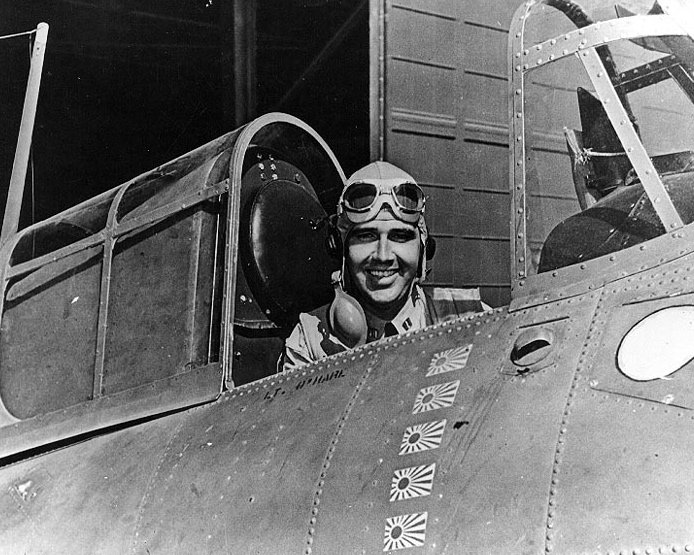
O’Hare believed he had shot down six bombers and damaged a seventh. The Lexington’s captain, Frederick Sherman, credited him with five, making him the Navy’s first fighter ace of the war. Post-war research in Japanese records shows that he destroyed three and damaged three more. Either way, Sherman and Admiral Wilson Brown believed that his attack may have saved their carrier from serious damage or even from being sunk.1,4,5
The first naval aviator
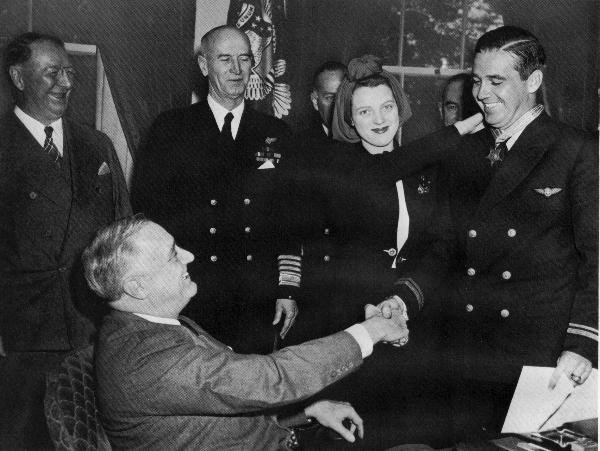
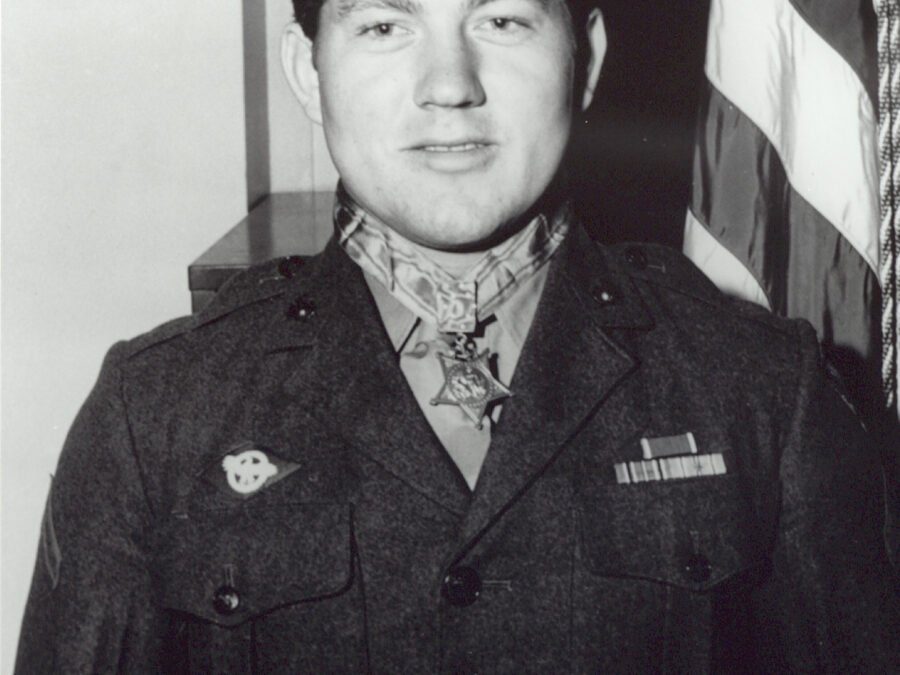
America in early 1942 was losing everywhere in the Pacific and badly needed a hero. Young, handsome and modest, O’Hare was perfect. He was promoted to lieutenant commander and, on 21 April 1942, became the first naval aviator of the war to receive the Medal of Honor. At the White House, with President Roosevelt looking on, Rita O’Hare placed the medal around his neck. A reporter described him as modest, inarticulate, humorous, terribly nice and more than a little embarrassed by the whole thing. Four days later 60,000 people lined the streets of St. Louis to welcome him home.1,2
The workers at the Grumman factory on Long Island, who built the Wildcat, passed the hat and sent him 230,000 cigarettes. He thanked them in a letter: you build them, we’ll fly them, and between us we can’t be beaten.1
Teaching
The Navy used its best pilots to train new ones. In June 1942 O’Hare took command of VF-3 and spent a year in Hawaii teaching young pilots how to fight the Japanese. They remembered his lessons for the rest of their lives: when a Zero you have surprised pulls into a loop, do not follow it; always look behind you, even when you are pulling the trigger, because there will be someone back there. They remembered him swimming far out to sea off Maui for hours, diving for fish and octopus. In March 1943 he met his daughter, Kathleen, for the first time.1
In the summer of 1943 his squadron went back to war in the new Grumman F6F Hellcat, which could finally outfight the Zero. O’Hare won the Distinguished Flying Cross in raids on Marcus Island and Wake Island. In the autumn he was made commander of Air Group Six on the carrier Enterprise, responsible for its fighters, dive bombers and torpedo bombers and about a hundred pilots. He still insisted that everyone call him Butch.1,3
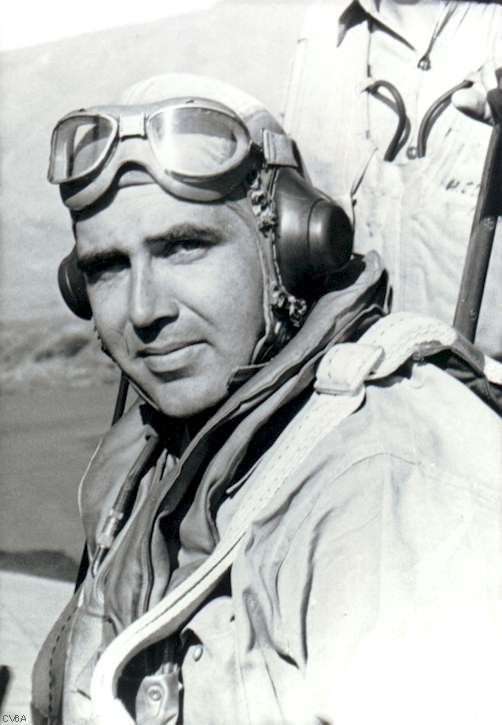
The night fighters
In November 1943 American forces invaded the Gilbert Islands, at Tarawa and Makin. By day American fighters now ruled the sky, so the Japanese began sending torpedo bombers against the carriers at night, when the fighters could not find them. O’Hare, the Enterprise’s captain and its air staff worked out a counter. A radar-equipped Avenger torpedo bomber would lead two Hellcats towards the incoming bombers, guided by the carrier’s radar, until the fighter pilots could see the blue exhaust flames of the Japanese engines and attack. It would be the first carrier night-fighter operation in the Navy’s history.1,3
On the evening of 26 November 1943 a large Japanese force was reported approaching. O’Hare was eating his dinner. He grabbed some of it in his fist and ran for the ready room. Just before six o’clock he was catapulted off the Enterprise in his Hellcat, with Ensign Andy Skon in a second Hellcat and Lieutenant Commander John Phillips in the Avenger.1,3
Into the dark
In the darkness the three aircraft had trouble finding each other and the enemy. Aware of the danger of being shot by his own side, O’Hare radioed Phillips to turn on his running lights, so he could be sure it was a Japanese plane he was drilling. As the team closed on the Japanese bombers, the Avenger’s turret gunner, Alvin Kernan, saw a Japanese bomber close behind O’Hare’s fighter and opened fire; the Japanese gunner fired back. O’Hare’s Hellcat slid out of formation, and his lights went out. Skon saw him veer off and slant down into the darkness. Phillips thought he saw something fall away, perhaps a parachute, and then a splash.1,3
Searches at dawn and in the days that followed found nothing. For years many accounts said O’Hare had been shot down by his own side, by the Avenger’s gunner. Ewing and Lundstrom, who interviewed the surviving members of the mission, concluded that he was almost certainly killed by a burst from the nose gunner of the Japanese bomber, and that Kernan had been wrongly blamed.1,3
O’Hare was declared dead a year later. On 26 November 1944 his widow received his posthumous Navy Cross and Purple Heart. Rear Admiral Arthur Radford, who commanded the carrier group, said that he had never seen one individual so universally liked.1
O’Hare International
In 1945 the Navy named a destroyer, USS O’Hare, after him. On 19 September 1949 Chicago renamed its Orchard Field airport O’Hare International Airport. It became for many years the busiest airport in the world. In Terminal 2 hangs a Wildcat painted in the markings of the aircraft he flew on 20 February 1942, White F-15. Millions of travellers pass it every year without knowing the story of the quiet man it honours, or of the father who was killed for helping to bring down Al Capone.1
Timeline
- 13 March 1914 Born in St. Louis, Missouri.
- 3 June 1937 Graduates from the Naval Academy.
- 8 November 1939 His father is murdered in Chicago.
- 2 May 1940 Wins his wings; joins VF-3.
- 6 September 1941 Marries Rita Wooster.
- 20 February 1942 Attacks nine bombers alone to defend USS Lexington.
- 21 April 1942 Receives the Medal of Honor at the White House.
- June 1942 Takes command of VF-3.
- August–October 1943 Marcus and Wake Island raids.
- Autumn 1943 Commands Air Group Six on USS Enterprise.
- 26 November 1943 Lost on the Navy’s first carrier night-fighter mission.
- 19 September 1949 Chicago’s airport renamed in his honour.
- Steve Ewing and John B. Lundstrom, Fateful Rendezvous: The Life of Butch O’Hare (Naval Institute Press, 1997).
- Medal of Honor citation for Lieutenant Edward H. O’Hare, for action on 20 February 1942.
- Edward P. Stafford, The Big E: The Story of the USS Enterprise (Random House, 1962).
- U.S. Navy action reports of USS Lexington, 20 February 1942, and USS Enterprise, 26 November 1943.
- O’Hare was credited at the time with five bombers destroyed. Later study of Japanese records by Lundstrom and others shows three destroyed outright and three damaged, one of which ditched later; his attack still broke up the raid.
Found an error, or hold a related record? Tell the research desk.
Share what you know