Of all the secret agents of the Second World War, none did more with less than Juan Pujol García. He had no training, no weapons and, for the first year of his career, no employer. He never visited most of the places he reported on. Almost every agent in his network was imaginary. Yet the lies he told helped to decide the outcome of the invasion of Normandy.1,2,3
A poultry farmer from Barcelona
Pujol was born in Barcelona on 14 February 1914, the third of four children of a Catalan who owned a cotton factory, and his Andalusian wife. His mother was devoutly Catholic; his father was secular and liberal. Juan was sent to a strict boarding school run by Marist brothers, left another school after an argument with a teacher, worked in a hardware shop, managed a cinema, and qualified as a poultry farmer at the Royal Poultry School in Arenys de Mar.1
Nothing in any of it suggested a spy. He did his compulsory military service in a cavalry regiment and hated it; he could not stand horses and said he lacked the essential qualities of loyalty, generosity and honour.1
Two sides, no bullets
When the Spanish Civil War broke out in 1936, he was managing a poultry farm north of Barcelona. The Republican authorities arrested his mother and sister as counter-revolutionaries; a relative in a trade union got them out. Called up by the Republic, Pujol hid in his girlfriend’s house until he was caught in a police raid, jailed, and freed by an underground group that gave him false papers. Later he rejoined the Republican army under his false identity, volunteered to lay telegraph cable near the front line, and deserted to the Nationalists during the Battle of the Ebro in 1938. The Nationalists treated him little better: his colonel struck him and had him locked up for expressing sympathy for the monarchy.1
He came out of the war with a hatred of both communism and fascism, and a certain pride that he had served both sides without firing a single bullet for either. He married Araceli González in Madrid, and they had a son.1
“For the good of humanity”
In 1940 Britain stood alone against Hitler. Pujol decided he must do something, as he put it, for the good of humanity, and that the best thing he could do was to spy for Britain. Beginning in January 1941 he approached the British embassy in Madrid, three times in all, some of them through his wife. The British were not interested.1,4
So Pujol decided to make himself valuable. If he could get himself recruited by the Germans, the British would have to take him seriously. He presented himself to the Abwehr, German military intelligence, in Madrid as a fanatically pro-Nazi Spanish official who could travel to London. He even talked a printer into making him a fake Spanish diplomatic passport. The German officer he met, Friedrich Knappe-Ratey, codenamed Federico, was persuaded. The Abwehr gave Pujol a crash course in secret writing, a bottle of invisible ink, a codebook and £600 for expenses, and told him to go to Britain and recruit agents.1,3
London, from Lisbon
Pujol did not go to Britain. He went to Lisbon, the neutral capital full of spies, and invented his reports. His sources were a tourist guide to Britain, reference books and magazines from the public library, railway timetables and the newsreels at the local cinema. He claimed travel expenses from the fares in a British railway guide. The British currency of pounds, shillings and pence baffled him, so he listed his expenses item by item and promised to send the total later.1,3
He made mistakes that should have given him away. He reported that a contact in Glasgow would do anything for a litre of wine, not knowing that Scots were not great wine drinkers or that Britain did not use litres. But the Germans believed him. He began inventing sub-agents: a Swiss businessman in Bradford, a Portuguese commercial traveller, a Venezuelan student. When a report turned out to be wrong, he could blame the agent.1,3
Some of his inventions were so convincing that the Germans acted on them. British codebreakers reading German signals noticed an agent in Britain whose reports made no sense, and MI5 launched a full-scale hunt for him. Then the German navy wasted time and effort searching for a convoy that did not exist, on the strength of one of his reports. By early 1942 the British had worked out who he was, and after he approached an American naval officer in Lisbon, they brought him to London. He arrived on 24 April 1942.1,2
The best actor in the world
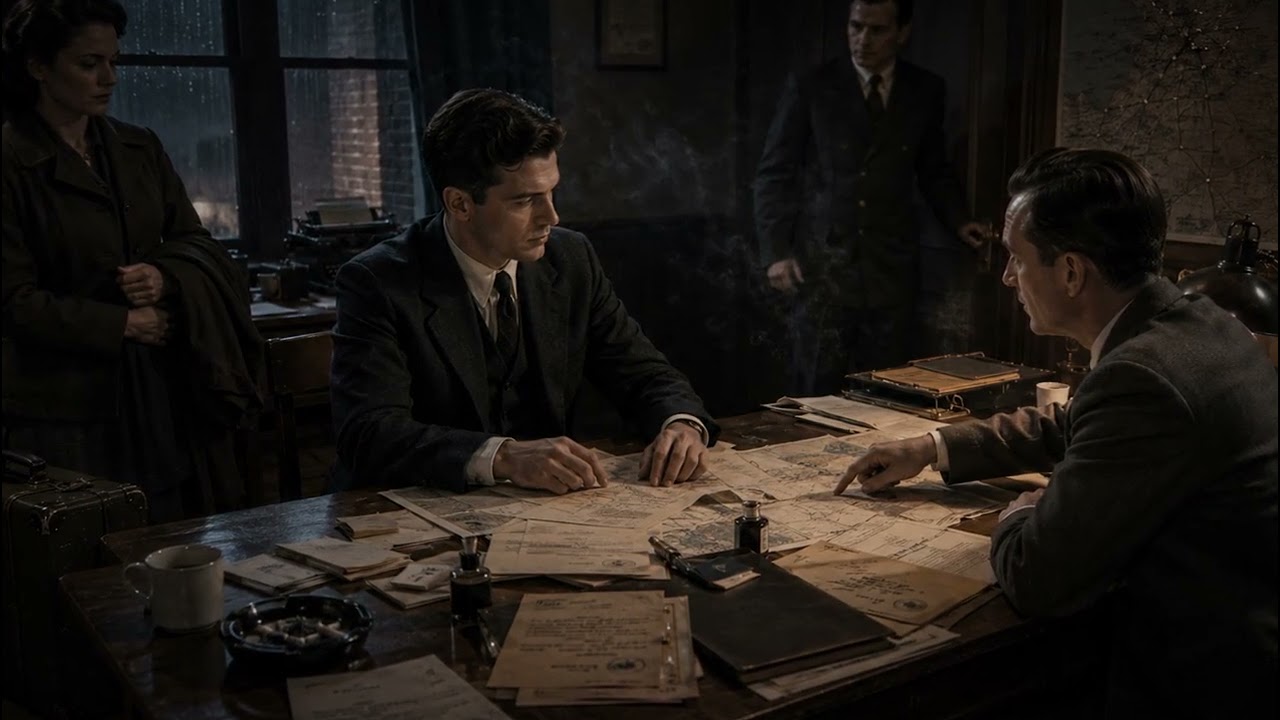
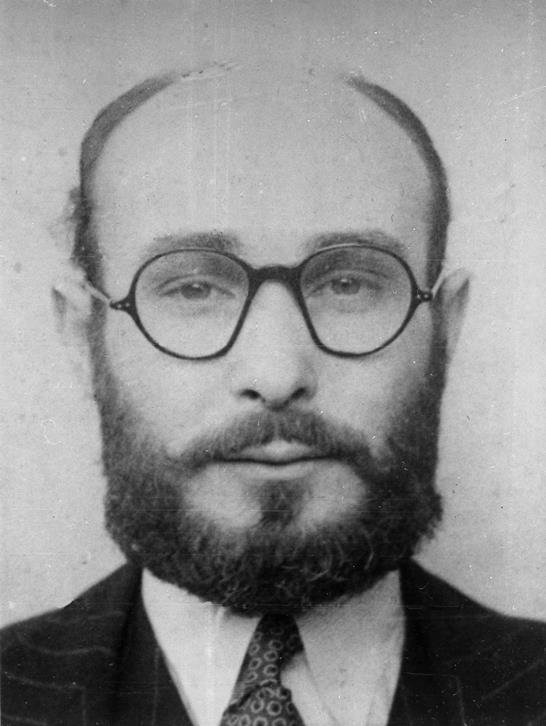
In London Pujol became part of the Double Cross system, run by MI5 and a committee known as the XX, or Twenty, Committee, which controlled almost every German agent in Britain and used them to feed false information to Berlin. His first case officer, Cyril Mills, said Pujol was the best actor in the world, and suggested a new codename: Garbo, after the film star Greta Garbo. His handler for the rest of the war was a Spanish-speaking MI5 officer and art dealer named Tomás Harris.2,3
Together Pujol and Harris built the network into an enterprise. They wrote 315 letters in secret ink to a Lisbon address supplied by the Germans, averaging about 2,000 words each, and from August 1943 sent messages by radio. The network grew to twenty-seven agents, every one of them fictitious, each with a personality, a history and a writing style. There was a Gibraltarian waiter, a disaffected Welsh nationalist, a group of Aryan world-order fanatics, an official in the Ministry of Information. The Germans paid for all of them: some $340,000 over the war.2,3
The art was to mix fiction with truth. Garbo’s messages contained invented material, genuine information of no military value, and real secrets delivered deliberately too late. Before the Allied landings in North Africa in November 1942, his agent on the Clyde reported troopships leaving port painted in Mediterranean camouflage. The letter was postmarked before the landings, but the British held it back so that it arrived too late to be useful. The Germans wrote back that they were sorry it had come too late, but his reports were magnificent.2
When his agents failed to spot something the Germans would learn about anyway, Garbo had to explain. His agent in Liverpool, he reported, had fallen ill just before a major fleet sailing from the port. Later the agent “died”, and MI5 placed an obituary in the local paper to prove it. The Germans paid a pension to his widow.2,3
There was another benefit. Garbo’s radio messages were received in Madrid, decoded, and re-sent to Berlin enciphered on the Enigma machine. Bletchley Park, which read German Enigma traffic, therefore had both the original texts, written by MI5, and their enciphered versions: a gift to the codebreakers.3
Fortitude
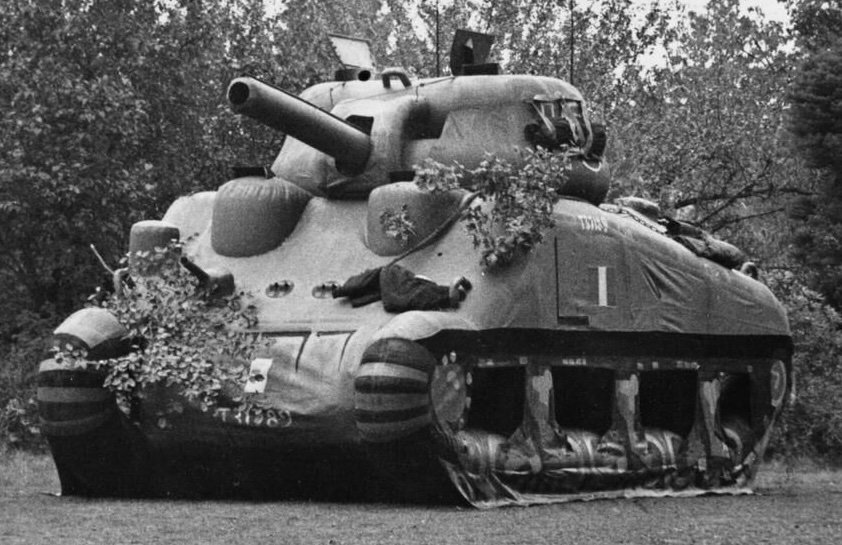
By 1944 the great question in the German high command was where and when the Allies would invade France. The Allies’ answer was a deception called Operation Fortitude. Its southern part was designed to persuade the Germans that the main invasion would come across the narrowest part of the Channel, at the Pas de Calais, and that any landing elsewhere would be a diversion. To support the story the Allies created a phantom army, the First United States Army Group, supposedly commanded by General George Patton and stationed in south-east England, complete with dummy tanks, fake landing craft and false radio traffic.2,3
Garbo was the chief means of telling the Germans about it. Between January 1944 and D-Day he and Harris sent more than five hundred radio messages, sometimes more than twenty in a day, filled with sightings of troops, insignia and camps that confirmed the phantom army’s existence.2
To make him even more credible, MI5 decided that Garbo should warn the Germans that the invasion was coming, too late for the warning to be of any use. On the night of 5–6 June 1944 his radio operator called Madrid at three in the morning with the news that the Allied landing craft had sailed. Nobody answered until eight. By then the landings were under way, and Garbo was able to send his warning, now useless, together with more genuine detail. He complained furiously that his message had been ignored. Were it not for his ideals, he told them, he would abandon the work.1,2,3
The message of 9 June
The most important message came three days after D-Day. On 9 June Garbo reported that he had conferred with his leading agents. The forces in Britain, he said, amounted to some seventy-five divisions, when in reality there were about fifty. The units of Patton’s army group had not yet been used. The landings in Normandy were a diversion, meant to draw the German reserves away from the real target: the Pas de Calais.2,3
The message went up the German chain of command to Hitler himself. German armoured reserves that were being ordered to Normandy were halted and held back. For weeks afterwards the German Fifteenth Army, with nineteen infantry divisions and two armoured divisions, stayed in the Pas de Calais waiting for an invasion that never came. There were more German troops there at the end of June than on D-Day. Two days after the message, Berlin told Madrid that all reports from Garbo’s network in the last week had been confirmed without exception and were especially valuable. After the war, researchers found sixty-two of his reports quoted in German high command intelligence summaries during Fortitude.2,3
The Iron Cross by radio
On 29 July 1944 the Germans awarded Garbo, whom they knew as Alaric, the Iron Cross Second Class, an honour normally given only to fighting men, which needed Hitler’s personal approval. It was announced to him by radio. On 25 November 1944 King George VI made him a Member of the Order of the British Empire, quietly. The Germans never discovered that they had been deceived.2,3
When the V-1 flying bombs began falling on London in June 1944, the Germans asked Garbo to report where they landed. He could not give false information without being caught out, and he would not give true information that would help them aim. MI5 had him “arrested” for a few days instead, and he came back with a letter of apology from the Home Secretary for his wrongful detention, which he forwarded to his German masters.2
Death by malaria
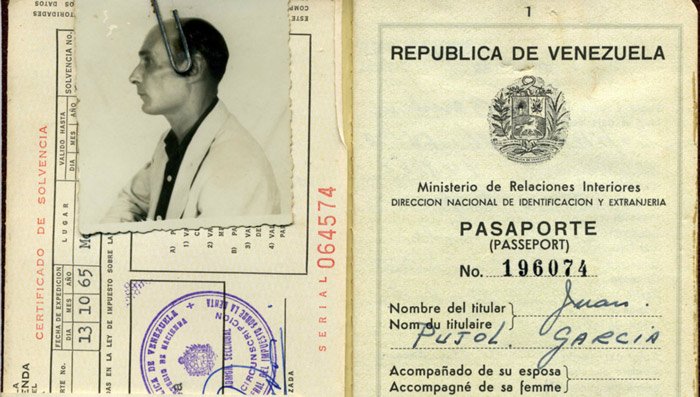
After the war Pujol was afraid of revenge from surviving Nazis. With MI5’s help he went to Angola, then a Portuguese colony, and in 1949 it was put about that he had died there of malaria. In fact he had moved to Venezuela, where he ran a bookshop and a gift shop in the oil town of Lagunillas, married again and had more children. For thirty-five years almost no one knew who he had been.1
In the 1970s the British writer Rupert Allason, writing as Nigel West, began searching for Garbo. No one he asked knew the man’s real name, until in 1984 a retired MI5 officer supplied it. Allason had an assistant ring every J. García in the Barcelona telephone directory, and eventually found Pujol’s nephew. The two men met in New Orleans on 20 May 1984, and together wrote Pujol’s memoir, Operation Garbo.1
That year Pujol went back to London, where Prince Philip received him at Buckingham Palace and his old colleagues from MI5 welcomed him at the Special Forces Club. On 6 June 1984, the fortieth anniversary of D-Day, he went to Normandy and walked the beaches, to pay his respects to the men who had died there. He died in Caracas on 10 October 1988 and is buried at Choroní, on the Caribbean coast of Venezuela.1
Timeline
- 14 February 1914 Born in Barcelona.
- 1936–1938 Spanish Civil War; deserts from the Republicans to the Nationalists at the Ebro.
- January 1941 Offers his services to the British in Madrid, and is turned away.
- 1941 Recruited by the Abwehr; sends invented reports from Lisbon.
- 24 April 1942 Brought to Britain; codenamed Garbo.
- November 1942 Delivers a genuine but deliberately late warning of the North Africa landings.
- August 1943 Begins sending by radio.
- 6 June 1944 D-Day; his warning arrives too late, as planned.
- 9 June 1944 Tells Berlin that Normandy is a diversion.
- 29 July 1944 Awarded the Iron Cross.
- 25 November 1944 Appointed MBE.
- 1949 Fakes his death in Angola; settles in Venezuela.
- 20 May 1984 Found by Nigel West.
- 10 October 1988 Dies in Caracas.
- Juan Pujol with Nigel West, Operation Garbo: The Personal Story of the Most Successful Double Agent of World War II (Weidenfeld & Nicolson, 1985).
- Tomás Harris, Garbo: The Spy Who Saved D-Day (Public Record Office, 2000), the official MI5 history of the case written in 1945.
- Ben Macintyre, Double Cross: The True Story of the D-Day Spies (Bloomsbury, 2012).
- The National Archives, Kew, MI5 files on Juan Pujol García (KV 2 series).
- Some details of Pujol’s early approaches to the British, including the part played by his wife, differ between his memoir and the official files.
Found an error, or hold a related record? Tell the research desk.
Share what you know