
Douglas Albert Munro was born in Vancouver, British Columbia, on 11 October 1919, to an American father, an electrician, and an English-born mother. When he was two the family moved to the United States and settled in South Cle Elum, a small railway and mining town in the Cascade mountains of Washington State.2
He was a musical boy who played drums, trumpet and harmonica, and became drillmaster of the local American Legion drum and bugle corps. He was a Boy Scout and wrestled for Cle Elum High School. After graduating in 1937 he went to the Central Washington College of Education nearby, where he was a cheerleader.2
A service that saves lives
In 1939, as war spread in Europe, Munro left college to enlist. He told his sister he had chosen the Coast Guard because its main job was saving lives. He was slightly built, and spent the week before his medical examination eating as much as he could to make the minimum weight.2
At the recruiting station in Seattle he met another recruit, Raymond Evans. The two became inseparable for the rest of Munro’s life, so close that their shipmates called them the Gold Dust Twins, after the twins on a popular washing-powder box. They trained together and served together on the cutter Spencer, on patrol in the North Atlantic.2
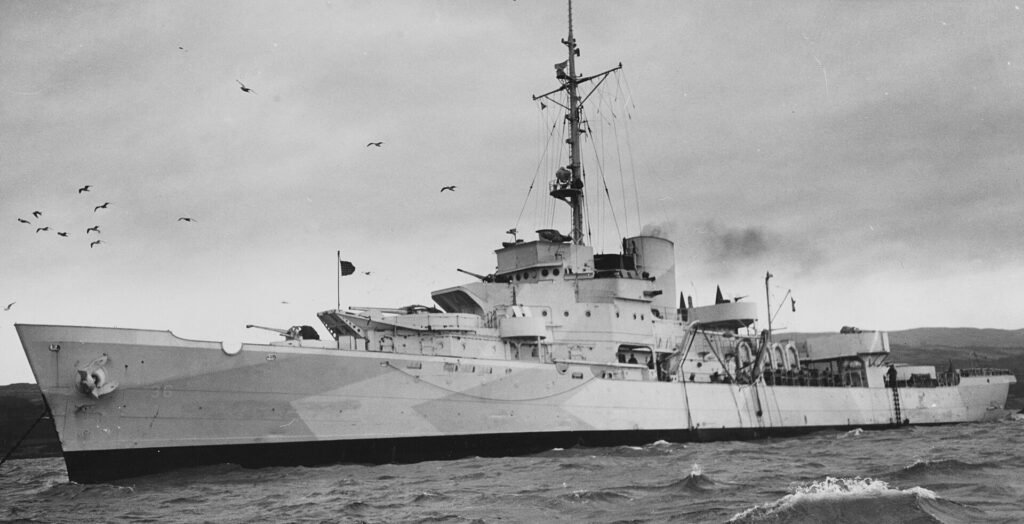
In 1941, as war with Japan grew closer, the Coast Guard was transferred from the Treasury to the Navy. Munro and Evans volunteered together for the transport USS Hunter Liggett, manned by the Coast Guard, and trained in handling the small landing craft that would carry troops ashore.2
Guadalcanal
On 7 August 1942 American Marines landed on Guadalcanal and nearby Tulagi in the Solomon Islands, the first American offensive of the Pacific war. Munro, trained as both a coxswain and a signalman, took troops ashore in the third wave at Tulagi and stayed with the Marines to handle communications between the ships and the shore.2,3
Afterwards he and Evans volunteered for Naval Operating Base Cactus at Lunga Point on Guadalcanal, the small-boat base run by a Coast Guard officer, Commander Dwight Dexter, that kept the Marines supplied and ferried men along the coast. The two friends lived in a hut they had built out of packing cases and scrap. The fighting for the island went on day and night, and the boat crews worked under Japanese air raids, naval bombardments and fire from the shore.2,3
On 20 September 1942 Munro volunteered to lead a boat to search for the crew of a Navy aircraft that had come down off Savo Island. His boat came under heavy fire from Japanese positions on shore, and he brought it back with only minor injuries to his crew.2
The Matanikau
At the end of September the Marines tried to push the Japanese back from the Matanikau River, west of the vital airfield. On 27 September 1942 Lieutenant Colonel Lewis “Chesty” Puller sent three companies of his 1st Battalion, 7th Marines, by sea to land behind the Japanese near Point Cruz. Munro was put in charge of the landing craft that took them there, two tank landing craft and eight Higgins boats. After the destroyer Monssen shelled the beach, the Marines went ashore and moved inland, and Munro brought the boats back to Lunga Point, carrying wounded men.2,3
The Marines ran into a much larger Japanese force than expected. Within hours they were surrounded on a ridge, cut off from the beach, and in danger of being wiped out. They had no radio that worked; they spelled out HELP in white T-shirts on the ridge, and a passing aircraft saw it. Puller went out on the Monssen himself, and the destroyer’s guns blasted a corridor through the Japanese to the shore.3
“Hell, yes!”
At Lunga Point, Commander Dexter asked Munro whether he would lead the boats back to bring the Marines out. Munro answered: “Hell, yes!” He led them back to Point Cruz, with Evans manning a machine gun in his boat.2
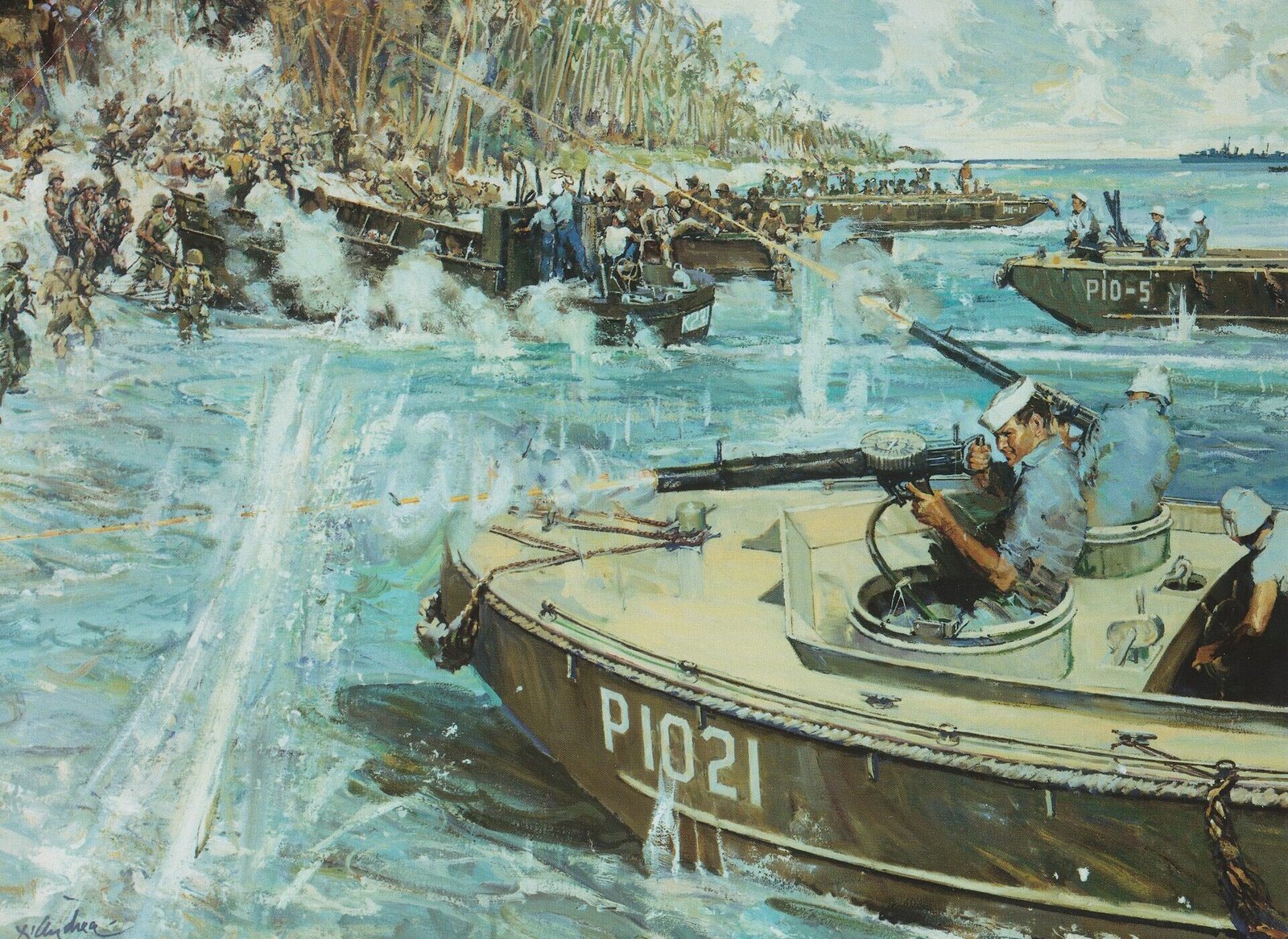
As the landing craft approached the beach the Japanese opened fire from the ridge the Marines had abandoned. Munro signalled the other boats in to pick up the Marines, who were fighting their way down to the water, carrying their wounded. Then he took his own boat in close to the shore and placed it between the beach and the Japanese guns, drawing their fire onto himself so that the heavily loaded boats behind him could get away. He and Evans fired their machine guns at the Japanese positions to keep their heads down.1,2
About five hundred Marines were brought off the beach. When one of the tank landing craft ran aground on a sandbar, Munro directed another to pull it free, and kept his own boat in position to shield it. As the last boats cleared the beach, a Japanese bullet struck him at the base of the skull.1,2
One question
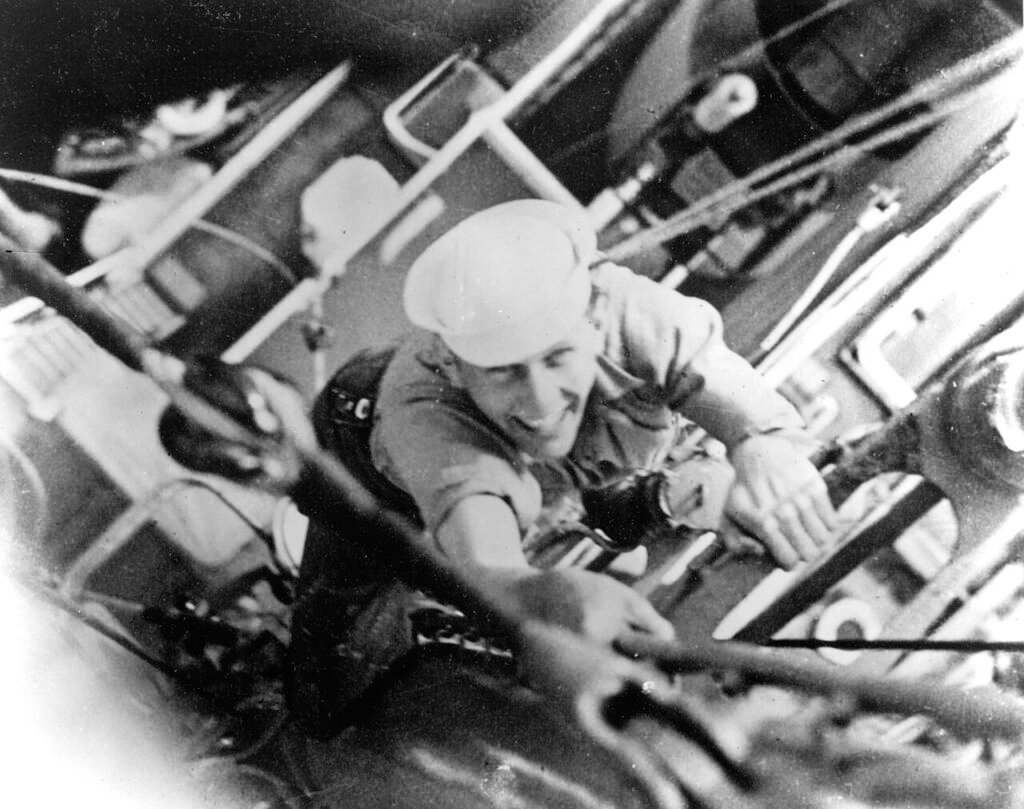
Evans held him as their boat pulled away. Out of range of the Japanese guns, Munro regained consciousness for a moment. He asked one question: “Did they get off?” Evans nodded. Munro smiled, Evans remembered later, with the smile he knew and liked so well, and then he was gone. He was twenty-two.2,5
His crew, two of them wounded, carried on until the last boat had loaded and cleared the beach. Munro was buried on Guadalcanal the next day, under a wooden cross made by Evans.1,2
The only one
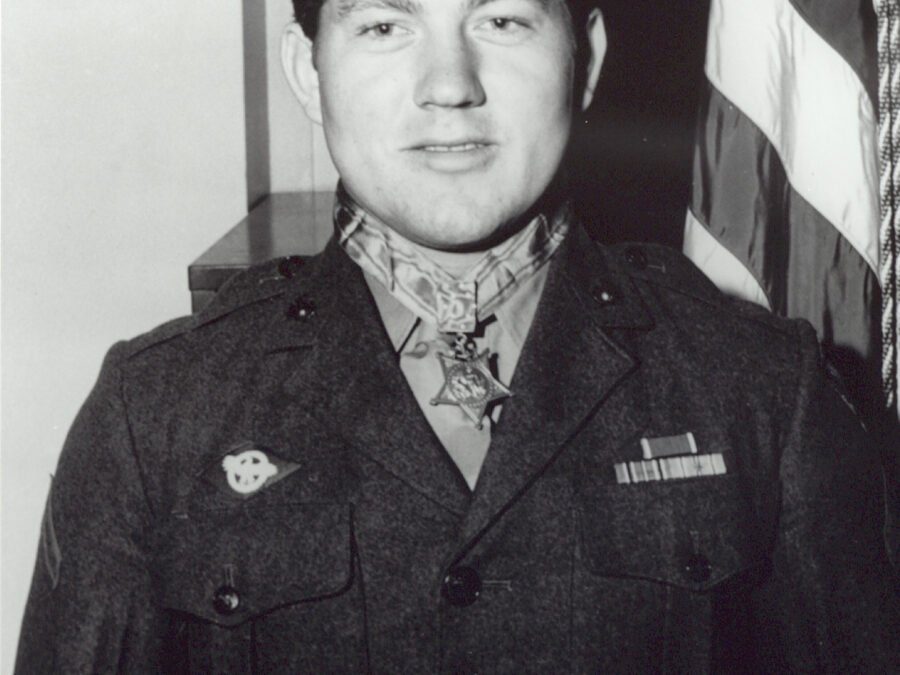
Chesty Puller, whose Marines Munro had saved, recommended him for the Medal of Honor. Admiral William Halsey endorsed it, and President Roosevelt approved it. On 24 May 1943 Roosevelt presented the medal to Munro’s parents at the White House. The citation says that he and his comrades undoubtedly saved the lives of many who would otherwise have perished.1,2
Douglas Munro is the only member of the United States Coast Guard ever to receive the Medal of Honor.1,2
Home to Cle Elum
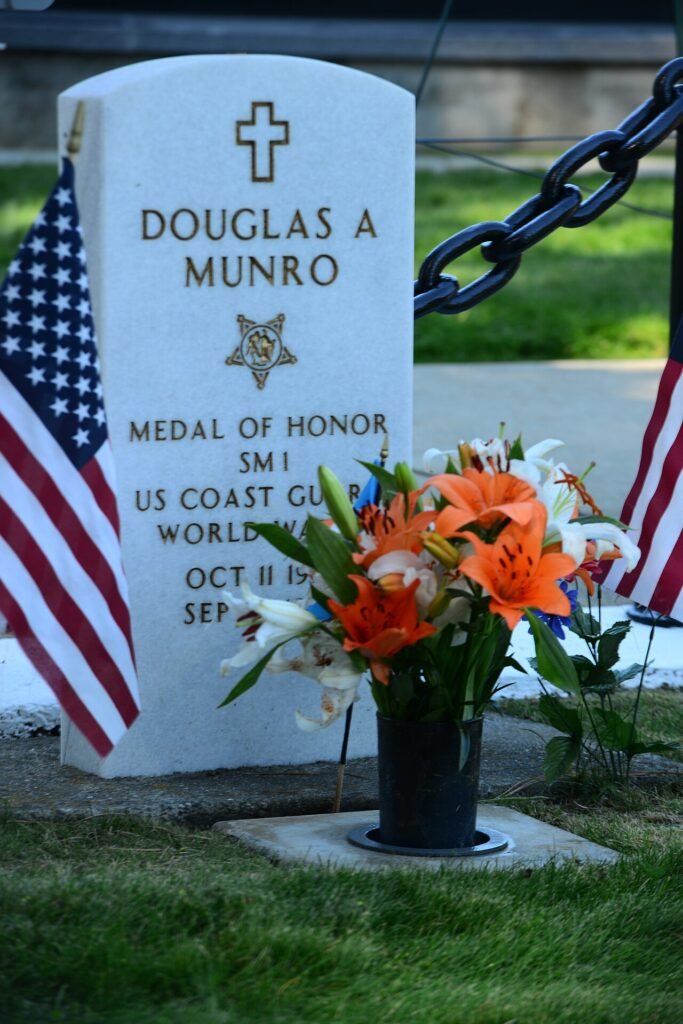
In 1947 his remains were brought home from Guadalcanal, and in 1948 he was buried at Laurel Hill Memorial Park in Cle Elum; his family chose his home town over Arlington. The town later placed two naval guns beside his grave, and his parents were buried on either side of him. The site is on the Washington Heritage Register.2,4
Every year on the anniversary of his death, Coast Guardsmen gather at his grave in Cle Elum and at the recruit training centre at Cape May, New Jersey. Three ships have carried his name, including the cutter Munro, commissioned in 2017. The Coast Guard’s headquarters building in Washington, opened in 2013, is named after him, and he is the only man who was not a Marine whose name is on the Wall of Heroes at the National Museum of the Marine Corps.2
Timeline
- 11 October 1919 Born in Vancouver, British Columbia.
- 1922 Family settles in South Cle Elum, Washington.
- 1939 Enlists in the Coast Guard with Raymond Evans.
- 1941 Volunteers for the transport USS Hunter Liggett.
- 7 August 1942 Takes Marines ashore at Tulagi.
- 20 September 1942 Leads a rescue boat under fire off Savo Island.
- 27 September 1942 Shields the evacuation of Marines at Point Cruz; killed.
- 24 May 1943 Medal of Honor presented to his parents by President Roosevelt.
- 1948 Reburied in Cle Elum.
- 2013 Coast Guard headquarters named in his honour.
- Medal of Honor citation for Signalman First Class Douglas A. Munro, for action on 27 September 1942.
- U.S. Coast Guard Historian’s Office, biography of Signalman First Class Douglas A. Munro.
- Richard B. Frank, Guadalcanal: The Definitive Account of the Landmark Battle (Random House, 1990), on the Second Battle of the Matanikau.
- Washington Heritage Register, Douglas Munro Burial Site, Cle Elum.
- Munro’s last words are known from the account of his friend and crewmate Raymond Evans.
Found an error, or hold a related record? Tell the research desk.
Share what you know