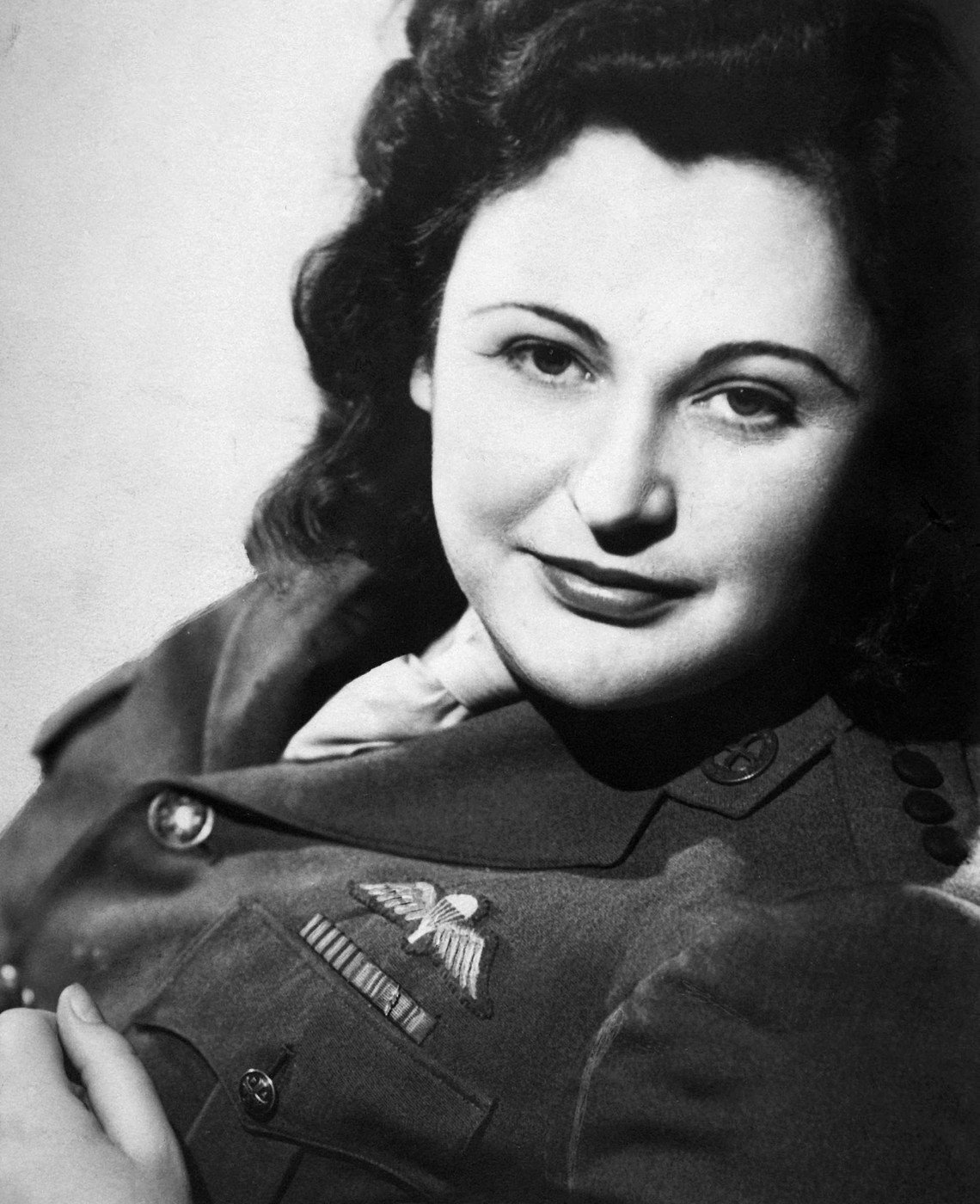
Nancy Grace Augusta Wake was born in Wellington, New Zealand, on 30 August 1912, the youngest of six children. In 1914 the family moved to Sydney, and soon afterwards her father went back to New Zealand and did not return. Her mother brought up the children alone. At sixteen Nancy ran away from home and worked as a nurse.1,3
Vienna, 1930s
A legacy of two hundred pounds from an aunt paid her way to New York and then to London, where she trained as a journalist. By the mid-1930s she was in Paris, working as a European correspondent for Hearst newspapers. On a visit to Vienna she saw gangs of Nazis beating Jewish men and women in the streets, and later said that it was then that she decided that if she ever had the chance, she would do something to fight them.1,3
In 1937 she met Henri Fiocca, a wealthy industrialist from Marseille, and on 30 November 1939, a few months after the war began, they married. When Germany invaded France in 1940 she drove an ambulance.3
The escape line
After France fell, the south of the country remained for a time unoccupied, and Marseille filled with British soldiers and airmen trying to get home. Wake became a courier for the escape network run by the Scottish officer Ian Garrow, which became known as the Pat O’Leary line. Using her husband’s money and her position as the wife of a respectable businessman, she carried messages, found safe houses and escorted men towards the Pyrenees.1,3
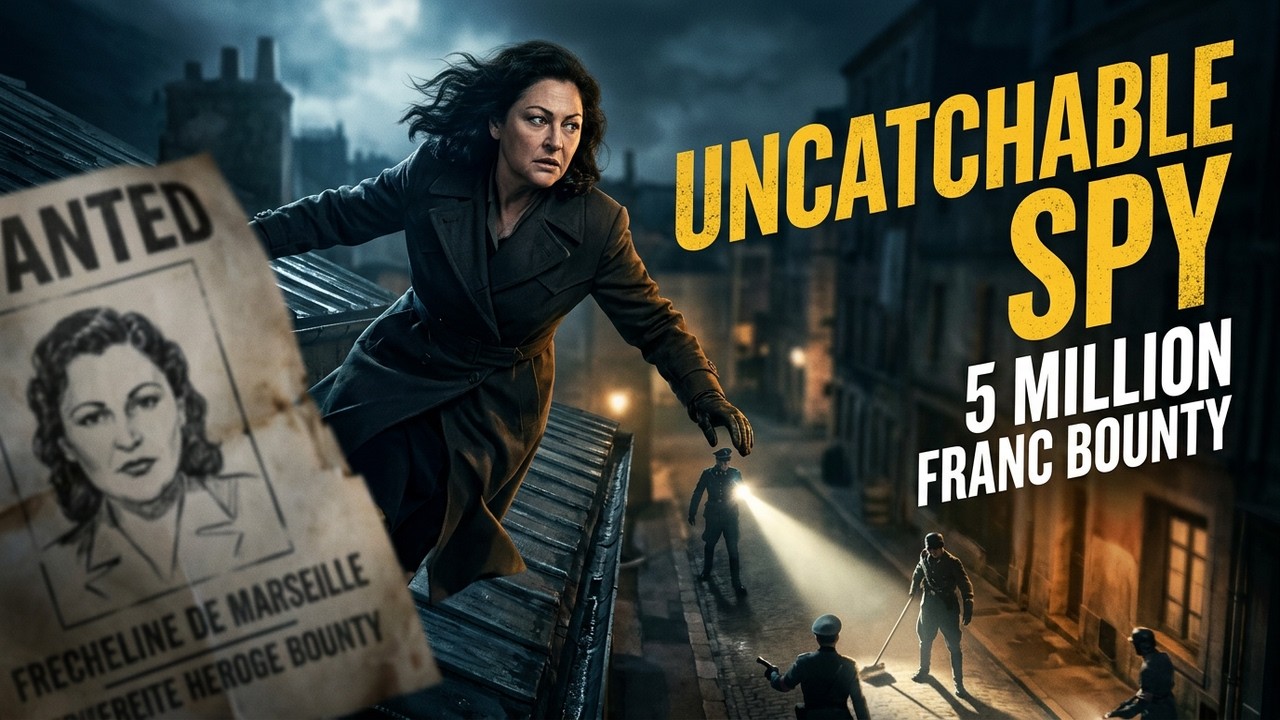
She was very good at it. She later said she got past German checkpoints with a little powder and a little charm, flirting with the soldiers and offering to let them search her. As the Gestapo became aware of a woman they could never catch, they are said to have called her the White Mouse, and eventually put a price of five million francs on her head.2,3
The price of escape
By 1943 the network had been betrayed and the Germans were closing in. Henri urged her to leave, promising to follow. She was arrested in Toulouse during her escape and held for four days, until the network’s leader, Albert Guérisse, talked her out by claiming she was his mistress. After several attempts she crossed the Pyrenees into Spain and reached Britain.2,3
Only later did she learn that Henri had been arrested, tortured and shot by the Gestapo in October 1943. She never forgave herself for leaving him.2,3
Parachuting into the Auvergne
In London she joined the Special Operations Executive. Her instructors were impressed: one report called her a very good and fast shot, and noted that her cheerful spirit put the men to shame. On the night of 29 to 30 April 1944 she parachuted into the Auvergne, in central France, as one of a team of three with the codename Hélène, under the leadership of John Farmer, with Denis Rake as their wireless operator.1,3
She landed in a tree. The resistance leader who found her there, Henri Tardivat, told her he hoped all the trees in France would bear such beautiful fruit. She told him to cut the nonsense and get her down.2,3
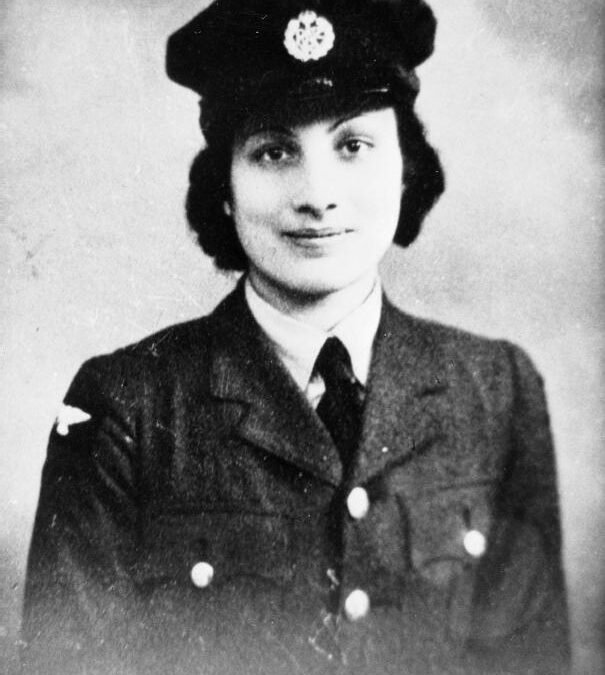
A journalist, a courier, a widow, and by 1944 the woman arranging arms for thousands of maquisards.
Nancy Wake, 1937–1944
Seven thousand maquisards
Her job was to link London with the maquis, the resistance fighters hiding in the hills, under the regional leader Émile Coulaudon, known as Gaspard. She arranged parachute drops of weapons and money, distributed them, and helped organise groups that numbered around seven thousand fighters.1,3
In June 1944 the Germans attacked the maquis around Mont Mouchet in force, and the groups scattered. In the retreat, Rake had to abandon his radio and codes, cutting the team off from London. By Wake’s own account, she borrowed a bicycle and rode about five hundred kilometres, through German-held country, to find a wireless operator at Châteauroux, sent a report to London and came back, in about seventy-two hours. The ride is one of the most famous parts of her story, and it rests mainly on her account.2,3
Later that summer her groups attacked German convoys and garrisons. She said that she took part in a raid on the Gestapo headquarters at Montluçon, and that during one operation she killed a German sentry with her bare hands, using a blow she had learned in training. These accounts too come mainly from Wake herself.2,3
What the maquis needed
The maquis of central France were brave, but in the spring of 1944 many of them were barely armed. Most were young men who had gone into the hills to avoid being sent to work in Germany, and their weapons were often old rifles and whatever they had captured. What they needed from London was guns, ammunition, explosives, money, and people who could arrange all of it.
That was Wake’s job. Parachute drops had to be requested by radio, the dropping grounds marked with lights on the right night, the containers collected before the Germans arrived, and the contents shared out among rival groups and leaders. She controlled the money and much of the supply, and that gave her real authority among men who were not used to taking orders from a woman.1,3
After the Allied landings in Normandy, and then in the south of France in August, the resistance in the Auvergne turned to attacking German troops and convoys as they tried to withdraw, and to harassing the garrisons left behind.3
Honours, late and early
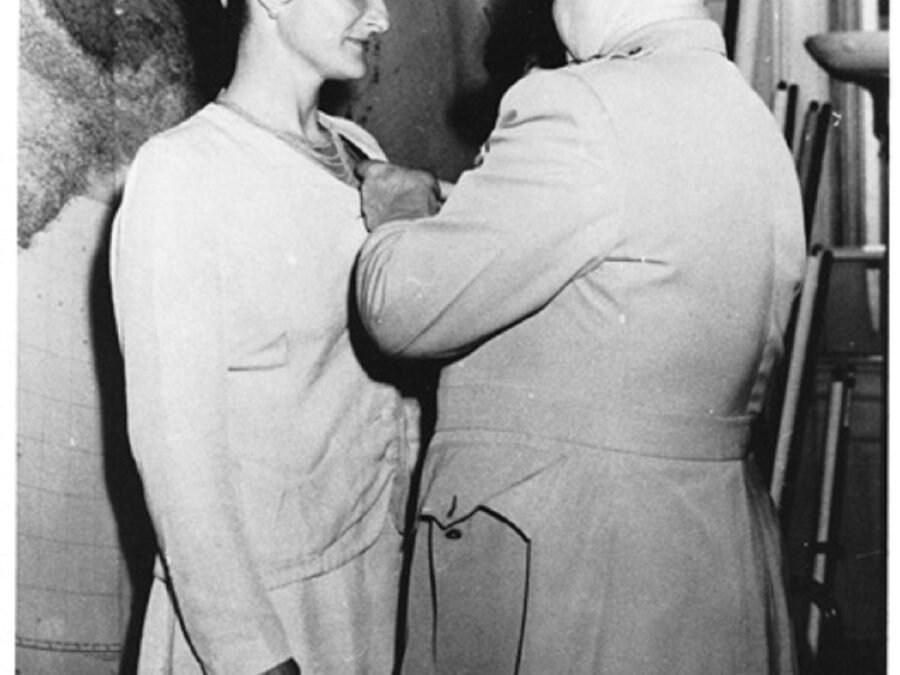
Britain awarded her the George Medal in July 1945. France gave her the Croix de Guerre with palms and the Médaille de la Résistance, and the United States the Medal of Freedom. Recognition in Australia took much longer: she was made a Companion of the Order of Australia only in February 2004, when she was ninety-one.1,4
After the war she worked for the Air Ministry in London, and stood unsuccessfully for the Australian parliament three times. In 1957 she married an RAF officer, John Forward, and they moved to Australia in the early 1960s. Her autobiography, The White Mouse, appeared in 1985.1,2
In her last years she lived in London, first at The Stafford hotel near Piccadilly and then in a home for veterans, telling her stories to anyone who would listen. Nancy Wake died on 7 August 2011, aged ninety-eight. As she had asked, her ashes were scattered near Montluçon, in the hills where she had fought.
Timeline
- 30 August 1912 Born in Wellington, New Zealand.
- 1914 Family moves to Sydney.
- Mid-1930s Works in Paris as a journalist for Hearst newspapers.
- 30 November 1939 Marries Henri Fiocca in Marseille.
- 1940–1942 Courier for the Pat O’Leary escape line.
- 1943 Escapes over the Pyrenees; Henri is executed that October.
- 29–30 April 1944 Parachutes into the Auvergne for the SOE.
- June 1944 German attack on the maquis around Mont Mouchet.
- July 1945 Awarded the George Medal.
- 1957 Marries John Forward.
- 1985 Publishes her autobiography.
- February 2004 Made a Companion of the Order of Australia.
- 7 August 2011 Dies in London, aged 98.
- Russell Braddon, Nancy Wake (Cassell, 1956).
- Nancy Wake, The Autobiography of the Woman the Gestapo Called the White Mouse (Macmillan, 1985).
- Peter FitzSimons, Nancy Wake: A Biography of Our Greatest War Heroine (HarperCollins, 2001).
- Australian War Memorial, collection records for Nancy Wake.
- Some of the best-known episodes, including the 500-kilometre bicycle ride and the raid on the Gestapo headquarters at Montluçon, rest mainly on her own accounts and have not been independently confirmed.
Found an error, or hold a related record? Tell the research desk.
Share what you know