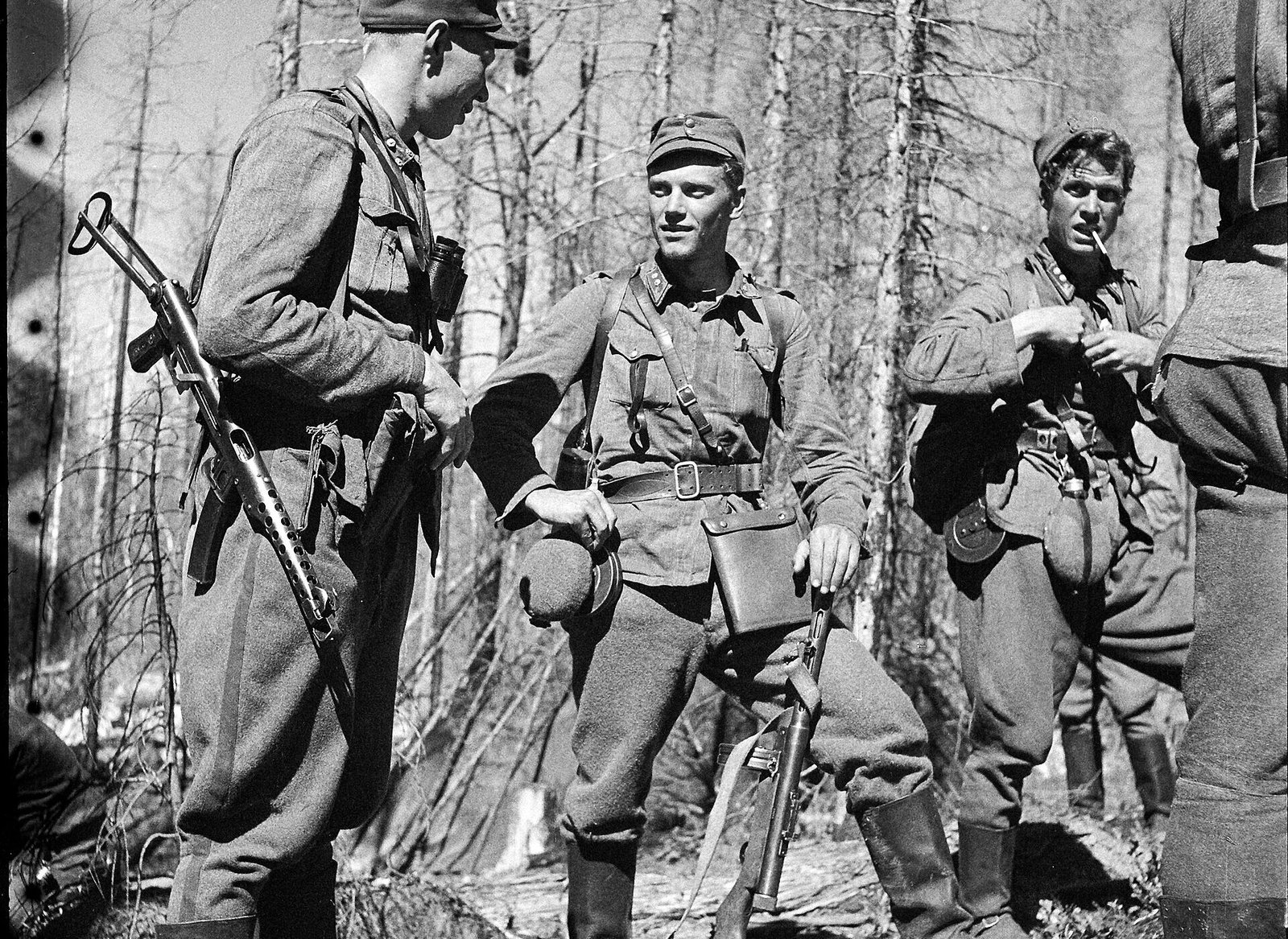

Lauri Allan Törni was born on 28 May 1919 in Viipuri, then Finland’s second city, on the Karelian isthmus near the Soviet border. His father was a ship’s captain. He was an athletic boy and a friend of the future Olympic boxing champion Sten Suvio. After business school and service in the Civil Guard, he began his military service in 1938 with a jäger battalion near the border.1
The Winter War
On 30 November 1939 the Soviet Union invaded Finland. Törni’s service was extended, and his unit met the invaders on the isthmus and then north of Lake Ladoga, where the Finns surrounded and destroyed whole Soviet divisions in the forests around Lemetti. His commanders noticed him. Before the war ended in March 1940 he was sent to officer school, and he was commissioned as a second lieutenant in the reserve.1
Finland survived the Winter War, but lost a tenth of its territory, including Viipuri, to the Soviet Union. When Germany attacked the Soviet Union in June 1941, Finland joined the attack to win it back, in what the Finns call the Continuation War. That summer Törni spent seven weeks training with the Waffen-SS in Vienna before returning to the Finnish army.1,2
Detachment Törni
It was in the Continuation War that Törni made his name. In 1943 he was given command of a small unit, known informally as Detachment Törni, that went deep behind the Soviet lines on raids and reconnaissance, often for days at a time, on skis in winter. It had a formidable reputation on both sides of the front. The Soviets are said to have put a price of three million Finnish marks on his head.1
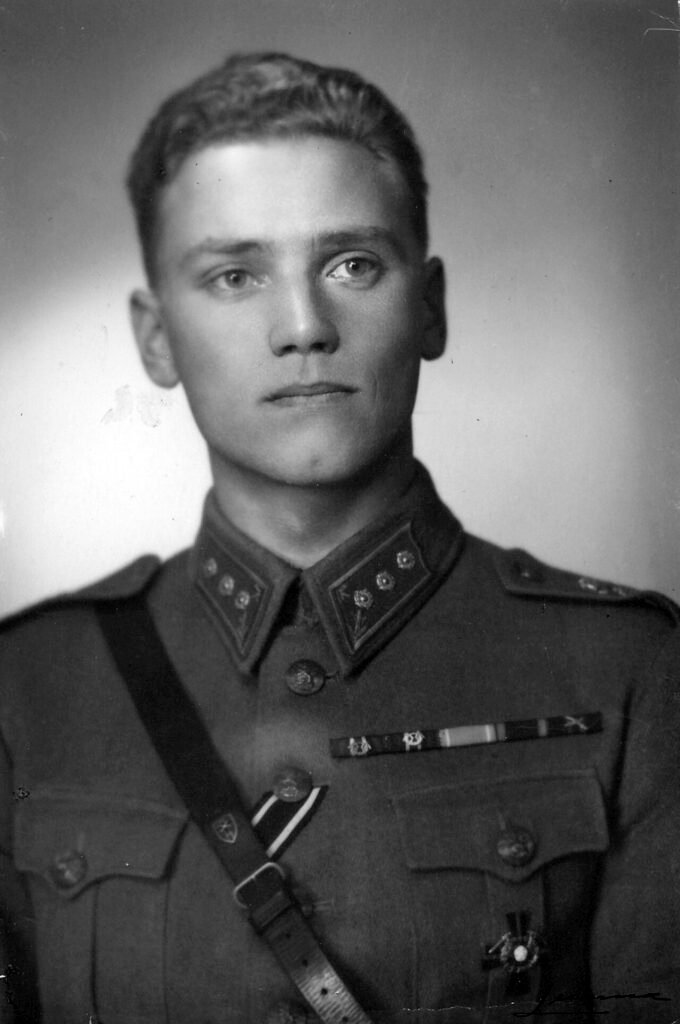
In the summer of 1944 the Soviet army launched a massive offensive to knock Finland out of the war. In July and August, in the last great battle of the war at Ilomantsi, Törni’s men fought with a ferocity that helped stop the Soviet advance there. One of the young soldiers in his reconnaissance company was Mauno Koivisto, who would one day be President of Finland. On 9 July 1944 Törni was awarded the Mannerheim Cross, Finland’s highest award for bravery, and in August he was promoted to captain.1
Treason
In September 1944 Finland made peace with the Soviet Union. The armistice required it to expel the German troops still in the country, and the Finns turned their guns on their former allies in Lapland. Törni was demobilised in November, out of work at twenty-five, with his home town now Soviet territory.1
In January 1945 he was recruited by a clandestine pro-German network in Finland and went to Germany for sabotage training, meant, he later said, to prepare a resistance movement if the Soviet Union occupied Finland. When the training was cut short, he could not get home, and he joined a Waffen-SS unit fighting the Red Army near Schwerin, reaching the rank of Hauptsturmführer, captain. In the last days of the war he surrendered to the British, escaped from a prison camp in Lübeck, and made his way back to Finland.1,2
There the Finnish state police arrested him. He escaped and was arrested again in April 1946, and was tried for treason for serving Germany while Finland was at war with it. In January 1947 he was sentenced to six years. He escaped from prison in Turku, was recaptured, and was pardoned by President Juho Paasikivi in December 1948.1
His motives remain disputed in Finland. In 2013 the historians Juha Pohjonen and Oula Silvennoinen argued that the training in Germany in 1945 was preparation for a pro-Nazi coup, and that the conviction was justified. Others, including the historian and later defence minister Jussi Niinistö, have argued that Törni acted out of genuine fear of a Soviet occupation of his country. What is certain is that he wore the uniform of the Waffen-SS, the armed wing of the organisation responsible for the worst crimes of the Nazi regime, in 1941 and again in 1945.2,5
Swimming ashore in Alabama
In 1949 Törni slipped across the border into Sweden. In Stockholm he fell in love with a Swedish-Finnish woman, Marja Kops, and they became engaged. Then, under a false name, he signed on as a seaman on a ship to Venezuela. In 1950 he hid aboard a Swedish cargo ship bound for the United States, and when it was in the Gulf of Mexico near Mobile, Alabama, he jumped overboard and swam ashore.1
He made his way to New York, where the Finnish-American community of Brooklyn found him work as a carpenter and cleaner. In 1953 an act of Congress, supported by the law firm of William Donovan, the wartime head of the OSS, gave him permission to stay. In 1954, under the Lodge–Philbin Act, which allowed foreign nationals to enlist, he joined the United States Army. He took the name Larry Thorne.1
A Green Beret
A group of Finnish-American officers in the Army, known as Marttinen’s Men, helped him into the new Special Forces, the Green Berets. With combat experience few Americans could match, he taught skiing, mountain climbing, survival and guerrilla warfare. He became an American citizen in 1957, went to officer candidate school, and was commissioned. From 1958 to 1962 he served with the 10th Special Forces Group at Bad Tölz in West Germany, where he was second-in-command of a mission high in the Zagros Mountains of Iran to recover the bodies and classified material from a crashed American aircraft, which made his reputation.1
The author Robin Moore, who spent time with the Special Forces, based a character on him in his 1965 book The Green Berets.1
Vietnam
In November 1963 Captain Thorne went to South Vietnam with Special Forces Detachment A-734, to run camps of local irregular fighters in the Tịnh Biên district near the Cambodian border. During a heavy attack on his camp he was wounded twice and won the Bronze Star for valour.1
In 1965 he came back for a second tour and was assigned to MACV-SOG, the secret Studies and Observations Group that ran covert operations into Laos and North Vietnam. On 18 October 1965 he was in charge of the launch of the first cross-border reconnaissance mission of Operation Shining Brass, to find targets along the Ho Chi Minh Trail for air strikes. Because of the danger, his Distinguished Flying Cross citation records, he volunteered to go along in place of the officer assigned.1,3
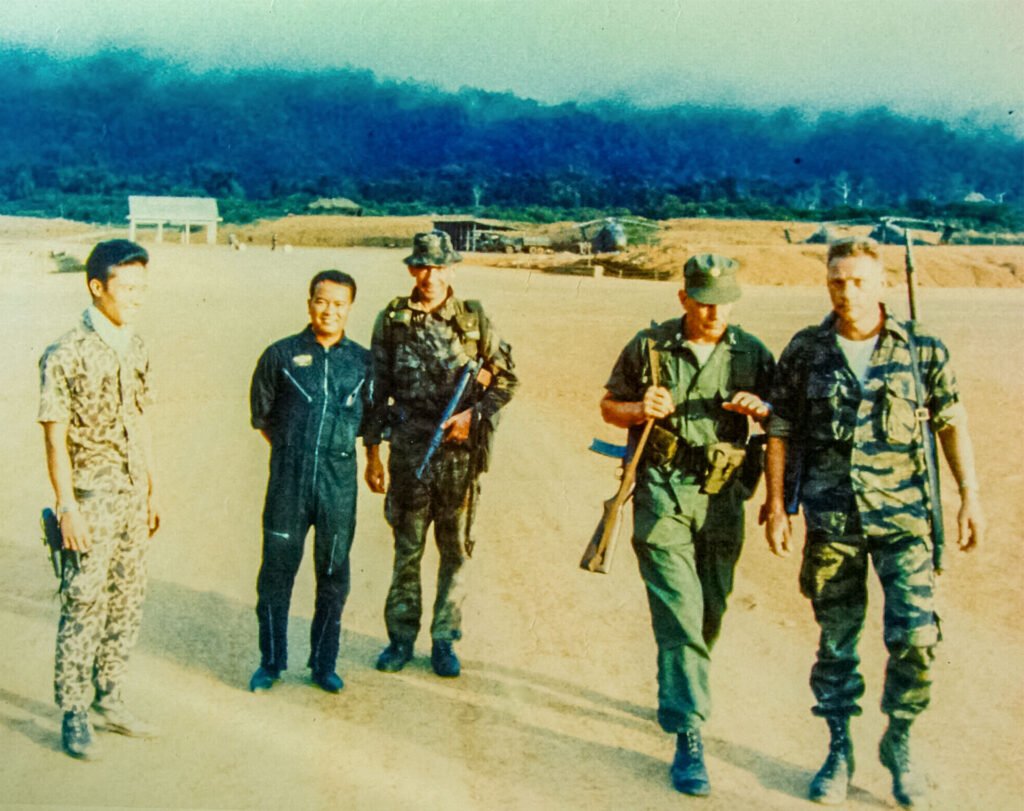
Two South Vietnamese air force helicopters took off from the Special Forces camp at Kham Duc in bad weather. One dropped the six-man team through a gap in the clouds. Thorne stayed overhead in the other, waiting for the team’s first report, ready to land and pull it out if it ran into a superior force. When the first helicopter climbed back above the clouds, Thorne’s helicopter and the spotter aircraft with it had vanished. Searches found nothing. The team on the ground completed its mission.1,3
Home to Arlington
Thorne was promoted to major after his disappearance and awarded the Legion of Merit and the Distinguished Flying Cross. For three decades his fate was unknown. In 1999 a joint American and Finnish team found the crash site in the mountains of Phước Sơn district, about twenty-five miles from Da Nang. His remains were formally identified in 2003, and on 26 June 2003 he was buried at Arlington National Cemetery, alongside the South Vietnamese airmen who had died with him. He was survived by his fiancée, Marja Kops.1,4
He is honoured today by the Green Berets. The headquarters of the 10th Special Forces Group at Fort Carson, Colorado, is named after him, and each year the group gives the Larry Thorne Award to its best team. In 2010 he was named the first honorary member of the Special Forces Regiment. In Finland, where he is remembered as a Mannerheim Cross knight and argued over as a man who wore the SS uniform, he was voted the most courageous of all the knights of the Mannerheim Cross in a 2006 poll.1,2
Timeline
- 28 May 1919 Born in Viipuri, Finland.
- 1939–1940 Fights in the Winter War; commissioned.
- 1941 Seven weeks of Waffen-SS training in Vienna; Continuation War begins.
- 1943 Forms Detachment Törni.
- 9 July 1944 Awarded the Mannerheim Cross.
- 1945 Trains in Germany; serves in the Waffen-SS; surrenders to the British.
- January 1947 Sentenced to six years for treason.
- December 1948 Pardoned.
- 1950 Swims ashore near Mobile, Alabama.
- 1954 Enlists in the U.S. Army as Larry Thorne.
- 1963–1965 Two tours in Vietnam.
- 18 October 1965 Disappears on a helicopter mission.
- 1999 Crash site found.
- 26 June 2003 Buried at Arlington National Cemetery.
- J. Michael Cleverley, Born a Soldier: The Times and Life of Larry A. Thorne (BookSurge, 2008).
- Juha Pohjonen and Oula Silvennoinen, Tuntematon Lauri Törni (Otava, 2013).
- Distinguished Flying Cross citation for Major Larry A. Thorne, Department of the Army General Orders No. 33, 1967.
- Arlington National Cemetery and the Defense POW/MIA Accounting Agency, identification and burial of Larry A. Thorne, 2003.
- Finnish historians disagree about Törni’s motives for joining the Waffen-SS in 1945: Pohjonen and Silvennoinen argue his training served a planned pro-German coup; others, including Jussi Niinistö, argue he acted from fear of a Soviet occupation of Finland.
Found an error, or hold a related record? Tell the research desk.

Share what you know