George Frederick Beurling was born in Verdun, a working-class district of Montreal, on 6 December 1921, the third of five children of a Swedish-born commercial artist and his English-Canadian wife. It was a strictly religious household. When George was six his father built him a model aeroplane, and from then on he could think of nothing else.2
He was not interested in school. He spent his spare time at the local airfield, took his first flying lessons as a boy, and at fifteen left school to work and pay for more of them. By sixteen he had flown some 150 hours and qualified for a commercial pilot’s licence. He tried to get to China to fly for the Chinese against the Japanese, and was stopped at the American border as an illegal immigrant.2
A convoy to Glasgow
When the war began in September 1939, Beurling tried to join the Royal Canadian Air Force. He was turned down: he had not finished school. He tried to volunteer for the Finnish air force, fighting the Soviet Union in the Winter War, but could not get his parents’ permission. So in 1940 he signed on as a deckhand on a ship in a convoy and crossed the Atlantic, through the U-boat war, to enlist in the Royal Air Force in Britain. When he got there he found he had left his birth certificate at home. He sailed back to Canada to fetch it, and then crossed again. In September 1940 the RAF accepted him.2
Training the eye
At his operational training unit in 1941 he came under the eye of James “Ginger” Lacey, one of the leading RAF aces of the Battle of Britain, who said Beurling was a wonderful pilot and an even better shot. Beurling worked obsessively at the science of air gunnery: judging range, deflection, the drop and curve of bullets, until it all became instinct. He had exceptional eyesight, and he trained it, spotting distant specks in the sky long before other pilots.1,2
He was not a good team player. Posted to fighter squadrons in England in the winter of 1941–42, he flew sweeps over France in a Spitfire, and twice broke formation to chase and shoot down German fighters. He was reprimanded for leaving his leader, and became unpopular with the pilots around him. When a place came up for a pilot to go overseas, he volunteered. He did not know where he was going until his ship reached Gibraltar. It was Malta.2
The island under siege
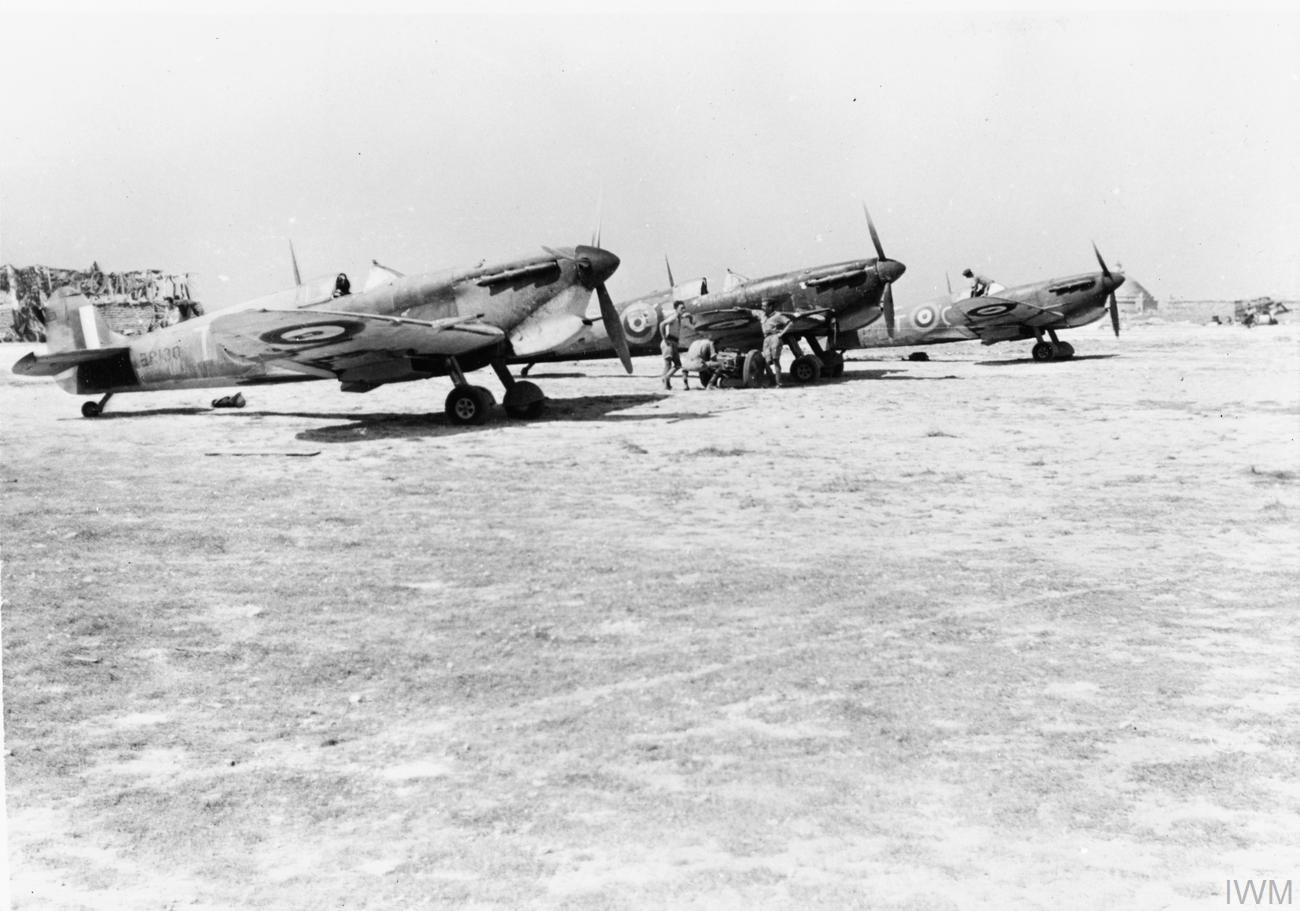
In 1942 Malta, a small British island in the middle of the Mediterranean, was the most bombed place on earth. It sat across the supply routes from Italy to Rommel’s army in North Africa, and the Germans and Italians were determined to bomb it into submission. Its people lived in caves and cellars and were close to starvation. Its airfields were cratered daily. Everything, including fuel and food, had to be brought in by convoys that suffered terrible losses, and fighter aircraft were flown in off aircraft carriers.3
On 9 June 1942 Beurling flew his Spitfire off the deck of the carrier HMS Eagle and landed on the island, posted as a sergeant pilot to No. 249 Squadron at Ta Kali. The pilots of Malta lived on poor rations and fought several times a day against enemies who outnumbered them badly. Beurling fitted in there as he never had anywhere else. His habit of calling everything and everyone a screwball earned him that nickname.1,3
Twenty-seven in fourteen days
He was a solitary figure on the ground: a Christian who did not drink or smoke, who spent his time studying and thinking about air fighting. In the air he was deadly. He liked to hold his fire until he was within 250 yards of his target, closer than most pilots dared. If attacked from behind, he would haul his Spitfire into a violent stall and spin that no pursuer could follow.1,2
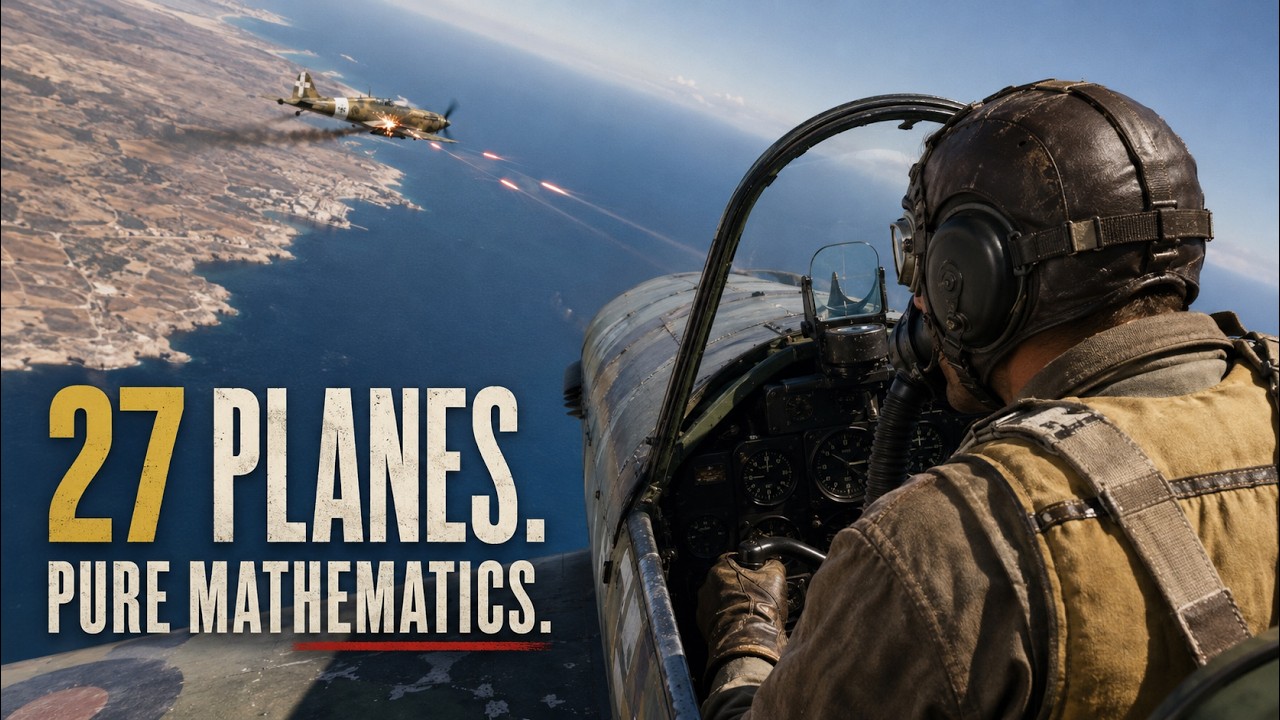
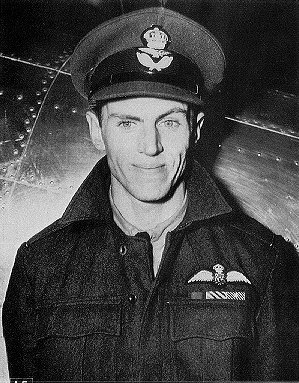
In July 1942 he shot down enemy aircraft almost daily. On 6 July he claimed three in one day; by 10 July he was an ace. On 12 July he shot down two Italian Reggiane fighters, one of them flown by an Italian group commander, Lieutenant Colonel Aldo Quarantotti. On 27 July, his greatest day on Malta, he claimed four, among them the leading Italian ace of the time, Captain Furio Niclot Doglio. He was awarded the Distinguished Flying Medal and then a Bar to it, and was commissioned as a pilot officer.3,4
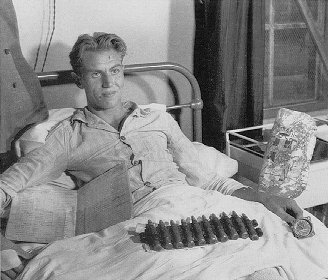
He was shot down himself four times over Malta. In August, weak from dysentery and poor food, he was in bed for weeks. He came back in September and October to claim more victories. On 14 October 1942, attacking a large German raid, he was wounded in the heel, elbow and ribs, and his burning Spitfire forced him to bail out into the sea. It was his last fight over Malta. He was credited with some twenty-seven aircraft destroyed over the island, far more than any other pilot in the campaign.3,4
Post-war historians comparing his claims with German and Italian records have found that some of the aircraft he believed he destroyed returned to base damaged, and that some of his victories cannot be matched to known losses. That is true of almost every fighter pilot of the war, and it does not change the fact that in the desperate summer of 1942 he was the most dangerous Allied pilot over Malta.3,5
Survivor
At the end of October 1942 he was flown out of Malta for England in a B-24 Liberator. It crashed into the sea while landing at Gibraltar. Beurling, still recovering from his wounds, was one of only three people to survive. On 4 November he was awarded the Distinguished Service Order; he was by then Canada’s most famous serviceman.2,4
The hero who hated heroics
He was sent home to Canada to sell war bonds. There was a parade in his honour in Verdun and a meeting with the Prime Minister, Mackenzie King. He hated it. He was blunt to the point of embarrassing his superiors, telling audiences that he enjoyed killing, and he was often ill from his wounds and his poor health. His ghost-written book, Malta Spitfire, was published in 1943. In Vancouver he met Diana Whittall, whom he married.1,2
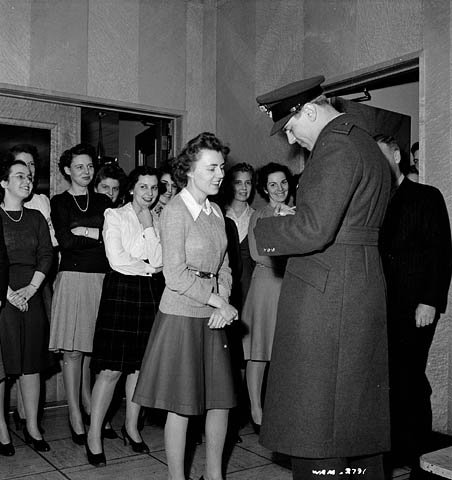
Back in Britain he was made a gunnery instructor, then in September 1943 transferred to the Royal Canadian Air Force and returned to his first squadron, 403. He shot down a German fighter that month and another on 30 December 1943, his last. But he chafed at formation flying and asked to be allowed to lead free-roaming raids deep into Germany in long-range Mustangs; he was turned down. Stunting at low level over his airfield in a Tiger Moth trainer, he was threatened with a court martial. His commanders grounded him.2
In April 1944 he went home, and in October he was honourably discharged, a squadron leader of twenty-two with thirty-one victories and one shared, and the DSO, DFC and DFM with Bar. He tried to join the United States Army Air Forces. They would not have him. His war was over.2
Rome, 1948
Peace had no place for him. He drifted, his marriage failed, and he looked for a war. In 1948 he found one: the new state of Israel was about to fight for its existence, and was recruiting experienced pilots from abroad. Beurling signed up to fly for the Israeli air force.2
On 20 May 1948, six days after Israel declared its independence, Beurling and another former Malta pilot, a British volunteer named Leonard Cohen, took off from the Urbe airfield in Rome in a Noorduyn Norseman transport aircraft they were to deliver to Israel. The aircraft crashed and burned on landing, killing both men. Sabotage was suspected, though never proved. Beurling was twenty-six. It was the tenth crash of his flying life.2
He was buried first in Rome. In 1950 his coffin was taken to Israel, and he now lies in the military cemetery at Haifa, on the slopes of Mount Carmel. In Verdun, the school that could not keep him is now called Beurling Academy.2
Timeline
- 6 December 1921 Born in Verdun, Quebec.
- 1939 Rejected by the RCAF for lack of schooling.
- September 1940 Accepted by the Royal Air Force after crossing the Atlantic twice.
- 9 June 1942 Flies his Spitfire off HMS Eagle to Malta.
- July 1942 Claims more than a dozen enemy aircraft; DFM and Bar.
- 27 July 1942 His “biggest day on Malta”: four aircraft claimed.
- 14 October 1942 Wounded and shot down in his last fight over Malta.
- October 1942 Survives the crash of a Liberator off Gibraltar.
- 4 November 1942 Awarded the Distinguished Service Order.
- 30 December 1943 His last victory.
- October 1944 Discharged.
- 20 May 1948 Killed in a crash at Rome while joining the Israeli air force.
- George Beurling and Leslie Roberts, Malta Spitfire: The Story of a Fighter Pilot (Farrar & Rinehart, 1943).
- Brian Nolan, Hero: The Buzz Beurling Story (Lester & Orpen Dennys, 1981).
- Christopher Shores and Brian Cull with Nicola Malizia, Malta: The Spitfire Year, 1942 (Grub Street, 1991).
- Citations for the DFM (July 1942), Bar to the DFM (September 1942), DFC (October 1942) and DSO (November 1942), The London Gazette.
- Beurling was officially credited with 31 enemy aircraft and one shared, 27 of them over Malta in 1942. Comparison with Italian and German loss records has shown that some of his claims, like those of most fighter pilots of the time, did not correspond to aircraft actually destroyed.
Found an error, or hold a related record? Tell the research desk.
Share what you know