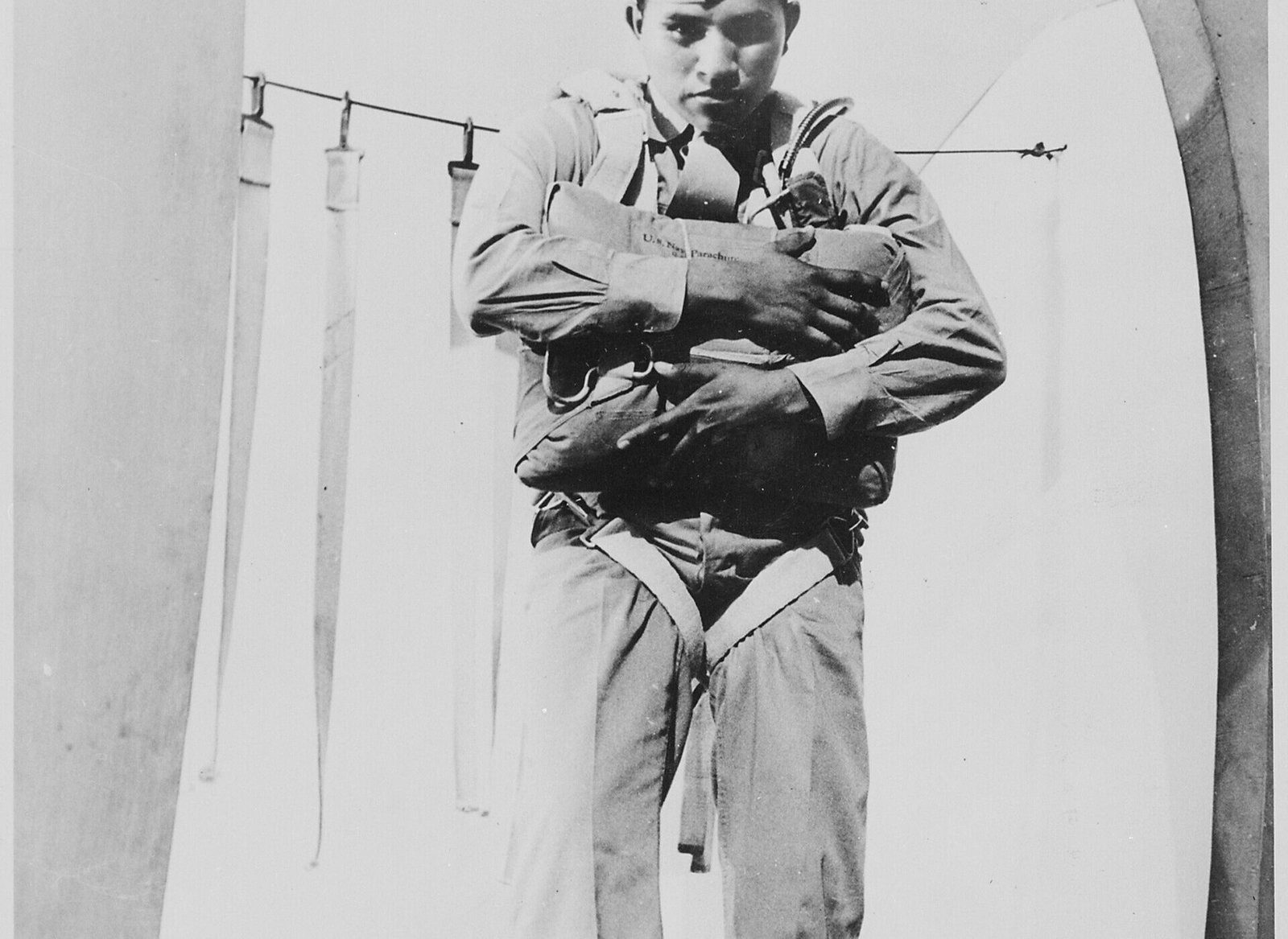

Ira Hamilton Hayes was born on 12 January 1923 in Sacaton, Arizona, on the Gila River Indian Community, home of the Akimel O’odham, the River People, whom English speakers called the Pima. He was the eldest of six children. His father, Joseph, a veteran of the First World War, scraped a living farming and picking cotton; his mother, Nancy, was a devout Christian who taught Sunday school.1
People who knew him as a boy all said the same thing: he was quiet. He could go for days without speaking unless someone spoke to him first. He was also bright. He learned to read and write early, read everything he could find, and spoke English well at a time when many on the reservation did not. He went to high school at the Phoenix Indian School and in 1942 was working as a carpenter.1
Chief Falling Cloud
After Pearl Harbor, Hayes told a classmate he was going to be a Marine. On 26 August 1942 he enlisted in the Marine Corps Reserve. After recruit training in San Diego he volunteered for the Marine paratroopers, the Paramarines, and on 30 November 1942 earned his jump wings, the first Pima to do so. The other trainees nicknamed him Chief Falling Cloud.1
He sailed for the Pacific in March 1943 with the 3rd Parachute Battalion. The Marines never did jump into battle, but they fought on the ground. On 4 December 1943 Hayes landed on Bougainville in the Solomon Islands and fought through the jungle there as a Browning Automatic Rifle man. In February 1944 the parachute units were disbanded, and he was posted to Easy Company, 2nd Battalion, 28th Marines, in the new 5th Marine Division, which trained in California and Hawaii for its next objective.1
Iwo Jima
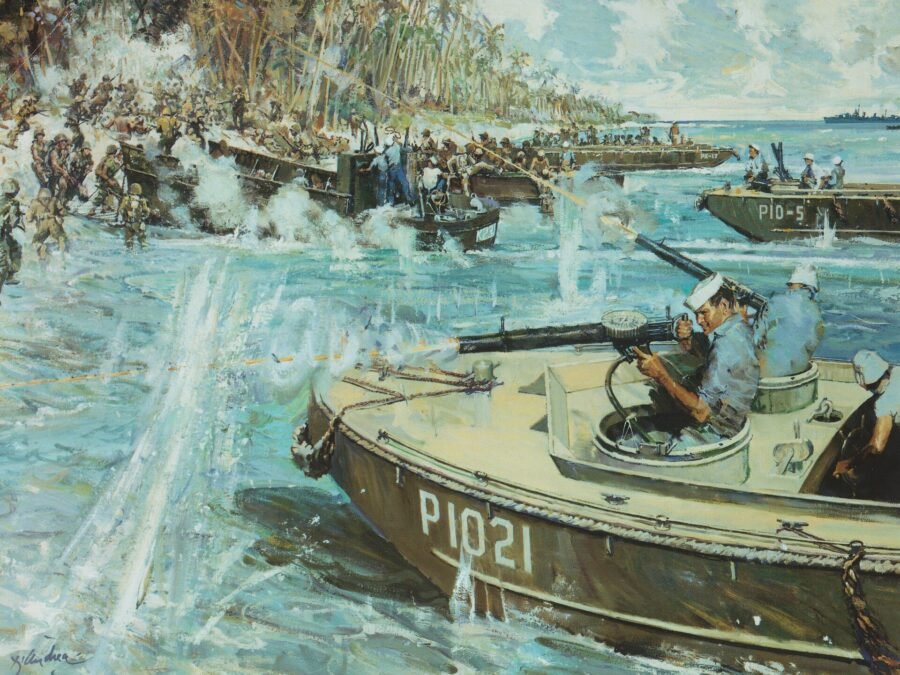
That objective was Iwo Jima, a small volcanic island about 750 miles south of Tokyo, wanted as an airfield for the bombers attacking Japan. It was defended by more than 20,000 Japanese soldiers dug into tunnels, caves and concrete bunkers, with orders to fight to the death. The 5th Marine Division landed on 19 February 1945. The 28th Marines had the job of cutting off and taking Mount Suribachi, the 550-foot volcano at the island’s southern tip, from which Japanese guns looked down on every inch of the landing beaches.1,2
For four days they fought their way to its foot. On the morning of 23 February a forty-man patrol under Lieutenant Harold Schrier climbed the mountain and, after a short firefight at the rim, raised a small American flag over the summit at about 10.30. The Marines on the beaches below cheered, and ships offshore sounded their horns.1
That first raising was photographed too, by Staff Sergeant Louis Lowery of the Marine magazine Leatherneck, who had climbed with the patrol. Two of the men who raised it, Platoon Sergeant Ernest Thomas and Sergeant Henry Hansen, would be killed on the island within ten days. Hayes, meanwhile, was still below with Easy Company’s Second Platoon, with no idea the afternoon would change his life.1
The second flag
That flag was too small to be seen across the island, and the battalion commander decided to replace it with a larger one. In the early afternoon Sergeant Michael Strank took three Marines from his squad up the mountain with it: Corporal Harlon Block, Private First Class Franklin Sousley and Private First Class Ira Hayes. On top, Hayes and Sousley found a length of heavy Japanese water pipe to serve as a pole. At about one o’clock, as the first flag came down, six Marines raised the second: Strank, Block, Sousley, Hayes, and two men from Schrier’s patrol, Harold Schultz and Harold Keller.1,3
Joe Rosenthal, a photographer for the Associated Press, had climbed the mountain that afternoon. He swung up his camera and caught the moment almost by chance, without time to compose the picture. The photograph showed six men straining together to plant the flag in the rocky ground, their faces turned away. Within days it was on the front page of newspapers across the United States. It won the Pulitzer Prize and became the most reproduced photograph of the war.2
To the men on the mountain it had been a small job. The battle went on for another month. Strank and Block were killed on 1 March, Sousley on 21 March. By the time the island was declared secure on 26 March, Hayes was one of only five men left from his original platoon of forty-five. Almost 7,000 Americans died on Iwo Jima.1,2
Three names on a poster
President Roosevelt ordered that the flag-raisers in the photograph be brought home to lead the next war bond drive. In April 1945 a Marine, Rene Gagnon, who had carried the second flag up the mountain, was asked in Washington to name the men in the picture. His list included himself, the Navy corpsman John Bradley, and Sergeant Henry Hansen, who had been killed; Hayes had not wanted to be found. Brought to Washington and questioned, Hayes said the man at the foot of the pole was not Hansen but Harlon Block. He was told the names had already been announced, and that both men were dead anyway.1,2
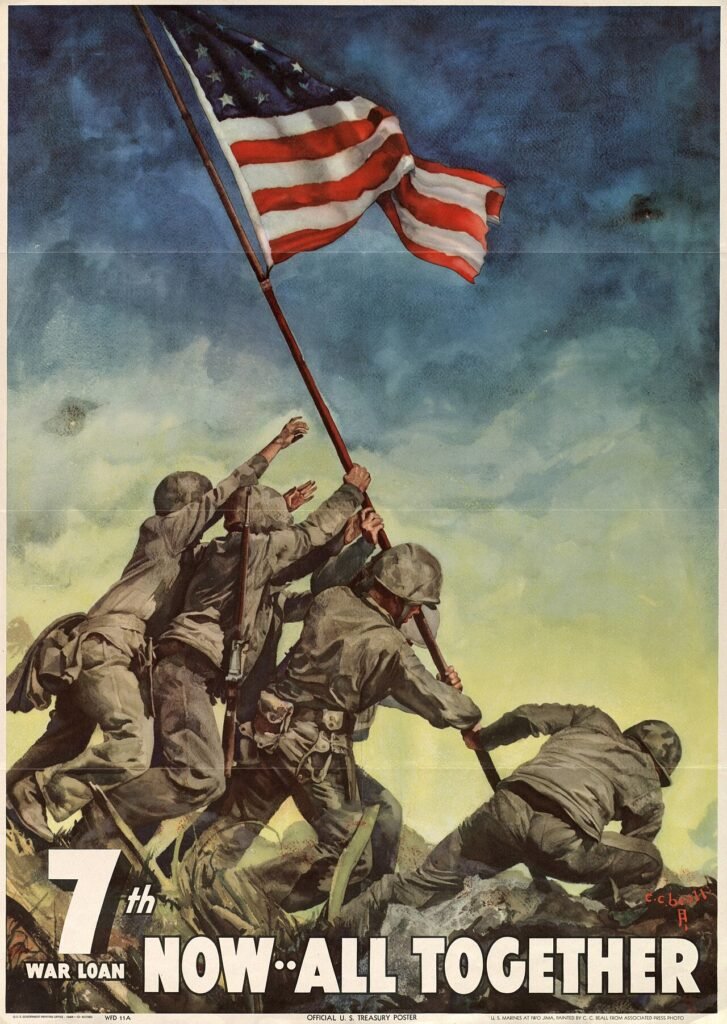
On 20 April Hayes, Gagnon and Bradley met President Truman at the White House. On 9 May they raised the actual Suribachi flag again at the Capitol to open the Seventh War Loan drive, and the tour began in New York two days later. Crowds cheered; Hayes was paraded, photographed and asked the same questions again and again. He hated it. Talking about the flag-raising felt to him like taking credit for what better men, now dead, had done. He began to drink. On 24 May, after an episode of drunkenness, he was ordered back to his company in Hawaii. The tour went on without him through thirty-three cities and raised some $26 billion, far more than the government had asked for.1,2
1,300 miles to Weslaco
Hayes was promoted to corporal in June, served on occupation duty in Japan that autumn, and was honourably discharged on 1 December 1945. He went home to the reservation. In February 1946 the Marine Corps awarded him a commendation for meritorious service in combat. But there was no going back to an ordinary life. Hundreds of letters arrived. Strangers drove through the reservation and walked up to him to ask whether he was the Indian who had raised the flag on Iwo Jima.1
He kept up with the men he had served with. One of them, Jack Thurman, who stood beside him in another of Rosenthal’s pictures from the summit that day, the group shot the Marines called the Gung Ho photograph, remembered Hayes turning up unannounced at his family’s farm in South Dakota after the war, having hitchhiked across the country to see him. Thurman’s mother, who did not like Indians, made him wait at the end of the drive until her son came home. The two men stayed friends until Hayes died.1
What troubled him most was Harlon Block. Block’s mother had always believed it was her son at the foot of the pole; she had said so the day she saw the picture. In May 1946 Hayes walked and hitchhiked some 1,300 miles from Arizona to the Block family’s farm at Weslaco, Texas, to tell Harlon’s father that his son was in the photograph. He later wrote to Mrs Block to confirm it. She took his letter to her congressman, the Marine Corps opened an inquiry, and in January 1947 it agreed that the man it had named as Hansen was Harlon Block.1,3
Hayes was right, and the record was not finished. In 2016 the Marine Corps concluded that John Bradley was not in the photograph and that Harold Schultz was; in 2019 it found that Rene Gagnon was not in it either, and that the sixth man was Harold Keller. Of the three men sent on the bond tour as flag-raisers, Hayes was the only one who had been in the picture.3
“I was sick”
Hayes could not hold a steady job for long. He was arrested for drunkenness more than fifty times, in towns across the country. When he was arrested in Chicago in October 1953, the newspapers carried the story, and Americans who had not thought about him since the war learned what had become of the man in the picture. In 1949 he played himself in the John Wayne film Sands of Iwo Jima, in a scene in which Wayne’s sergeant hands the real Suribachi flag to Gagnon, Hayes and Bradley, the three men then believed to be the surviving flag-raisers. He worked for a time as a chauffeur in Beverly Hills and as a labourer. He spoke about his service with pride, but rarely about the flag. “I was sick,” he said of his drinking. “I guess I was about to crack up thinking about all my good buddies. They were better men than me and they’re not coming back.”1
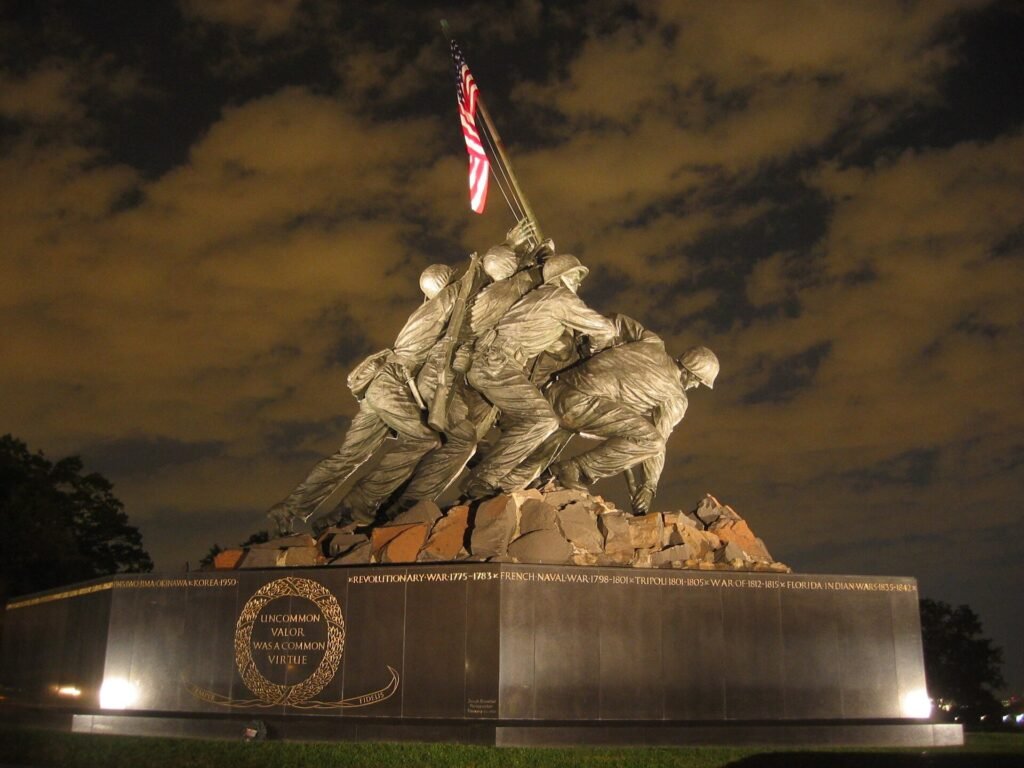
On 10 November 1954, sober, he went to Arlington, Virginia, for the dedication of the Marine Corps War Memorial, Felix de Weldon’s thirty-two-foot bronze statue based on Rosenthal’s photograph. President Eisenhower shook his hand and called him a hero. A reporter asked him how he liked the pomp and ceremony. Hayes hung his head. “I don’t,” he said.1
A cold night in January
On the night of 23 January 1955 Hayes was drinking and playing cards with friends and his brothers on the reservation. There was an argument. The next morning he was found dead on the ground near an abandoned adobe hut close to his home in Sacaton. The county coroner ruled that he had died of exposure and alcohol poisoning. His brother Kenneth always believed he had died after a fight; there was no autopsy and no police investigation. He was thirty-two.1
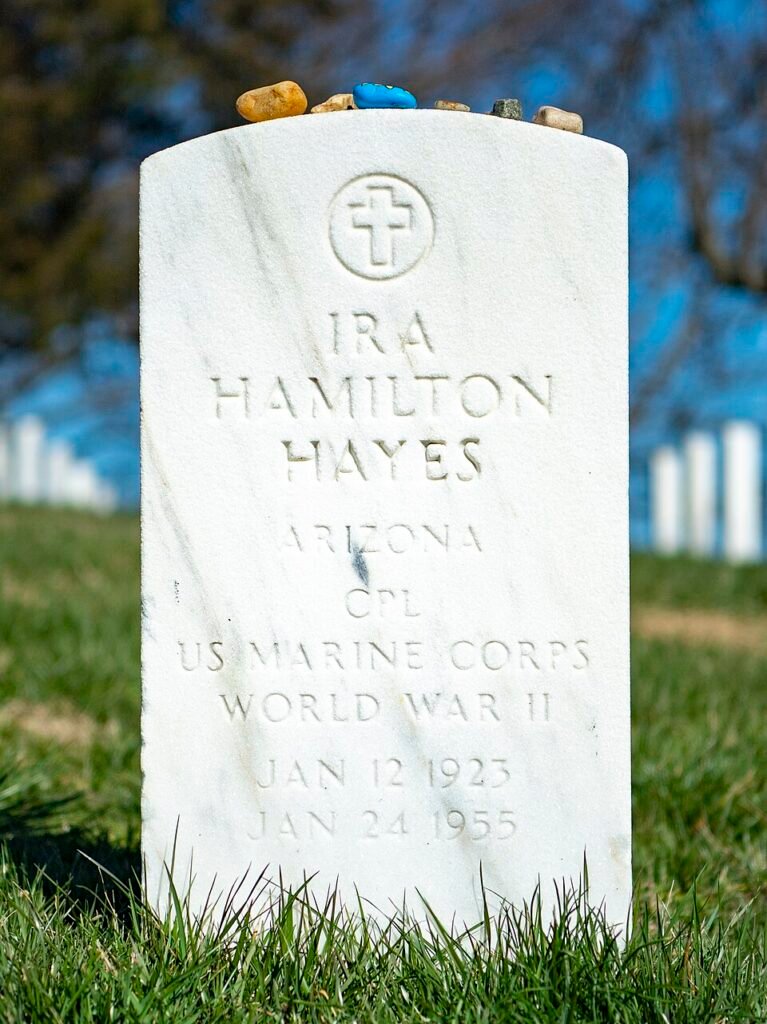
On 2 February 1955 he was buried with full military honours at Arlington National Cemetery, in Section 34, not far from the memorial. At the funeral Rene Gagnon said that Ira had a dream in his heart that one day Indians would be able to walk all over the United States as freely as white men.1,5
The ballad
His story would not rest. The writer William Bradford Huie told it in an article that became the 1961 film The Outsider, with Tony Curtis as Hayes. The film inspired the songwriter Peter La Farge to write “The Ballad of Ira Hayes”, which Johnny Cash made famous in 1964. In 2006 Clint Eastwood’s film Flags of Our Fathers, based on the book by John Bradley’s son James, portrayed Hayes, played by Adam Beach, as a man broken by guilt and by fame he had not asked for.2
On the Gila River Indian Community he is remembered as a warrior, in a veterans’ memorial park at Sacaton that carries his name. He was one of more than 40,000 Native Americans who served in the armed forces in the Second World War, and one of six men in a photograph that stood for a nation. He never believed he deserved to be in it.1
Timeline
- 12 January 1923 Born in Sacaton, Gila River Indian Community, Arizona.
- 26 August 1942 Enlists in the Marine Corps Reserve.
- 30 November 1942 Earns his parachute wings.
- 4 December 1943 Lands on Bougainville.
- 19 February 1945 Lands on Iwo Jima with the 28th Marines.
- 23 February 1945 Helps raise the second flag on Mount Suribachi.
- 20 April 1945 Meets President Truman; joins the Seventh War Loan tour.
- 1 December 1945 Discharged as a corporal.
- May 1946 Hitchhikes to Texas to tell the Block family the truth.
- January 1947 The Marine Corps confirms Harlon Block was in the photograph.
- 10 November 1954 Attends the dedication of the Marine Corps War Memorial.
- 24 January 1955 Found dead near his home in Sacaton.
- 2 February 1955 Buried at Arlington National Cemetery.
- Albert Hemingway, Ira Hayes: Pima Marine (University Press of America, 1988).
- James Bradley with Ron Powers, Flags of Our Fathers (Bantam, 2000).
- U.S. Marine Corps, findings of the flag-raiser identification boards (1947 on Harlon Block; 2016 and 2019 on the other flag-raisers).
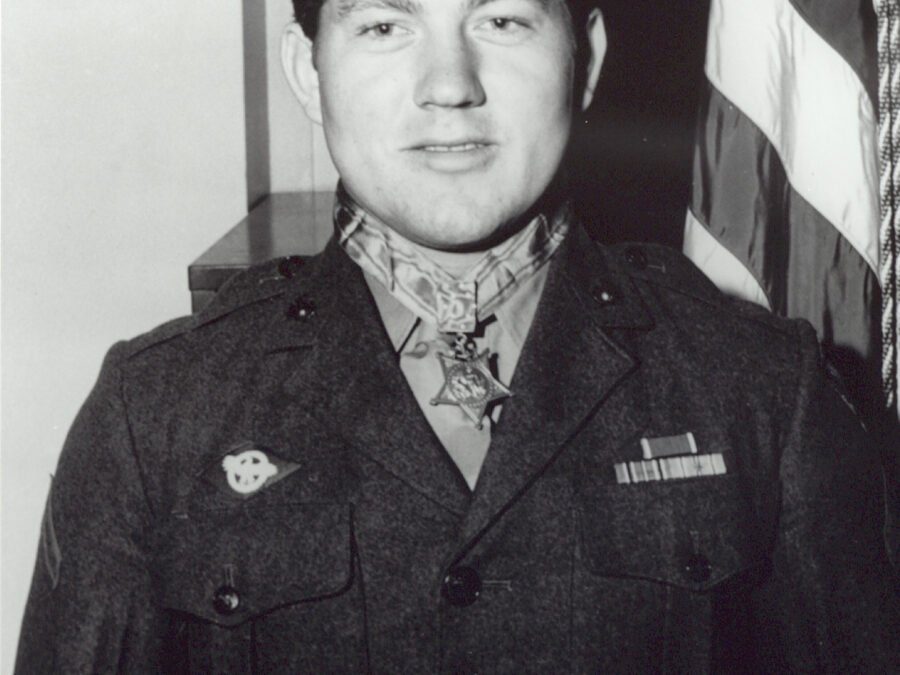
- National Archives, photograph 519164, “Pfc. Ira H. Hayes, a Pima, at age 19, ready to jump”, 1943.
- Arlington National Cemetery, burial record of Ira H. Hayes, Section 34.
- The identities of the men in Joe Rosenthal’s photograph were corrected three times after the war. This story uses the Marine Corps’ current findings: Michael Strank, Harlon Block, Franklin Sousley, Ira Hayes, Harold Schultz and Harold Keller.
Found an error, or hold a related record? Tell the research desk.
Share what you know