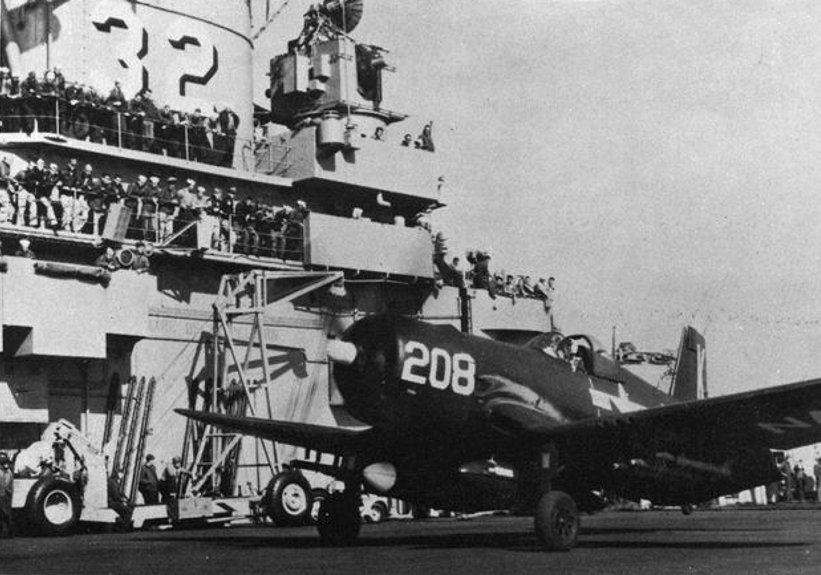
Jesse LeRoy Brown was born on 13 October 1926 in Hattiesburg, Mississippi. His mother, Julia, was a schoolteacher; his father, John, worked in a warehouse until the Depression cost him his job, and then as a sharecropper. The family was poor. Their house had no central heating and no indoor plumbing. Jesse walked three miles each day to a one-room school, and worked in the fields when he was not there.2,3
When he was six, his father took him to an air show. From then on he wanted to fly. He hung around a nearby dirt airstrip until the mechanics chased him away. At thirteen he became a paperboy for the Pittsburgh Courier, one of the leading Black newspapers of the day, and read everything he could find about Black aviators such as Bessie Coleman and Eugene Bullard. In 1937 he wrote to President Franklin Roosevelt to protest that Black pilots were kept out of the Army Air Corps, and received a reply from the White House.2,3
A way out of Mississippi
In 1939 he moved to Hattiesburg to attend Eureka High School, the town’s segregated Black high school, living with an aunt. He graduated as salutatorian in 1944. There he met Daisy Pearl Nix, who would become his wife.3
Inspired by the example of the Olympic champion Jesse Owens, he went north to Ohio State University that autumn to study architectural engineering. The university would not let him join its aviation programme because he was Black. He kept his grades at the top of his class while working as a janitor at a department store and loading boxcars for the Pennsylvania Railroad from half past three in the afternoon until midnight.2,3
The Navy’s first
In his second year he learned about the Navy’s V-5 aviation cadet programme, which accepted students from integrated colleges. On 8 July 1946 he enlisted in the Naval Reserve. In March 1947 he reported to Naval Air Station Glenview in Illinois for flight training, the only African American in the programme.3
Training took him to Ottumwa, Iowa, and then to Pensacola, Florida, where he and Daisy married in secret, since cadets were not allowed to marry. He faced open racism from at least one instructor and some fellow students, and kept going. He qualified in carrier landings aboard the light carrier USS Wright and finished his training at Naval Air Station Jacksonville.2,3
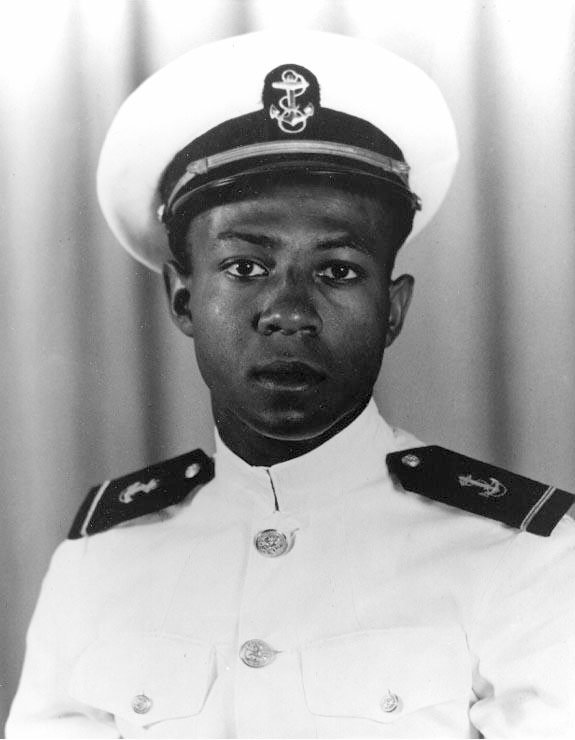
On 21 October 1948 he received his wings, the first African American to complete the Navy’s basic flight training. The Associated Press ran a profile and his photograph appeared in Life magazine. He was commissioned an ensign in April 1949 and joined Fighter Squadron 32 aboard the aircraft carrier USS Leyte, flying the F4U Corsair. His daughter, Pamela, was born that December.2,3
Close air support at Chosin
When North Korea invaded South Korea in June 1950, Leyte was in the Mediterranean. It was ordered to Korea in August, crossed the Atlantic, passed through the Panama Canal and arrived off Korea in October, joining the carriers of Task Force 77. Brown flew twenty combat missions against roads, rail lines, troop concentrations and supply dumps.2,3
In late November, Chinese armies entered the war in force and surrounded American Marines and soldiers around the Chosin Reservoir in the mountains of North Korea, in temperatures far below freezing. The carriers’ fighter squadrons flew close air support mission after mission to help the trapped troops fight their way out.3
4 December 1950: the crash
At 1.38 in the afternoon on 4 December 1950, Brown took off from Leyte, call sign Iroquois 13, in a flight of six Corsairs. His wingman was Lieutenant (junior grade) Thomas Hudner. They flew about a hundred miles to the reservoir and began searching the hills on its western side at low altitude.3
At about 2.40, one of the other pilots radioed that Brown appeared to be trailing fuel. His aircraft had probably been hit by small-arms fire from Chinese infantry hidden below. Losing fuel pressure, Brown dropped his external tanks and rockets and made an emergency landing in a snow-covered clearing on a mountainside near the village of Somong-ni, about fifteen miles behind Chinese lines. The Corsair broke apart on impact, and the buckled fuselage trapped his leg.1,3
The wingman who landed
From above, the other pilots saw Brown open the canopy and wave. Smoke was coming from the engine. Hudner made a decision without precedent in the Navy: he deliberately crash-landed his own Corsair in the snow nearby to try to get Brown out. He packed snow into the smoking engine with his bare hands and tried to pull Brown from the cockpit, but could not free his leg.1,3
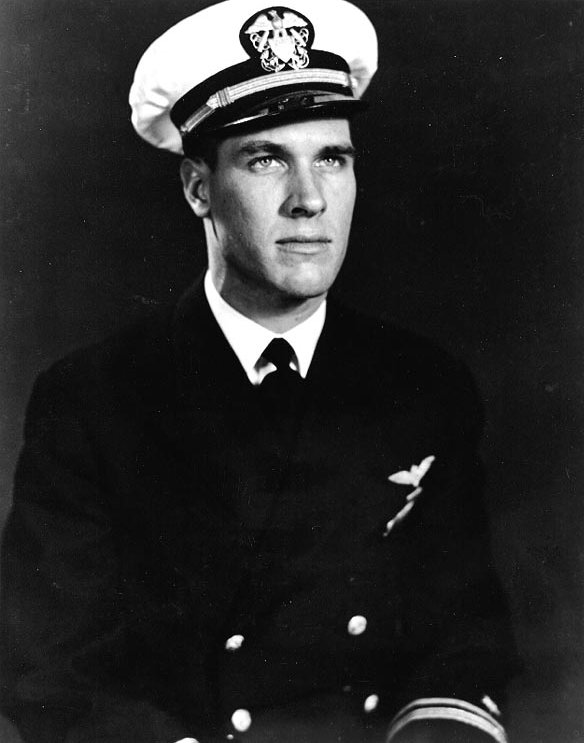
A Marine rescue helicopter arrived at about three o’clock, flown by Lieutenant Charles Ward. For forty-five minutes Ward and Hudner fought the engine fire with an extinguisher and hacked at the wreck with an axe. At one point they discussed amputating Brown’s trapped leg. The temperature was about fifteen degrees Fahrenheit, and Brown was drifting in and out of consciousness. According to Hudner, his last words were a message for his wife: “Tell Daisy I love her.”1,3
The helicopter could not fly in the dark. As night fell, Ward flew Hudner out and Brown had to be left behind; he died there of his injuries and the cold. Two days later, so that his body and aircraft would not fall into enemy hands, Navy aircraft struck the crash site with napalm. The pilots are said to have recited the Lord’s Prayer over the radio as they did it. His remains have never been recovered.3
Devotion
Brown was awarded the Distinguished Flying Cross, the Air Medal and the Purple Heart posthumously. On 13 April 1951 President Harry Truman presented Hudner with the Medal of Honor for his attempt to save him. His example inspired a young sailor named Frank Petersen, who became the first African American aviator in the Marine Corps and rose to lieutenant general.1,3
In 1973 the Navy commissioned a frigate, USS Jesse L. Brown. At the ceremony in Boston, Daisy, Pamela and Thomas Hudner were all present; Hudner gave the dedication. In 2013, at eighty-eight, Hudner travelled to North Korea to try to recover his wingman’s remains, but was unable to reach the crash site. He died in 2017.1,3
Their story has been told in Theodore Taylor’s The Flight of Jesse Leroy Brown, in Adam Makos’s book Devotion and in the 2022 film of the same name.
Timeline
- 13 October 1926 Born in Hattiesburg, Mississippi.
- 1944 Graduates from Eureka High School; enrols at Ohio State University.
- 8 July 1946 Enlists in the Naval Reserve for aviation training.
- 21 October 1948 Receives his wings: the first African American to complete Navy basic flight training.
- April 1949 Commissioned an ensign; flying with Fighter Squadron 32 on USS Leyte.
- December 1949 Daughter Pamela born.
- October 1950 Leyte arrives off Korea.
- 4 December 1950 Shot down near the Chosin Reservoir; dies after Hudner’s rescue attempt.
- 13 April 1951 Thomas Hudner receives the Medal of Honor.
- 1973 Frigate USS Jesse L. Brown commissioned.
- 2013 Hudner travels to North Korea to seek his remains.
- 2022 The film Devotion is released.
- Naval History and Heritage Command, “Captain Thomas J. Hudner, Jr.”, history.navy.mil.
- Adam Makos, Devotion: An Epic Story of Heroism, Friendship, and Sacrifice (Ballantine, 2015).
- Theodore Taylor, The Flight of Jesse Leroy Brown (Avon, 1998).
- National Archives, U.S. Navy photograph of Midshipman Jesse L. Brown, October 1948.
- The grid reference is approximate; the crash site lies in North Korea and has not been surveyed.
Found an error, or hold a related record? Tell the research desk.

Share what you know