

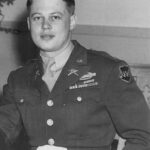
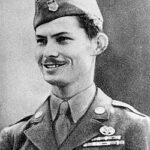
Desmond Doss: The Medic Who Saved 75 Men at Hacksaw Ridge Without Touching a Weapon
May 5, 1945. Okinawa. The top of a 400-foot cliff the maps called the Maeda Escarpment. The men who fought there called it Hacksaw Ridge. The Japanese counterattack has just swept the ridge. The...

May 5, 1945. Okinawa. The top of a 400-foot cliff the maps called the Maeda Escarpment.
Table Of Content
The men who fought there called it Hacksaw Ridge.
The Japanese counterattack has just swept the ridge. The American battalion that clawed its way up is falling back down the cargo nets, dragging what’s left of itself off the plateau. Dozens of wounded men are still up there — trapped in the open, in the smoke, in range of every Japanese gun on the ridge.
The order is clear: the ridge is lost. Nobody goes back up.
But one man never came down.
He is a skinny, soft-spoken medic from Virginia. He has been mocked, threatened, and nearly court-martialed by his own army. He has never carried a rifle. He has never carried so much as a knife.
Alone on top of that ridge, under fire, he crawls to the nearest wounded man, drags him to the cliff edge, ties a rope sling around him with a knot he learned as a boy, and lowers him down the rock face to safety.
Then he goes back for another. And another. For hours. And each time he reaches the edge, exhausted, bleeding from rope burns, he says the same five words to himself:
“Lord, help me get one more.”
By the time he’s finished, roughly 75 men owe him their lives.
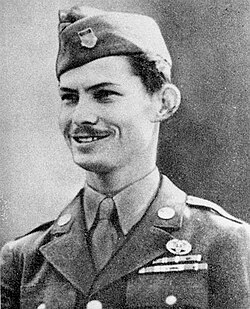
His name was Desmond Doss — and five months later he became the first conscientious objector in American history to receive the Medal of Honor. If you’ve seen the movie Hacksaw Ridge, you know a version of this story. The true story is better.
The Boy and the Picture on the Wall
Desmond Thomas Doss was born on February 7, 1919, in Lynchburg, Virginia, to a carpenter father who had served in the First World War and a devout Seventh-day Adventist mother.
On the wall of the family home hung a framed illustration of the Ten Commandments. One panel showed Cain standing over the body of his murdered brother Abel. Young Desmond would stare at it for what felt like hours, transfixed by one commandment above the rest: Thou shalt not kill.
Two moments welded that commandment into him for life. As a boy, he got into a fight with his own brother and struck him with a brick — the sight of what he’d nearly done horrified him. Years later, his father, drunk, pulled a gun during a family quarrel, and Desmond’s mother had Desmond take the weapon away and hide it. He would later say that was the last time he ever touched a gun.
But there was a second commandment written just as deep in him: love thy neighbor. As a teenager, he once walked miles into town to donate blood for an accident victim he had never met. A few days later, he walked back and donated again.
A man who would not kill — but would bleed for a stranger. That was Desmond Doss at twenty. The Army had no idea what to do with him.
The Army That Wanted Him Gone
When America entered the war, Doss was working at the Newport News shipyard — a job that could have earned him a deferment. He turned it down. He wanted to serve. He just refused to kill while doing it.
In April 1942 he entered the Army, which classified him as a conscientious objector. Doss hated the term. He wasn’t objecting to anything, he said — he was a “conscientious cooperator.” He would go anywhere, do anything, wear the uniform, take the risks. He simply would not carry a weapon, and as a Seventh-day Adventist, he would not work on Saturday, his Sabbath.
To the men of the 77th Infantry Division, that made him a coward and a liability.
What followed was one of the ugliest campaigns of harassment ever aimed at an American soldier by his own side. Men threw boots at him while he prayed by his bunk. One soldier told him to his face: “When we get into combat, I’ll shoot you myself.” Officers assigned him the worst duties, tried to intimidate him into quitting, and at one point attempted to have him discharged as mentally unfit under Section 8. A court-martial was threatened when he refused to handle a rifle even in training.
Doss could have walked away with a discharge at almost any point. He refused. Being branded unfit, he said, would mean his faith made him crazy — and he would not accept that.
So the Army, grudgingly, sent its unarmed medic to the Pacific. And on Guam and Leyte in 1944, the men who had thrown boots at him started to see something strange: wherever the fire was worst, wherever a man screamed “Medic!” — the coward was already running toward it. He treated the wounded under fire so many times he was awarded the Bronze Star for valor, twice, before the world had ever heard of Hacksaw Ridge.
Then, in the spring of 1945, the 77th Division landed on Okinawa.
The Ridge
The Maeda Escarpment ran like a wall across the island — a jagged cliff rising as much as 400 feet, its top honeycombed with Japanese tunnels, caves, and machine-gun nests. American units were fed onto that plateau again and again, and torn apart again and again. The men renamed it Hacksaw Ridge, because that’s what it did to battalions.
Doss’s unit — 1st Battalion, 307th Infantry — was ordered up it at the end of April 1945. Before one major assault, the company commander asked Doss to pray for the men. Doss did. That day, B Company took the ridge crest with astonishingly light casualties; the story spread through the division like electricity.
Then came May 5. A Saturday — Doss’s Sabbath. He went up anyway, because his men were going up, telling himself that Christ healed on the Sabbath.
That morning, the Japanese launched a massive counterattack, and the American position on the crest collapsed. The battalion poured back down the cargo nets — except for the wounded, scattered across the plateau, and except for Doss.
For the next several hours, one unarmed man conducted a rescue operation that senior officers would flatly call the most extraordinary they had ever heard of. Doss crawled through the smoke to wounded men — some lying within yards of Japanese positions — dressed their wounds, dragged them one at a time to the cliff edge, and lowered them down the rock face using a rope sling tied with a double bowline, a knot he’d learned back in Virginia. Down below, stunned soldiers untied each man and waited, disbelieving, as the rope went back up. Again. And again.
Lord, help me get one more.
When the Army wrote his citation, officers estimated he had rescued 100 men. Doss, characteristically, insisted it couldn’t have been more than 50. The Army split the difference. The official record reads: approximately 75 men — lowered down a cliff, one by one, by a medic who never carried a gun.
And he wasn’t done. On the night of May 21, during a Japanese attack, a grenade landed near Doss and men he was treating. He stamped at it — it detonated, driving seventeen pieces of shrapnel into his legs. Rather than call another medic out into the fire, he treated his own wounds and waited five hours for stretcher bearers. As they carried him out, they came across a man wounded worse than he was. Doss rolled off the litter and told them to take the other man first.
While he waited, a sniper’s bullet shattered his left arm. So Desmond Doss, both legs full of shrapnel and one arm broken, bound the arm to a rifle stock as a splint — the only time he ever touched a rifle — and crawled some 300 yards to the aid station.
Somewhere on that ridge, he lost the Bible Dorothy, his wife, had given him. When word got around, the men of his battalion — the same outfit that had once thrown boots at him — combed the battlefield of Hacksaw Ridge until they found it, dried it out, and mailed it to him.
The Quiet Life of an Impossible Man
On October 12, 1945, on the White House lawn, President Harry Truman clasped Desmond Doss’s hand and told him this honor was greater than being president. The Medal of Honor went around the neck of a man whose weapon had been a rope.
Then history largely moved on — and Doss’s hardest years began.
He had contracted tuberculosis on Leyte. The disease cost him a lung and five ribs, and years in and out of hospitals. In 1976, an overdose of antibiotics during treatment took his hearing, leaving him almost completely deaf for over a decade until a cochlear implant restored sound in 1988. He lived modestly on Lookout Mountain, Georgia, on a small farm, raising his son and turning down nearly every Hollywood offer that came — for decades — because he feared the filmmakers would bend the truth of what happened, and Doss did not bend on the truth.
He and Dorothy were married for 49 years, until she died in a car accident in 1991 while he was driving her to the hospital. He remarried, kept his quiet faith, and spent his last years telling his story to church groups and schoolchildren — always deflecting the word “hero.” The real heroes, he said, were the men still buried on Okinawa.
Desmond Doss died on March 23, 2006, at age 87. He was buried in the National Cemetery in Chattanooga, Tennessee.
Ten years later, Mel Gibson’s Hacksaw Ridge (2016), with Andrew Garfield as Doss, finally brought his story to the world — and here is the remarkable part: the filmmakers admitted they had to leave out some of what Doss actually did, because audiences would never believe it. The 300-yard crawl with a splinted arm didn’t make the film. It was too much.
The true story was too heroic for Hollywood.
Why History Should Never Forget Him
Every army in history has honored the men who were best at killing. Desmond Doss is what it looks like when an army is forced to honor a man who refused to.
He was called a coward by men whose lives he later carried down a cliff. He held two convictions the world insisted were incompatible — I will not kill and I will not leave you — and on top of Hacksaw Ridge he proved they were the same conviction all along.
Asked late in life how he found the strength to keep going back into the fire, his answer never changed:
“I was praying the whole time. I just kept praying, ‘Lord, help me get one more.'”
🎬 Watch our documentary on Desmond Doss: [EMBED: YouTube long-form video — Desmond Doss / Hacksaw Ridge]
📚 Further Reading
If you want to go deeper into Desmond Doss’s story, these are the books we recommend:
- Redemption at Hacksaw Ridge by Booton Herndon — the authorized account, based on interviews with Doss and the men he saved. The definitive book. [Amazon affiliate link]
- Desmond Doss: Conscientious Objector by Frances M. Doss — the intimate telling from his own family. [Amazon affiliate link]
- With the Old Breed by E.B. Sledge — the classic first-person memoir of Peleliu and Okinawa, for the full horror of the campaign Doss walked into unarmed. [Amazon affiliate link]
As an Amazon Associate, The Forgotten Front earns from qualifying purchases. It costs you nothing and helps us keep telling these stories.

No Comment! Be the first one.