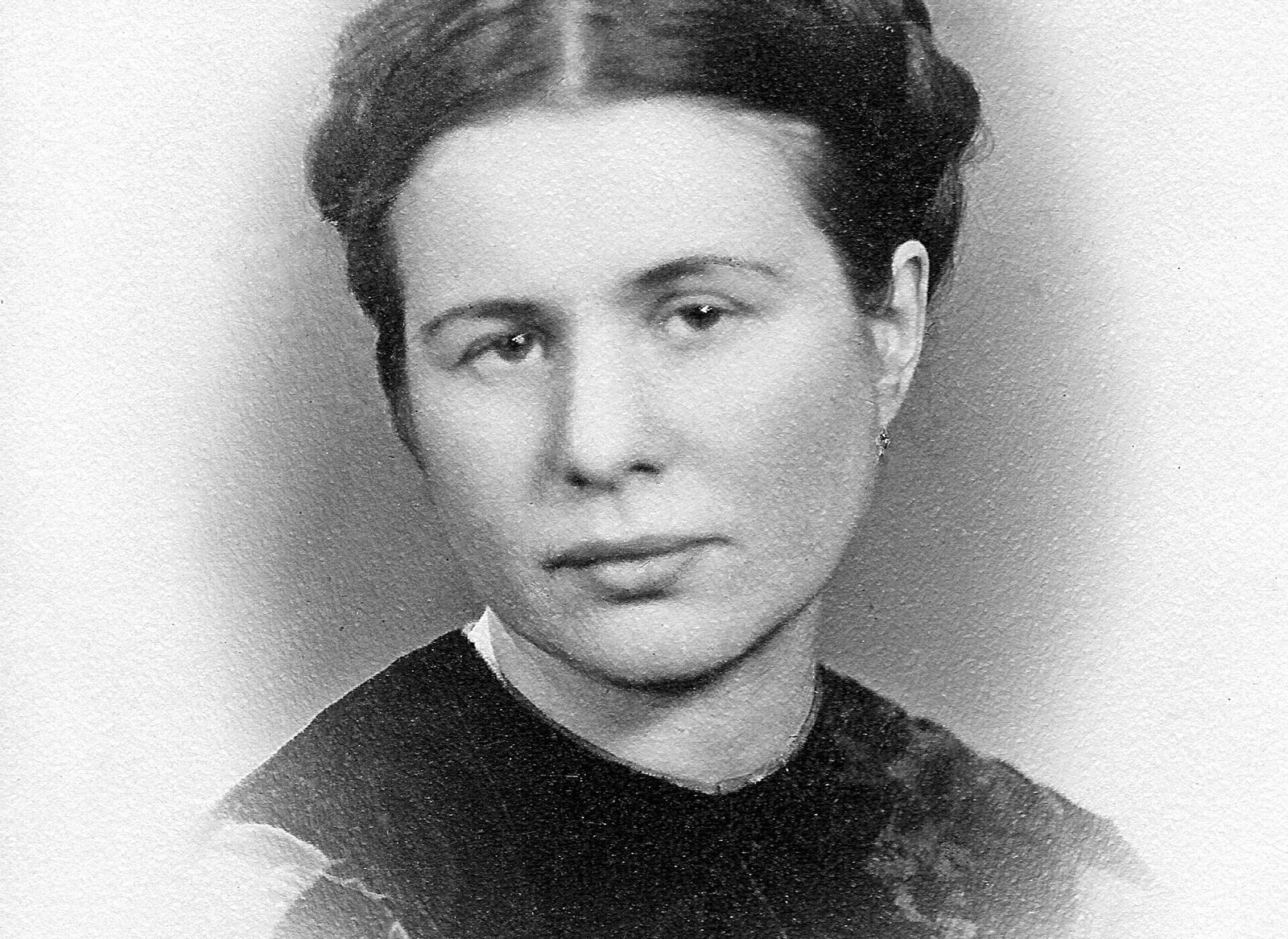

Irena Krzyżanowska was born in Warsaw on 15 February 1910. Her father, Stanisław Krzyżanowski, was a doctor who treated poor patients, many of them Jewish, often without charging them. In February 1917 he died of typhus, which he had caught from the patients he was caring for. She was seven, and his example stayed with her for the rest of her life.2,4
The student who crossed out the stamp
She studied at Warsaw University from 1927. In the 1930s several Polish universities introduced the so-called ghetto benches, separate seats for Jewish students. Sendler protested by defacing the mark on her own student record that would have placed her on the non-Jewish side. The protest cost her: it harmed her prospects of becoming a teacher, and she turned instead to social work.2,4
She married Mieczysław Sendler in 1931. In 1935 she began working for the Warsaw city social welfare department, looking after the city’s poorest families.2
A pass to the ghetto
Germany invaded Poland on 1 September 1939. Her husband was captured as a soldier and spent the rest of the war as a prisoner. The German authorities quickly barred Jews from the city’s welfare system. Sendler and a group of colleagues began forging documents so that Jewish families could still receive help.2,4
In November 1940 the Germans sealed more than four hundred thousand Jews inside the Warsaw Ghetto, where hunger and disease killed thousands every month. Through her work Sendler obtained a permit from the city’s epidemic control department, which allowed her to enter the ghetto to inspect for typhus, a disease the Germans greatly feared. She used her visits to bring in food, medicine and clothing, and to get to know families inside.2,4
Getting the children out
In the summer of 1942 the Germans began deporting the ghetto’s inhabitants to the death camp at Treblinka. Sendler and a network of social workers and helpers, most of them women, began smuggling children out. Some were carried out in ambulances, some led through the courthouse building that bordered the ghetto, some through churches, some hidden in sacks or boxes. On the other side they were given false Christian names and papers, and placed with Polish families, in convents and in orphanages.2,4
To make sure the children could one day be given back their own names, Sendler kept records of who each child really was and where they had gone. She hid the lists in jars and buried them.2,4
Their real names were written down, hidden in jars and buried, so that one day someone could give them back.
Irena Sendler’s lists, Warsaw, 1942–1945
The Great Deportation
The scale of what the rescuers were up against is hard to grasp. On 22 July 1942 the Germans began what became known as the Great Deportation. Over the following eight weeks they sent more than a quarter of a million Jews from the Warsaw Ghetto to Treblinka, where almost all of them were murdered on arrival. Children, the old and the sick were among the first to be taken.
Smuggling a child out of the ghetto was only the beginning. Every child needed a new identity, a family or institution willing to take the risk of hiding them, money for food, and people who would check on them regularly. In occupied Poland, hiding a Jew was punishable by death, for the helpers and often for their families. A single careless word, a neighbour’s suspicion or a child who spoke the wrong language could betray everyone involved.2,4
Żegota and “Jolanta”
In late 1942 the Polish underground, with funding from the government-in-exile in London, set up Żegota, the Council to Aid Jews, an organisation unique in occupied Europe. Sendler joined in early 1943 and by that autumn was head of its children’s section, under the codename Jolanta. The historian Debórah Dwork has called her the inspiration and prime mover of the network that saved Jewish children in Warsaw.3,4
Pawiak
In October 1943 the Gestapo arrested her at her home. During the search she managed to pass the lists of children to a friend, who hid them in her clothing; the Germans did not find them. Sendler was taken to Pawiak prison, interrogated and tortured, and sentenced to death.2,4
She was saved at the last moment. Żegota bribed the German guards who were escorting her to execution, and they let her go. She went into hiding under a false name and went on running the children’s section. During the Warsaw Uprising in 1944 she worked as a nurse in a field hospital, where she hid Jewish patients among the wounded.2,4
After the war
When the war ended she dug up the lists and handed them to Adolf Berman of the Central Committee of Polish Jews, so that the children could be traced. Most of their parents had been murdered at Treblinka. Many of the children were later taken to Palestine and elsewhere by Jewish organisations.2,4
In communist Poland she joined the ruling party and worked in senior posts in welfare and education, and later as a teacher and librarian. Outside Poland her story remained little known for decades. In 1965 Yad Vashem in Israel recognised her as Righteous Among the Nations.1,2
Life in a Jar
Her story reached the wider world in 1999, when a group of high-school students in Uniontown, Kansas, researched it for a history project and turned it into a play, Life in a Jar, which has since been performed hundreds of times. In 2003 Poland awarded her its highest honour, the Order of the White Eagle, and Pope John Paul II wrote to thank her. In 2007 she was nominated for the Nobel Peace Prize.2,4
The number of children her network saved is still debated. The figure most often quoted, about 2,500, comes from Sendler and her colleagues; historians agree that she led a network that saved many children, but place the number she herself helped much lower. She never claimed the credit for herself. To the end of her life she said she could have done more.2,3
Irena Sendler died in Warsaw on 12 May 2008, aged ninety-eight, and was buried in the city’s Powązki Cemetery.
Timeline
- 15 February 1910 Born in Warsaw.
- February 1917 Her father dies of typhus caught from his patients.
- 1935 Joins the Warsaw social welfare department.
- 1 September 1939 Germany invades Poland.
- November 1940 The Warsaw Ghetto is sealed.
- 22 July 1942 Mass deportations to Treblinka begin.
- December 1942 Żegota, the Council to Aid Jews, is established.
- October 1943 Arrested by the Gestapo; later freed by bribery.
- 1944 Nurse in a field hospital during the Warsaw Uprising.
- 1965 Recognised by Yad Vashem as Righteous Among the Nations.
- 1999 Kansas students write the play Life in a Jar.
- 2003 Awarded the Order of the White Eagle.
- 12 May 2008 Dies in Warsaw, aged 98.
- Yad Vashem, Righteous Among the Nations database: Irena Sendler.
- Anna Mieszkowska, Irena Sendler: Mother of the Children of the Holocaust (Praeger, 2011).
- Debórah Dwork, Children with a Star: Jewish Youth in Nazi Europe (Yale University Press, 1991).
- POLIN Museum of the History of Polish Jews, Warsaw, material on Irena Sendler and Żegota.
- The number of children saved is disputed. The figure of about 2,500 comes from Sendler and her associates; historians agree she led the network that saved many children, but put the number she was personally involved in much lower.
Found an error, or hold a related record? Tell the research desk.
Share what you know